

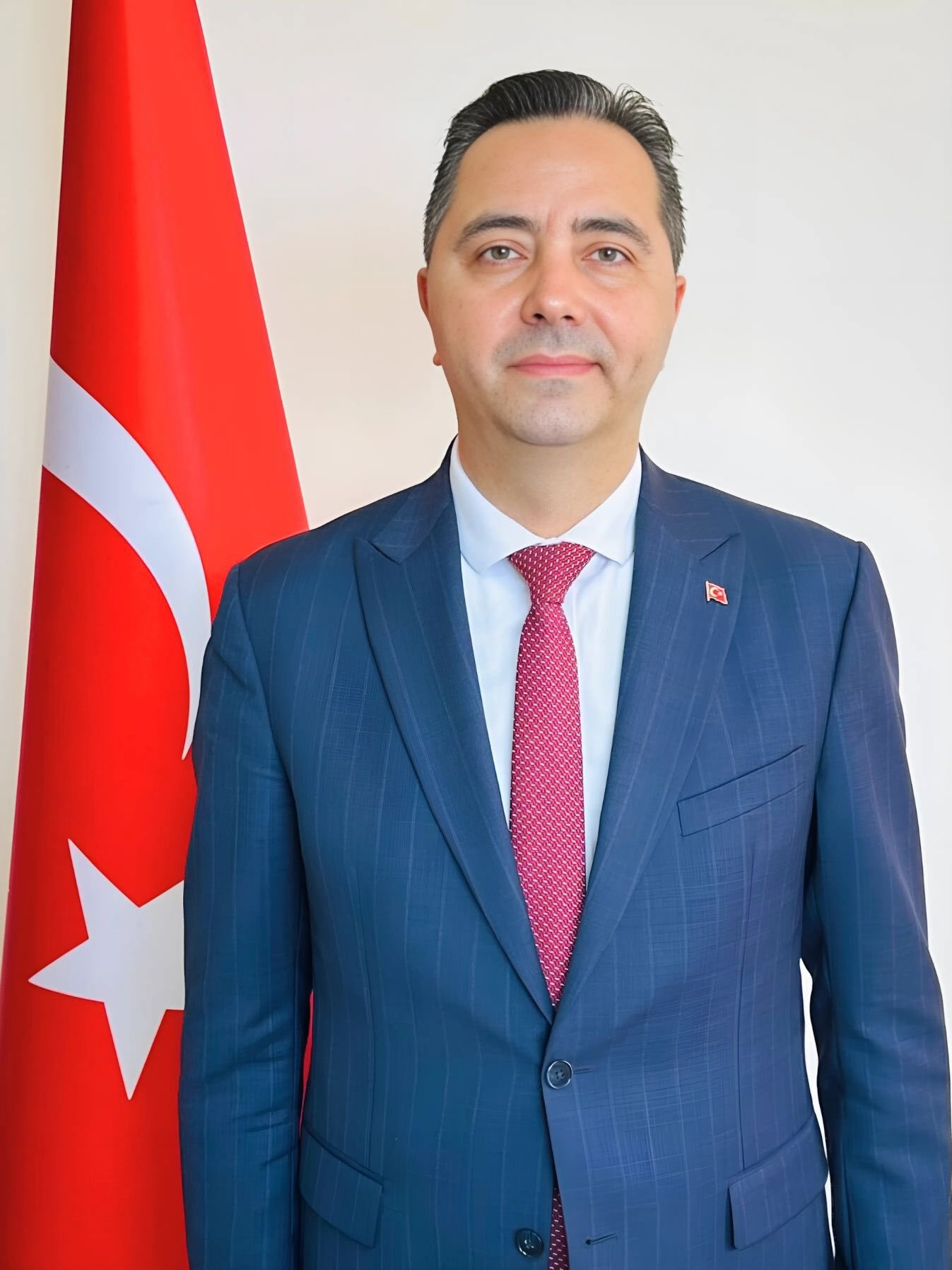
Turkey has appointed veteran diplomat Ferhat Alkan as its new ambassador to Somalia, signaling a potentially significant shift at a time when Mogadishu is navigating one of its most sensitive political periods in recent years.
Alkan succeeds outgoing Ambassador Alper Aktaş, whose tenure coincided with a deepening Turkish role in Somalia’s security, economic development, and diplomatic affairs. The appointment comes amid growing political tensions between President Hassan Sheikh Mohamud’s administration and opposition leaders, with Turkey increasingly finding itself at the center of efforts aimed at preventing a wider political confrontation.
Unlike many diplomats who spend most of their careers in a single region, Ferhat Alkan arrives in Mogadishu with a remarkably diverse international background. Throughout his diplomatic career, he has served in several strategically important countries, including Afghanistan, Iraq, Libya, China, and the United States.
These postings exposed him to complex security environments, post-conflict state-building efforts, great-power competition, and delicate political negotiations.His experience in Afghanistan, Iraq, and Libya is particularly relevant to Somalia’s current situation.
Each of these countries has faced challenges involving political fragmentation, security threats, and efforts to balance competing domestic and international interests.
Such experience could prove valuable as Somalia enters a period characterized by heightened political disagreements over governance, elections, constitutional reforms, and national security arrangements.The transition from Ambassador Alper Aktaş to Ferhat Alkan is likely to attract considerable attention among Somali political actors.
Aktaş presided over a period in which Turkey expanded its influence across multiple sectors in Somalia. Ankara continued investing in infrastructure, military training, humanitarian assistance, and economic cooperation.
Turkey also maintained its position as one of Somalia’s closest international partners, operating its largest overseas military training facility in Mogadishu while supporting development projects across the country.
However, in recent months, some opposition leaders have raised concerns regarding Turkey’s role in Somalia’s internal political affairs. During meetings with a visiting Turkish intelligence delegation, opposition figures reportedly expressed worries that certain Turkish officials had become increasingly aligned with the federal government rather than maintaining the neutral posture expected of a trusted international partner.
Whether those perceptions are accurate or not, they have highlighted the delicate balancing act Turkey faces. For years, Ankara’s success in Somalia has largely been built on its ability to engage with a broad spectrum of Somali society while avoiding the appearance of taking sides in domestic political disputes.
As political tensions rise, preserving that image has become increasingly important.The appointment of Ferhat Alkan may therefore be viewed as more than a routine diplomatic reshuffle. It could also represent an opportunity for Ankara to reset perceptions and reassure various Somali stakeholders that Turkey remains committed to supporting stability, dialogue, and national unity.
Turkey’s growing involvement in mediation efforts is hardly surprising. Over the past decade, it has evolved from being primarily a humanitarian and development partner into one of Somalia’s most influential international allies.
Unlike many foreign actors whose engagement fluctuates according to geopolitical interests, Turkey has maintained a continuous presence in Somalia through periods of conflict, political transition, and economic hardship.
This long-term investment has earned Ankara a level of trust that few external partners enjoy. It has working relationships with government officials, opposition leaders, regional administrations, business communities, and civil society groups.
As a result, Turkey occupies a unique position that allows it to communicate with multiple stakeholders during moments of political uncertainty.The timing of Alkan’s appointment is therefore significant.
Somalia is approaching a period that many observers consider politically decisive. Debates over electoral models, constitutional reforms, federal-state relations, and the country’s broader democratic trajectory continue to dominate the national conversation.
In such an environment, external partners capable of encouraging dialogue without escalating tensions become increasingly important.For Turkey, maintaining stability in Somalia is not only a diplomatic priority but also a strategic one.
Somalia represents one of Ankara’s most successful foreign policy engagements in Africa. Political instability could threaten years of investment in security cooperation, trade, infrastructure development, and regional influence.
As Ferhat Alkan prepares to assume his duties in Mogadishu, expectations will be high. His diplomatic experience, particularly in conflict-affected states, suggests that Ankara is sending a seasoned envoy at a crucial moment.
Whether he can bridge political divides, reassure skeptical opposition leaders, and preserve Turkey’s image as a trusted partner will be closely watched in the months ahead.
One thing is clear: at a time when Somalia’s political future is the subject of intense debate, Turkey remains one of the most consequential international actors in the country and its new ambassador arrives with a challenging but potentially historic mission.