


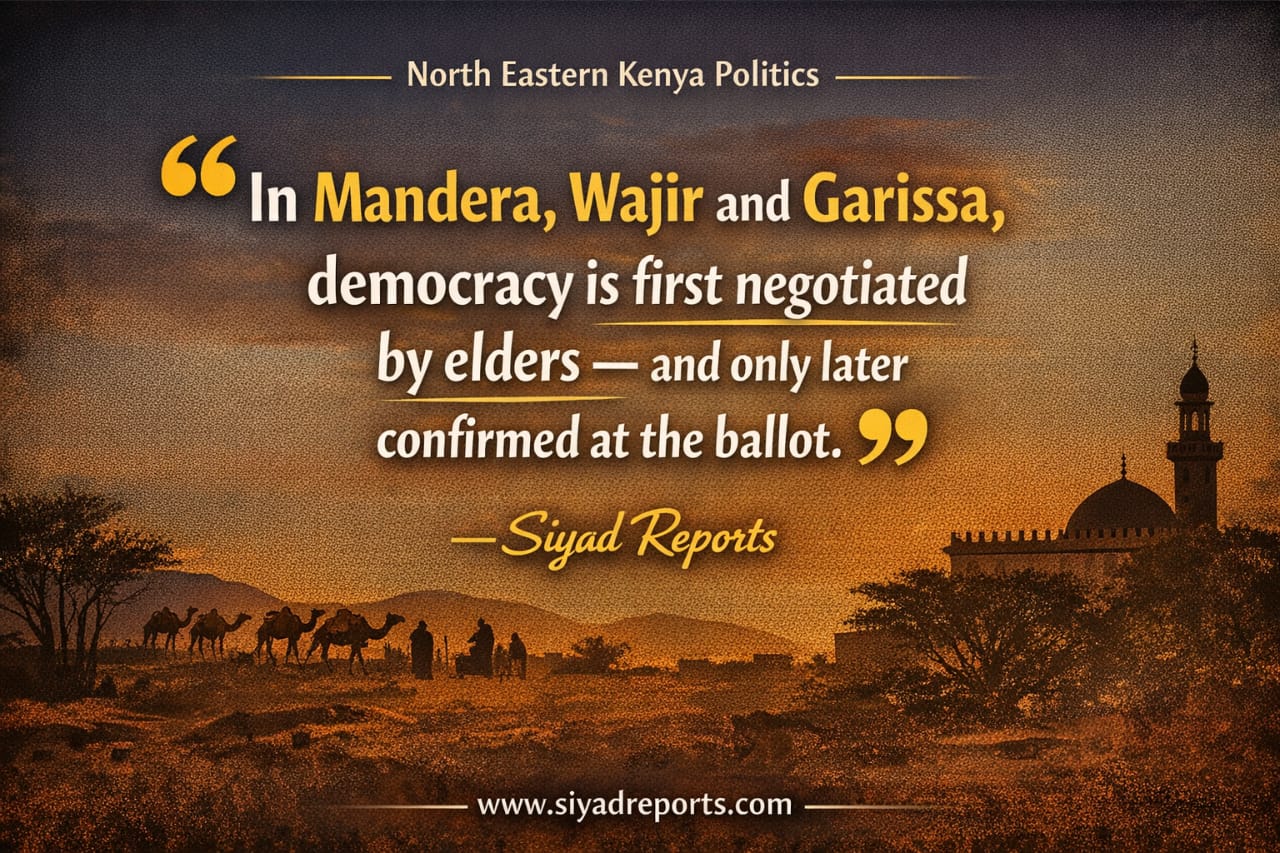
Political campaigns in North Eastern Kenya appear to have begun much earlier than expected, with a growing number of local leaders already seeking political endorsement from their respective clan and tribal elders ahead of the 2027 General Election.
The region which consist of, Mandera, Wajir and Garissa counties is well known for practising the so called negotiated democracy, a system where elders from dominant clans meet to select and endorse a single candidate to represent the community in various elective seats.
Elders Already Receiving Leadership Applications
According political observers, many aspiring politicians have started to formally submit their interest to community elders, hoping to secure early approval and backing before official campaigns begin.
These applications range from Member of Parliament seats, gubernatorial positions, senatorial offices, and MCA roles highlighting how seriously the negotiated democracy model is taken in the region.
In many cases, once elders endorse a candidate, the rest of the clan is expected to rally behind that individual at the ballot box.
Negotiated Democracy and Its Influence
Negotiated democracy has become deeply rooted in North Eastern Kenya, shaped by clan loyalties, historical ties and clan based structures.
Supporters of the practice argue that:
- it reduces political competition
- limits clan-based conflict
- prevents vote-splitting within communities
- and allows power-sharing agreements among different groups
In areas where clan identity strongly influences political choices, negotiated democracy is seen as a way of maintaining unity and preventing political disunity.
Critics Say Democracy Becomes Controlled
Many Political Critics believe the system limits democratic freedom, arguing that:
- voters often have little choice
- elders hold excessive influence
- unpopular candidates can still be imposed on communities
- youth and women may be sidelined
They warn that early political lobbying risks turning governance into an elite-controlled process dominated by tribal councils rather than open competition.
2027 Election Already Taking Shape
Although Kenya’s Independent Electoral and Boundaries Commission (IEBC) has not communicated the official campaign period, political realignments and negotiations are already underway.
Analysts say the negotiations in Mandera, Wajir and Garissa are likely to influence:
- party nominations
- coalition building
- and voting trends ahead of 2027
The region has historically voted along clan-based lines, meaning early endorsement
can almost guarantee political success.
Youth Call for Inclusive Decision-Making
A growing number of youthful people are calling for a more transparent and inclusive process, urging elders to consult wider community members instead of making closed-door agreements.
Some are advocating for issue-based politics focusing on:
unemployment
insecurity
education
and economic empowerment rather than purely clan representation.
The Bigger National Picture
North Eastern Kenya is not the only region where negotiated political arrangements exist, but nowhere else in the country is the model as institutionalized and influence politics as in Mandera, Wajir and Garissa.
As the 2027 election draws nearer, national parties are expected to carefully engage with clan leaders acknowledging the powerful role they continue to play in shaping political outcomes in the region.