


For decades, North Eastern Kenya has remained trapped in a cycle of poverty, underdevelopment, and dependency despite billions of shillings allocated through devolution and the Constituency Development Fund (CDF). Poor roads, struggling schools, weak health systems, and recurring drought emergencies continue to define daily life for ordinary citizens. Yet beneath this suffering lies a question that many leaders have avoided for years: where did the money go?
That uncomfortable question has now burst into national debate following controversial remarks by former Deputy President Rigathi Gachagua, who accused leaders from Northern Kenya of presiding over grand corruption while publicly blaming the national government for the region’s poverty. While his tone was widely criticised as abrasive and unsophisticated, the argument itself has struck a nerve among many residents of the region.
Senior Counsel Ahmednassir Abdullahi argues that, deliberately or not, Gachagua has exposed a painful truth that Northern Kenya’s masses have lived with for years. In his view, corruption by local leadership is central to the region’s suffering, and the debate could reshape political alignments if it continues.
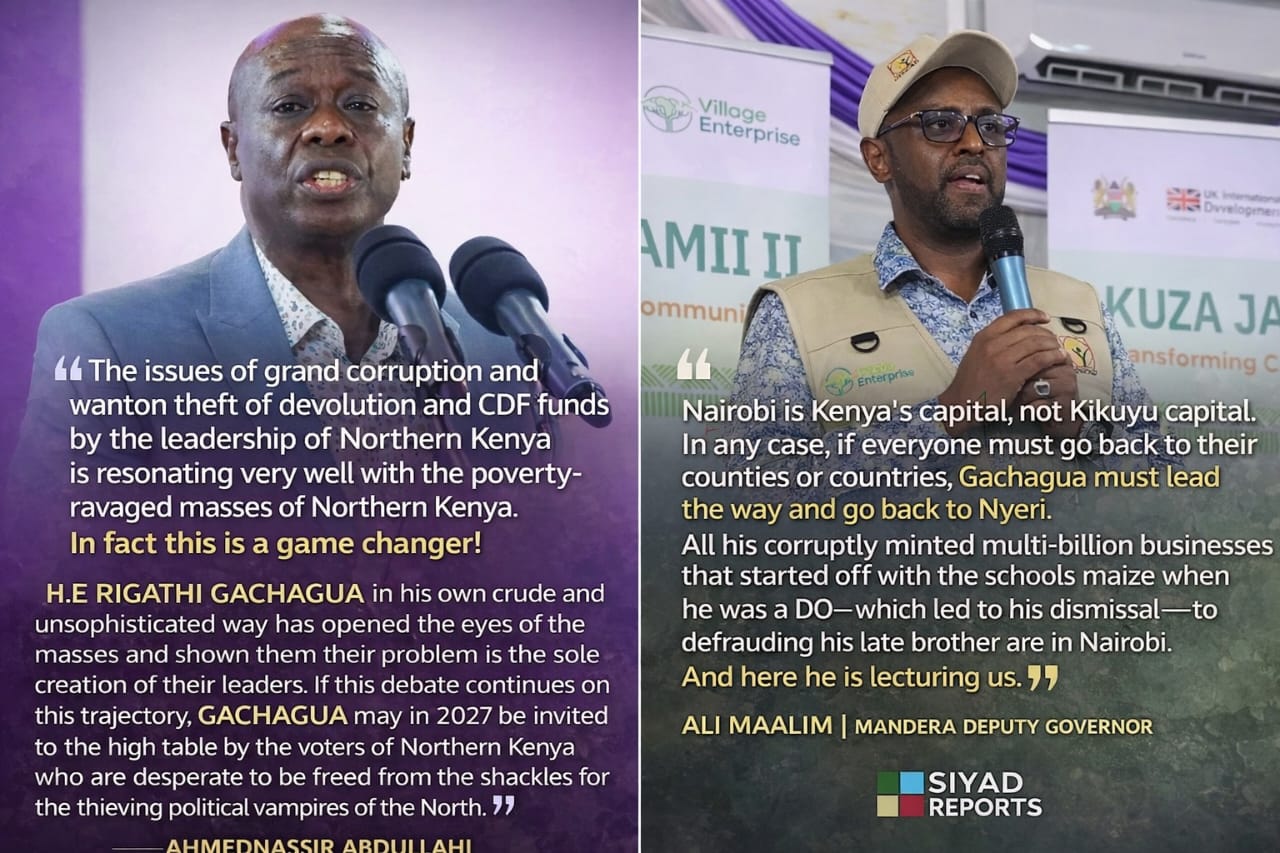
“The issues of grand corruption and wanton theft of devolution and CDF funds by the leadership of Northern Kenya is resonating very well with the poverty-ravaged masses of Northern Kenya. In fact this is a game changer,” Ahmednassir said.
“H.E Rigathi Gachagua, in his own crude and unsophisticated way, has opened the eyes of the masses and shown them their problem is the sole creation of their leaders. If this debate continues on this trajectory, Gachagua may in 2027 be invited to the high table by the voters of Northern Kenya who are desperate to be freed from the shackles of the thieving political vampires of the North. Watch this space.”
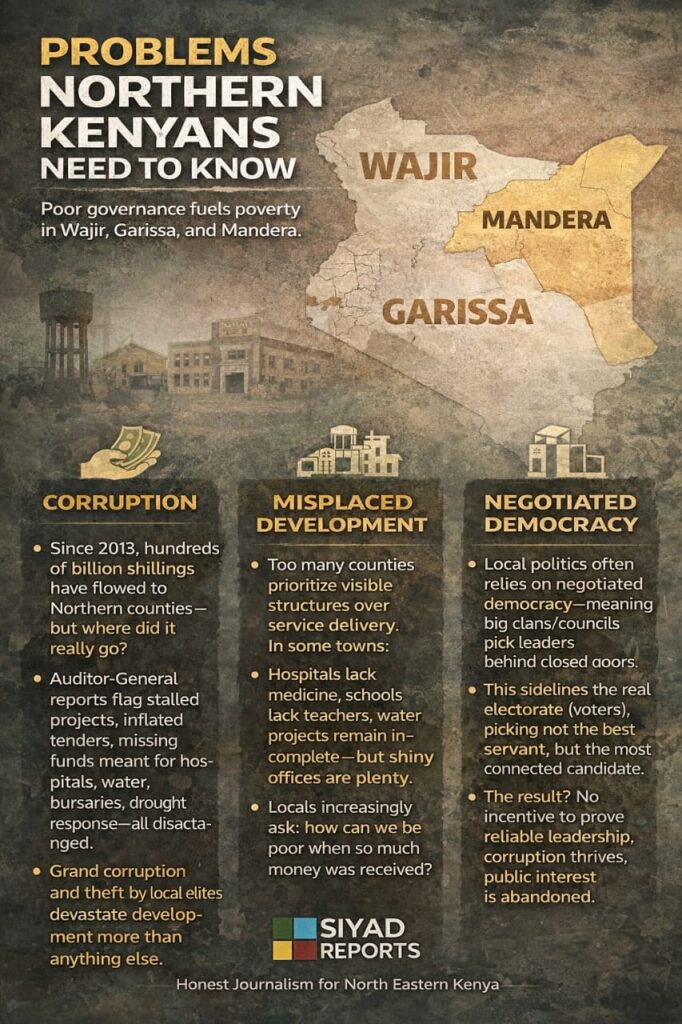
For many citizens, these words resonate because they reflect lived reality. Since the onset of devolution in 2013, counties in North Eastern Kenya have received hundreds of billions of shillings in national allocations. Yet Auditor-General reports consistently flag stalled projects, inflated tenders, ghost works, and misuse of public funds. Hospitals lack basic supplies, schools struggle with infrastructure, and water projects remain unfinished while political elites accumulate visible wealth.
This contradiction has fueled growing anger among ordinary residents, particularly the youth, who increasingly question why poverty persists despite massive public spending.
However, the narrative has been strongly challenged by leaders from the region who reject what they see as ethnic scapegoating and political hypocrisy. Mandera Deputy Governor Ali Maalim sharply criticised Gachagua, arguing that corruption is a national disease and that he lacks the moral authority to lecture any region.
“Nairobi is Kenya’s capital, not a Kikuyu capital. In any case, if everyone must go back to their counties or countries, Gachagua must lead the way and go back to Nyeri,” Ali Maalim said.
“All his corruptly minted multi-billion businesses that started off with the schools’ maize when he was a DO which led to his dismissal to defrauding his late brother are in Nairobi, and here he is lecturing us.”
Maalim’s response reflects a broader sentiment in North Eastern Kenya: while corruption exists, it is not unique to the region and should not be weaponised to demean entire communities. Many argue that selective outrage ignores the systemic nature of corruption across Kenya’s political class.
Both perspectives expose an uncomfortable dual reality. Corruption in North Eastern Kenya is real and destructive but so is the political tendency to ethnicise accountability. What is different today, however, is the public reaction. Citizens are no longer dismissing the issue outright. Instead, difficult conversations are taking place in community forums, online spaces, and youth circles focused on budgets, audits, and performance rather than clan or party loyalty.
If this shift continues, it could mark a turning point ahead of the 2027 elections. Leaders who have long survived on identity politics, fear, and historical marginalisation narratives may soon face a more informed and demanding electorate.
The truth remains stark: no region can develop if its own leadership loots public resources with impunity. External marginalisation is real but internal betrayal is equally devastating. The future of North Eastern Kenya will depend not just on decisions made in Nairobi, but on whether citizens choose accountability over silence.
The debate ignited by Gachagua’s remarks may be messy and politically charged, but it has forced a long-overdue reckoning. And for a region yearning for dignity, services, and opportunity, that reckoning may well be the beginning of real change.