


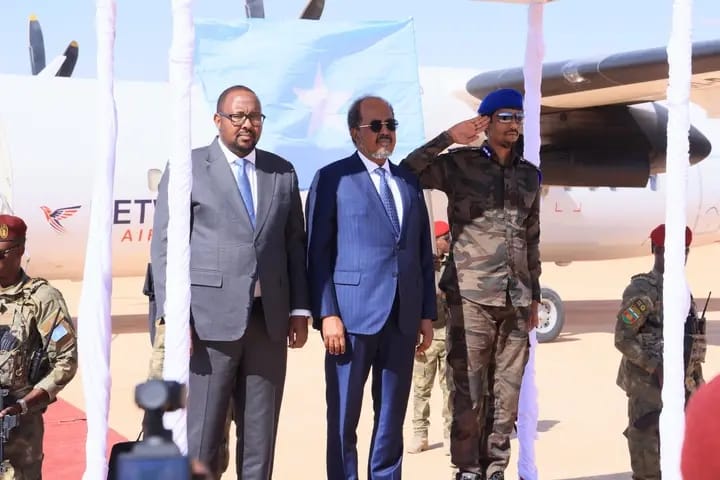
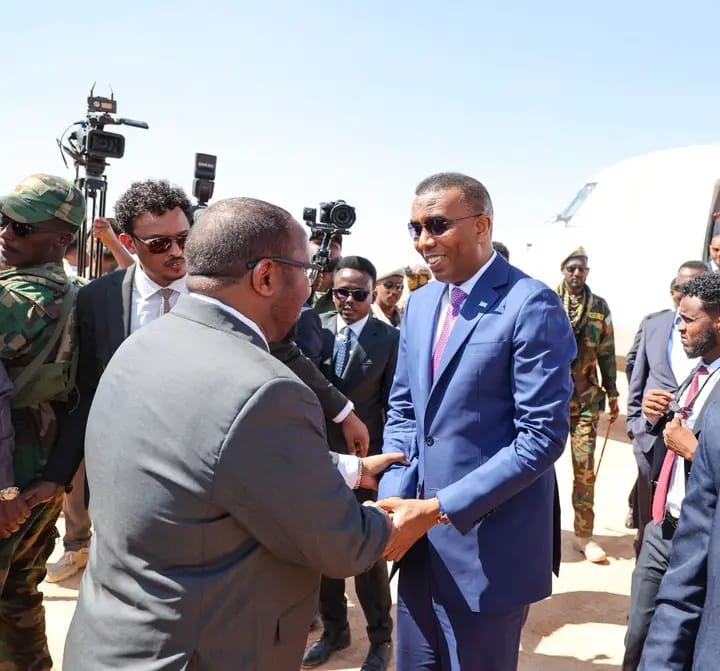
On January 16, 2026, Somalia crossed a political threshold never before witnessed in its modern history. President Hassan Sheikh Mohamud and Prime Minister Hamza Abdi Barre arrived on the same day, at the same airport, to attend the same national event in Las Anod (Laascaanood) a moment without precedent since the founding of the Somali Republic.
For Las Anod, the symbolism ran even deeper. President Hassan Sheikh Mohamud became the first sitting Somali head of state in more than 36 years to set foot in the city. The last time a Somali president visited Las Anod in an official capacity was in 1969 the year President Abdirashid Ali Shermarke was assassinated there, an event that reshaped the nation’s destiny and ushered in military rule.
This visit was not merely ceremonial. It was a declaration political, constitutional, and historical that Las Anod is no longer a forgotten frontier but a central pillar in Somalia’s evolving federal order.
Las Anod: From Anti-Colonial Resistance to Political Flashpoint
Las Anod’s story mirrors Somalia’s broader struggle for sovereignty, unity, and self-definition.
In the early 20th century, the Sool region served as the heartland of the Darwiish resistance, led by Sayyid Mohammed Abdullah Hassan, which defied British, Italian, and Ethiopian colonial forces for over two decades. This legacy entrenched Las Anod as a symbol of Somali defiance and nationalism long before the modern state existed.
Urban settlement expanded in the 1940s, largely driven by returning diaspora communities, and after independence in 1960 the city emerged as a key political center. That trajectory was violently interrupted in 1969 with Shermarke’s assassination a shock that triggered the coup led by Mohamed Siad Barre and altered Somalia’s political course for generations.
After the collapse of the central government in 1991, Las Anod became a contested space rather than a governed one. Competing claims by Somaliland and Puntland turned the city into a prolonged geopolitical fault line. Somaliland’s control from 2007 to 2023 brought infrastructure development, but also deep insecurity, marked by over 120 targeted assassinations of elders, intellectuals, and community leaders wounds that never healed.
The breaking point came in late 2022. Following another assassination, mass protests erupted. By February 2023, traditional elders publicly rejected Somaliland’s authority and declared their allegiance to the Federal Government of Somalia. Months of intense fighting followed, ending in August 2023 with Somaliland forces withdrawing from the city and its surrounding bases.
Las Anod emerged from the conflict battered, displaced but politically transformed.
SSC-Khatumo and the Return of the Somali State
By early 2026, Las Anod stands as the administrative capital of SSC-Khatumo, a regional administration recognized by the Federal Government of Somalia as a temporary federal member authority pending full constitutional integration.
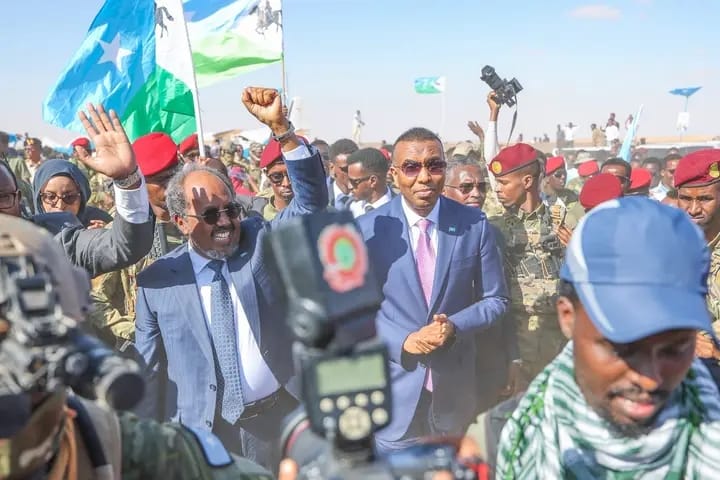
The joint visit by the President and Prime Minister was centered on the inauguration of Abdikadir Ahmed Aw-Ali (Firdhiye) as President of SSC-Khatumo. But its implications went far beyond an inauguration ceremony.
For Mogadishu, this was a physical projection of sovereignty into a region long treated as peripheral or disputed. For residents, it was the clearest signal yet that the Somali state had returned not through military imposition, but through political recognition and inclusion.
The timing amplified the message. The visit came amid heightened regional tensions and international speculation surrounding Somaliland’s push for recognition, including reports of possible unilateral moves by external actors. Standing in Las Anod, Somalia’s leadership delivered a blunt counter-narrative: Somaliland does not exercise control over all the territory it claims, and Somalia’s federal system is active, present, and functioning in the north.
The security dimension was equally important. The safe arrival and movement of the country’s top leadership in a city recently devastated by war sent a message to both citizens and the international community that the Federal Government is capable of stabilizing, governing, and rebuilding former conflict zones.
A Turning Point for Unity, Power, and the Somali Future
Predictably, authorities in Hargeisa condemned the visit as provocative. But the political reality is difficult to ignore. Las Anod is no longer framed as a “disputed territory” between Somaliland and Puntland. It is being treated as a distinct federal entity aligned directly with Mogadishu, reshaping the political map of northern Somalia.
For decades, Las Anod symbolized fragmentation a city claimed, fought over, and abandoned. On January 16, 2026, it became something else entirely: a stage for Somali statehood reasserting itself after years of absence.
History may ultimately judge this moment not by speeches delivered or photos taken, but by what followed. Yet one fact is already clear. For the first time since 1969, Las Anod is no longer defined solely by assassination, resistance, or dispute but by political inclusion and national relevance.
January 16, 2026, will be remembered as the day Las Anod decisively re-entered Somalia’s national story not as a battleground, but as a capital of consequence.