


Kenya’s northern counties have long been neglected in national development plans, often treated as a political afterthought rather than a strategic priority. For decades, the Isiolo–Mandera corridor remained a promise without progress a plan without execution a road without a foundation.
Now, under the current administration, the government is not only reviving the 740-kilometre tarmac project but is also deploying an unprecedented security strategy to protect the road’s construction.
The question now is whether this project will truly deliver transformation or become another politically timed initiative in a country preparing for elections.
From Neglect to “Project of National Importance”: Why This Road Took So Long
The Isiolo–Mandera road has been discussed for years, but previous governments treated it like a distant dream. Despite being a critical artery connecting northern Kenya, the region remained isolated, suffering from poor infrastructure, weak security, and limited economic opportunity.
Historically, northern Kenya has been left behind for two main reasons: political marginalization and security concerns. The region has often been viewed through the lens of conflict rather than potential. As a result, national investment has been minimal, and the communities here have paid the price in slow growth and poor access to services.
However, the current government’s renewed focus on the corridor signals a major shift. The road is now being treated as a national development priority, not a regional project. The government’s new approach is based on the belief that infrastructure can end isolation, strengthen national integration, and create economic opportunities that will permanently change the region.
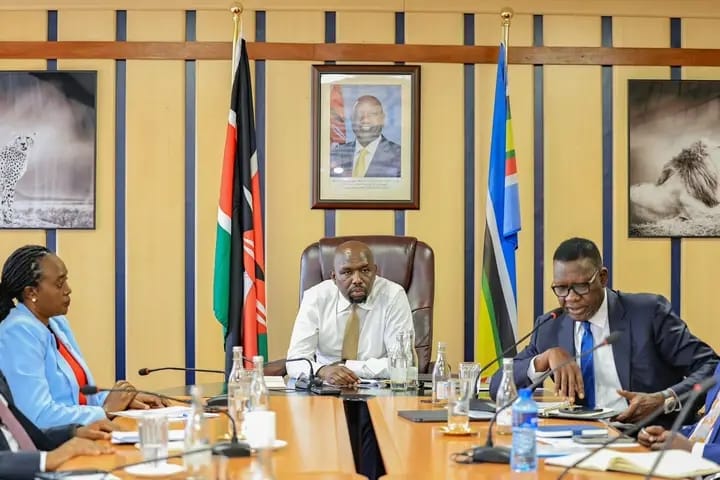
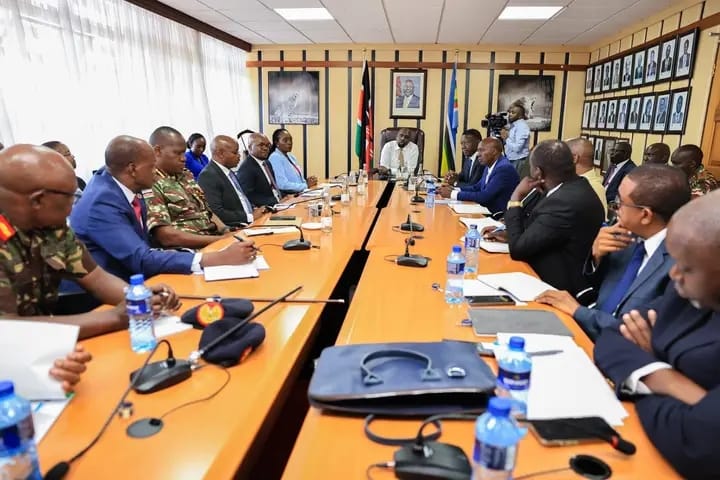
The government is also making it clear that it will not allow security challenges to delay the project again. The Cabinet Secretary for Interior Kipchumba Murkomen, together with Roads and Transport CS Davis Chirchir and Defence CS Soipan Tuya, met to review security measures and ensure construction continues without disruptions. This meeting underscores the seriousness of the government’s commitment.
The scope of the project is enormous: 740 kilometres of tarmac linking Isiolo, Wajir, and Mandera, at a cost of Ksh 100 billion ($750 million), funded by the World Bank and the state. The project has a strict completion deadline of June 2027, just months before the general election.
This timeline is significant. It raises questions about whether the government is genuinely committed to long-term transformation or is under pressure to deliver visible results before elections. Still, the decision to complete the road by 2027 shows the government is willing to take risks to ensure the project is finished on time.
The Security Challenge: “Pen or Sword” – Why the Government Is Turning to Defence
Security is the biggest obstacle to the Isiolo–Mandera road. The region has faced repeated attacks, ambushes, and threats from criminal groups. The road corridor has been targeted multiple times with explosive devices, forcing contractors to stop work and leaving communities vulnerable.
The inclusion of bombs on the road is a real threat, and it has already caused loss of life and severe disruptions. This is why the government is now adopting a “Whole of Government” approach, merging the Ministry of Transport with the machinery of the Ministry of Defence. The aim is to ensure that security is not treated as a side issue, but as an essential part of the project.
The Interior CS Murkomen made this point clear during the crisis meeting:
“We cannot allow a few criminals to hold the development of millions hostage.”
He added a strong message of determination:
“This road will be built, whether by the pen or the sword.”
This statement reflects a new government philosophy: development cannot be held back by criminals. It is also a warning to insurgents and sabotage groups that the state is ready to use force if necessary. The presence of defence forces alongside construction teams shows that the government is prepared to take bold steps.
However, this approach has its risks. Critics argue that a militarized project could deepen tension between communities and security forces, especially if the road is perceived as a political tool rather than a national necessity. There is also a concern that using force could lead to more conflict if not managed carefully.
Despite these concerns, the government is insisting that security measures will be strengthened to protect contractors and equipment. Officials have reassured partners and contractors that there will be “ample resources deployed to protect personnel and equipment.”
This is crucial, because contractors need assurance that they will not lose money or lives. Without security, no investor will risk working in the region. The government knows this, and that is why it is taking the security strategy seriously.
Beyond the Road: Economic Growth, Trade, and National Integration
The Isiolo–Mandera corridor is not just a road. It is a national development engine that could transform the entire northern region.
Once completed, the road will connect major towns and open the region to trade and investment. Northern Kenya is rich in potential: livestock, agriculture, minerals, and cross-border trade opportunities. But without infrastructure, these resources remain trapped.
The road will also strengthen Kenya’s position in the Horn of Africa. It is part of the Horn of Africa Gateway Development Project, a strategic initiative aimed at boosting regional connectivity and trade. This road is meant to link Kenya with neighbouring countries and improve access to ports and markets.
For local communities, the road means improved access to health services, education, and markets. Farmers and traders will be able to transport goods faster and safer. The cost of goods will likely decrease, and the region could become more economically competitive.
However, the road will also bring new challenges. Increased movement may attract more criminal activity, and the region will need stronger law enforcement and governance to manage the changes. Without strong institutions, the road could be used for illegal trade or smuggling.
Still, the potential benefits are enormous. The road can transform the north from a neglected region into a national economic powerhouse.
Political Context: Why the Road Matters Before 2027 Elections
The strict completion deadline of June 2027 is politically significant. It comes just months before the general election, raising questions about timing and motivation.
On one hand, the government can argue that the road is a national priority and must be completed quickly to deliver real benefits to citizens. On the other hand, critics may argue that the government is using the road to gain political support in a region that has historically opposed them.
The government is aware of this political angle. By completing the road, they can demonstrate a commitment to northern Kenya, potentially shifting political support. But if the project is seen as a political strategy rather than a national mission, it could create more division.
The government must therefore ensure that the road is executed transparently and with community involvement. The benefits should be shared equally among all counties, and local communities must be part of the project. Otherwise, the road could become a symbol of political manipulation rather than development.
The Road to a New Northern Kenya
The Isiolo–Mandera road represents more than a tarmac project. It symbolizes Kenya’s effort to integrate a neglected region into the national economy and security framework. It is a test of the government’s commitment to development and its ability to protect citizens and infrastructure from security threats.
The government has made it clear: the road will be built, whether by the pen or the sword. But the real test will be whether the road delivers long-term peace and prosperity, or whether it becomes another project used for political gain.
If the government can ensure security, transparency, and community involvement, the road could be the beginning of a new era for northern Kenya. If not, it will become another story of promises and failed execution.