


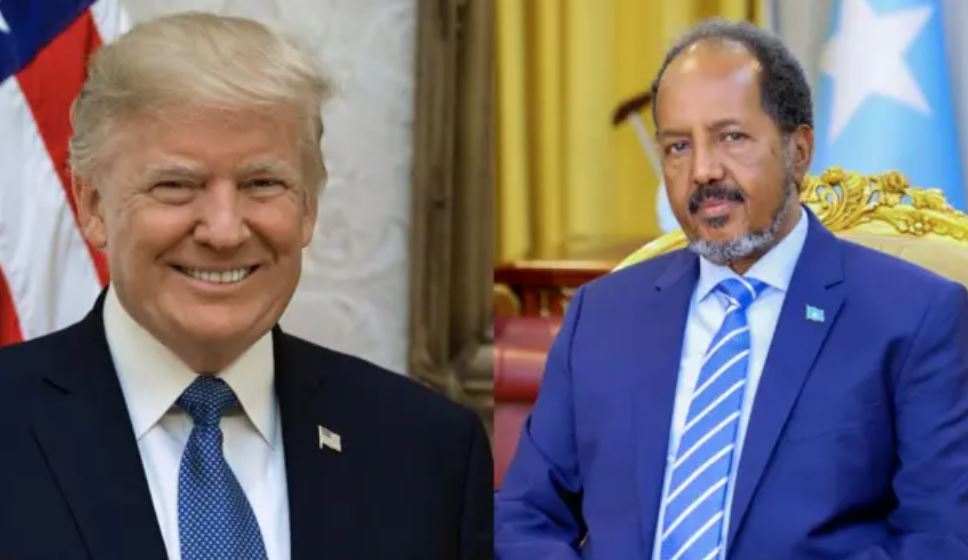
On January 20, 2026, during a White House press briefing marking the first anniversary of his second term, President Donald Trump once again directed harsh remarks toward Somalia. He described Somalia as “not even a country,” claiming it lacks anything resembling a functioning state. He insisted that if Somalia is a country, it is “just about the worst in the world.” These statements were not isolated. They came alongside personal attacks on Somali-American Representative Ilhan Omar, whom he described as coming from a “backward country,” and remarks labeling Somali immigrants as “low IQ” and accusing them of widespread fraud. He also claimed that the U.S. military has been targeting Somali pirates with missiles as deadly as those used against drug traffickers.
These comments were not only offensive, they were part of a consistent pattern. For years, Trump has portrayed Somalia as a failed, ungovernable state. Yet this latest attack was more intense, more public, and more detailed than previous ones. The timing also raises suspicion. The remarks were made while the administration announced the termination of Temporary Protected Status (TPS) for Somali nationals, effective March 17, 2026. This is not merely a policy shift; it is a message.
What is alarming is not only the attack itself, but the silence that followed. Somalia’s government has remained mostly quiet, failing to respond to what is now a repeated and public denigration. In the world of international politics, silence can be interpreted as weakness. In this case, it may be interpreted as agreement.
And if a powerful country like the United States can publicly demean Somalia without any diplomatic pushback, it raises a serious question: Is this just rhetoric, or is it a prelude to a larger plan?
The Pattern: Why Trump Keeps Returning to Somalia
Trump’s attacks on Somalia cannot be dismissed as mere personal opinions. They follow a recognizable pattern. He has repeatedly described Somalia as a failed state and used it as a symbol of disorder and collapse. This is not unique to Somalia, it is part of a broader political narrative that aims to categorize certain countries as hopeless, weak, and unworthy of sovereignty.
What is unusual this time is the intensity and the length of time he spent discussing Somalia. In most cases, Trump spends minimal time on foreign issues unless they serve his domestic political agenda.
However, his remarks about Somalia were long, detailed, and repeated across different contexts. This suggests that Somalia is not merely a random target; it is a deliberate symbol.
In the minds of many analysts, the repetition is strategic. A leader does not repeatedly target a country with public insults without expecting some future benefit. By portraying Somalia as a failed state, Trump may be setting the stage for future actions that could range from political pressure to military involvement. He is not only insulting Somalia; he is shaping public perception. The more he repeats this narrative, the more it becomes “truth” in the minds of his supporters and possibly even in the broader international community.
This kind of rhetoric can be used to justify a range of actions, including increased military presence, political interference, and the use of Somali territory for strategic purposes. In Trump’s worldview, weak countries are not just failures; they are opportunities.
The fact that Trump’s comments were paired with a decision to end TPS for Somali nationals suggests a deliberate linkage. The message is clear: Somalia is not a real country, and Somali people do not deserve protection. This serves a domestic political purpose, but it also shapes international policy. It signals to the world that the U.S. administration views Somalia as an unstable, failing nation with no legitimate government.
The question then becomes: Is this just a political tactic to energize supporters, or is it a carefully designed strategy to justify future moves in Somalia?
The Silence: Why Somalia Is Not Responding
The most concerning part of this story is the silence of the Somali government. In international politics, silence can be more damaging than a weak response. When a country is repeatedly attacked and it does not respond, it allows the attacker to shape the narrative unchallenged. Somalia’s silence has allowed Trump’s narrative to spread without contradiction.
There are several reasons that might explain Somalia’s silence, but none of them reduce the seriousness of the issue.
Firstly, Somalia is still rebuilding. The country is still struggling to establish stable institutions after decades of conflict. Its government is fragile and has limited diplomatic capacity. Responding to a superpower like the United States requires a strong diplomatic apparatus, which Somalia still lacks. But this weakness does not mean the issue should be ignored.
Secondly, Somalia may fear retaliation. The country depends heavily on international aid, diplomatic support, and foreign investment. Any direct challenge to the U.S. could result in diplomatic pressure, reduced support, or even economic sanctions. This creates a dangerous incentive to remain silent.
Thirdly, Somalia is internally divided. The federal structure, regional conflicts, and political fragmentation have limited the government’s ability to act cohesively. When there is no unified national voice, it becomes easier for the country to be ignored on the global stage.
Fourthly, there is a risk that Somalia does not fully understand the long-term danger.
Repeated attacks without response gradually reshape international perception. When the world hears the same narrative repeatedly, it begins to accept it as truth. Over time, this could lead to a global perception of Somalia as a failed state, which would weaken the country’s bargaining power in international affairs.
This silence is not just a failure of diplomacy; it is a failure of national defense in the modern sense. In the 21st century, national security is not only about military strength; it is also about controlling the narrative. Somalia’s silence has allowed Trump to control the narrative about Somalia.
So the question remains: Why is Somalia silent, and what does this silence mean for the country’s future?
The Real Danger: Is This the Beginning of a Larger Plan?
The most dangerous aspect of Trump’s rhetoric is the possibility that it is more than words. The strategic context suggests that this could be a prelude to future actions.
Somalia’s location makes it extremely valuable. It sits at the gateway to the Red Sea and the Gulf of Aden one of the world’s most important shipping routes. Control over this region means control over global trade. Any major global power understands this. Somalia’s coastline and ports are of enormous strategic importance, and any military or political involvement in the region would have significant global implications.
Moreover, Somalia is believed to have significant untapped natural resources, including minerals and offshore gas reserves. Global powers, including China, have been actively seeking access to resources in Africa. Trump’s repeated attacks on Somalia could be a way to justify future moves aimed at gaining access to those resources.
This is why the repeated narrative of Somalia as a failed state is dangerous. When a country is labeled as failed, it becomes easier to justify intervention. It becomes easier to argue that the international community must step in to “restore order.” In this way, the rhetoric becomes a tool for future action.
The question is not whether Trump is simply insulting Somalia. The question is whether these insults are being used to justify a future political or military agenda.
The termination of TPS for Somali nationals is not just an immigration policy, it is a political signal. It suggests that the administration no longer considers Somalia worthy of protection. It reinforces the narrative that Somalia is a failed state.
If the narrative continues unchecked, it could lead to a dangerous situation in which Somalia becomes an open target for external control. This raises a final question:
Is Somalia being targeted for strategic reasons, and is the world watching as Somalia’s narrative is being destroyed?
The Silence That Might Cost Somalia Its Future
Trump’s attacks on Somalia are not just insults. They are part of a pattern that is increasingly difficult to ignore. The repeated narrative of Somalia as a failed state is dangerous, because it can justify future political and military actions.
Somalia’s silence is equally dangerous. In the world of international politics, silence can be interpreted as weakness or agreement. If Somalia does not respond, the narrative will continue to grow, and the country will become increasingly vulnerable.
The real question now is not whether Trump has a plan for Somalia, but whether Somalia will continue to allow the world to accept a narrative that could justify future intervention.