


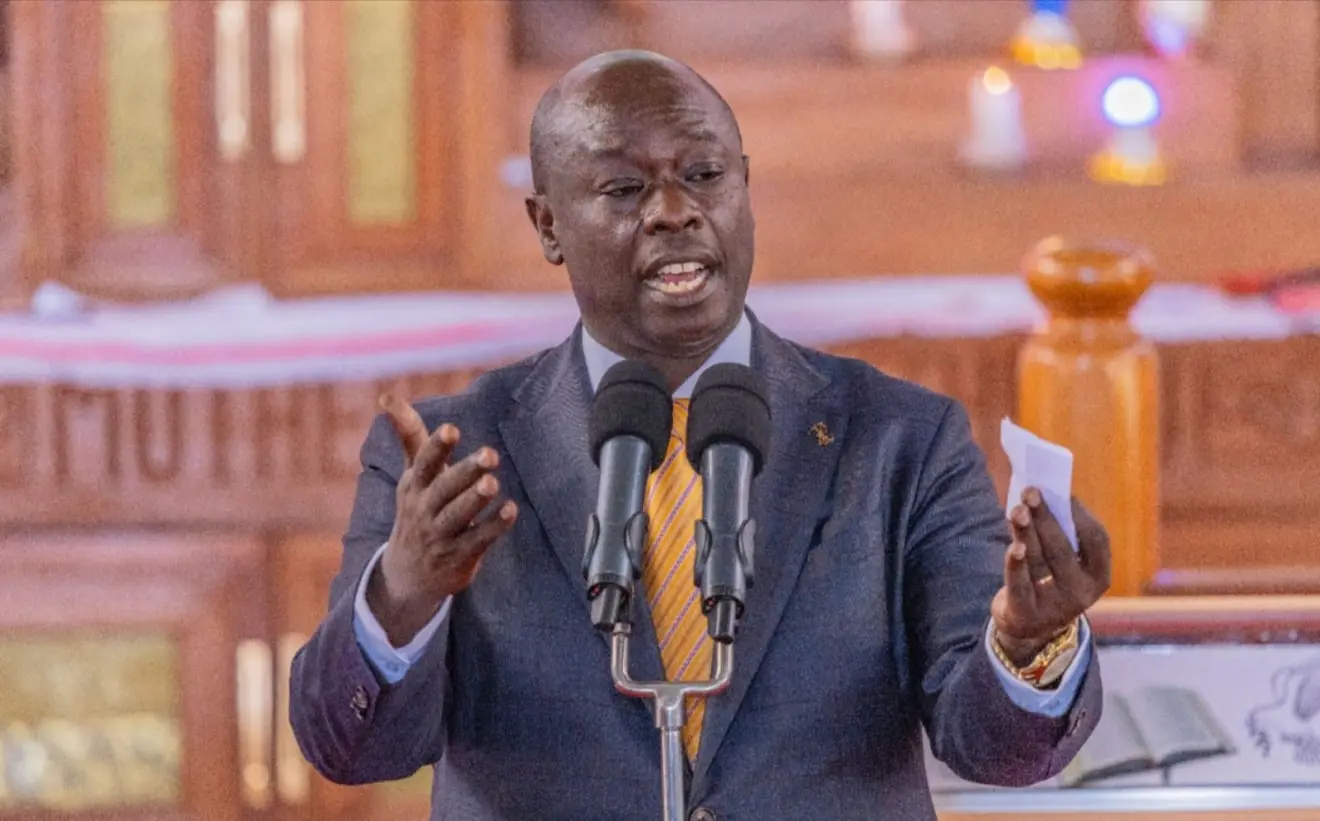
What was scheduled as a routine roundtable interview between Northern Kenya media practitioners and former Deputy President Rigathi Gachagua instead detonated into one of the most confrontational political moments the region has witnessed since the beginning of devolution. The interview, initially canceled by an umbrella body representing local radio stations and digital platforms, was later partially aired yet even in its disrupted form, its impact was seismic.
Speaking with urgency, Gachagua accused political leaders from Garissa, Wajir, Mandera, Isiolo, Marsabit, and Turkana of abandoning their people, looting public funds, intimidating journalists, and insulating themselves in Nairobi and Dubai while ordinary citizens endure hunger, drought, and institutional collapse.
At the heart of his message was a simple but devastating assertion: Northern Kenya’s suffering is no longer accidental, It is political.
Drought, Death, and a Deafening Silence from Those in Power
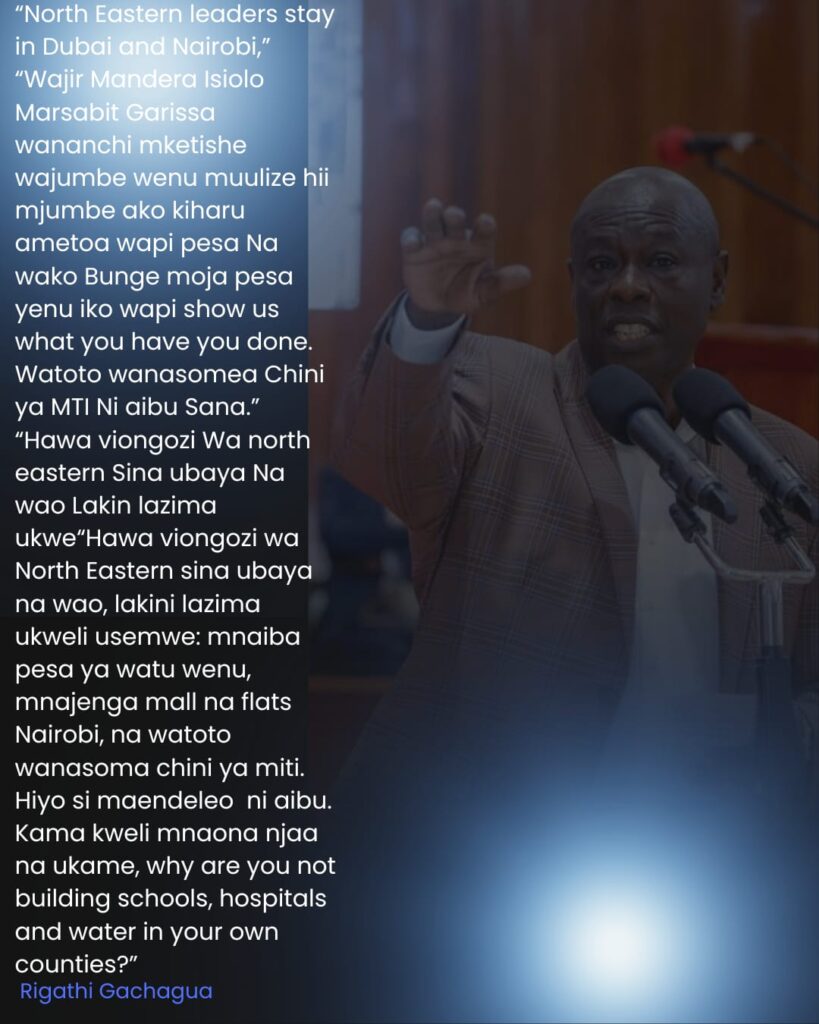
Gachagua opened the interview by questioning the complete silence from leaders months into a devastating drought,
“How is it that four months down the line tangu kiangazi ianze Northern Kenya hakuna mtu anaongea?”
He argued that drought is not new to Northern Kenya, but what is deeply disturbing is the lack of urgency, coordination, and political leadership despite visible human suffering. According to him, leaders have normalized tragedy and reduced humanitarian crisis into background noise.
“Mnaendelea campaign as if there is no problem in Kenya when people in Northern Kenya are dying because of hunger.”
Gachagua accused leaders of prioritizing political rallies, branding, and slogans over emergency response. He dismissed such politics as empty and dangerous, especially when lives are at stake.
He accused deputy president Kithure Kindiki of abandoning his core duties during the drought crisis, saying, “People are dying in Garissa, Wajir because of drought, unaanza kusema wewe ni fire. What kind of fire can you be?” “Huyu Kithure Kindiki hajaita mkutano kudiscuss mambo ya kumobilise resources kusaidia watu wa Northern Kenya. Kazi yake ni kuzunguka akiongeza mambo ya fire, mbwekse, sijui noma.”
He argued that the drought was not merely a lack of rain but a complete collapse of livelihoods, adding, “Iliifika mahali ngamia inakufa, na binadamu, na ng’ombe, na mbuzi?”
For Gachagua, leadership during disaster is not about rhetoric but about mobilizing state machinery. He faulted national leadership for failing to declare the drought a national disaster and for allowing preventable suffering to continue unchecked.
Threatened Journalists, Billions in Devolution Funds, and a System Built to Hide the Truth
One of the most alarming allegations in the interview concerned the silencing of journalists across Northern Kenya.
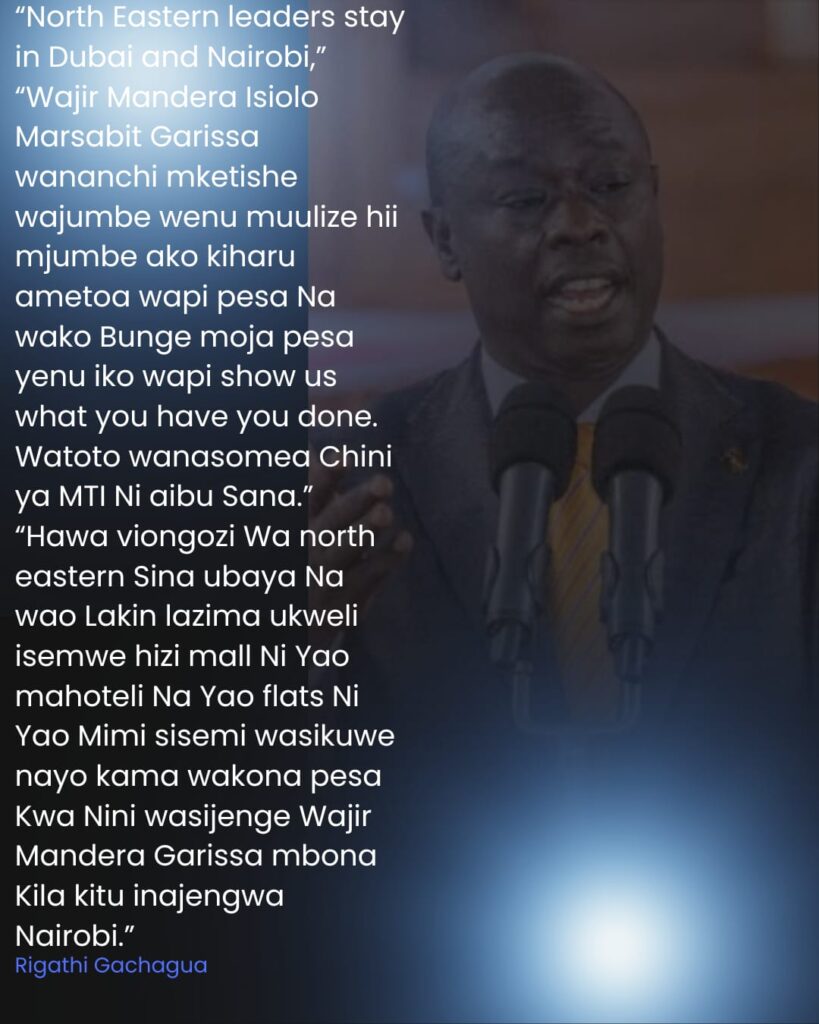
“Kwanzia Jana wanahabari wa izo kaunti tano walitishwa na viongozi kwa sababu hawataki kweli ijulikane.”
Gachagua claimed journalists from Garissa, Wajir, Mandera, Marsabit, and Isiolo were intimidated to prevent them from hosting the interview, arguing that leaders feared scrutiny over how public funds have been used since devolution began.
“Wangetaka kuendelea kudanganya wakaaji wa izo kaunti tano ati wako marginalized.”
He accused leaders of weaponizing the marginalization narrative to escape accountability while billions continue to flow into county coffers.
“Ni makosa sana viongozi kutisha wanahabari wasiongee na kiongozi wa Jamhuri ya Kenya ndio wananchi wasijue ukweli.”
Gachagua then laid out specific figures, insisting that financial records alone expose the scale of failure:
“Wajir had 99 billion, Garissa 81 billion, Mandera 119 billion so hakuna barabara, shule hakuna, there is nothing.”
He went further, breaking down CDF allocations in Mandera constituency by constituency:
“CDF katika Mandera six constituency, Mandera East so far wamepata 1.06 billion, Mandera West 1.7 billion, Mandera South 1.8 billion, Mandera North 1.8 billion, Banisa 1.5 billion and Lafey 1.6 billion.”
According to him, such figures should have completely transformed education infrastructure:
“Every ward in Mandera could have two boarding schools boys and girls school hii pesa inaeza jenga Mang’u, Alliance High School.”
He argued that the continued closure of radio stations and hostility toward journalists is driven by fear of such questions.
“Hii pesa ya CDF vile ilitumika na imetumika wapi ndio maana wamezima radio hawataki hii maswali.”
In a morally charged statement, Gachagua confronted leaders on religious grounds,
“If indeed you’re Muslims who have read the Quran, then tell me, why are you stealing from your people?”
Mandera Governor, Parklands Flats, Nairobi Dubai Leadership, and a Region Abandoned
Gachagua reserved some of his strongest words for what he described as leadership in exile leaders governing Northern Kenya from Nairobi and Dubai.
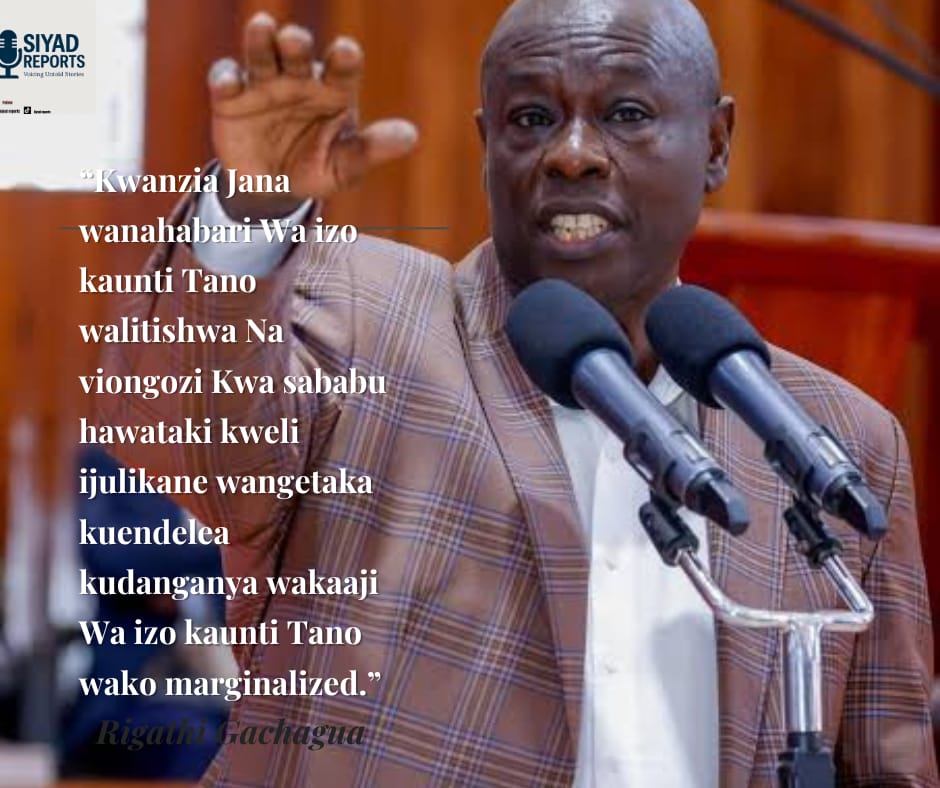
“North Eastern leaders stay in Dubai and Nairobi.”
He accused MPs and governors of abandoning their constituencies while continuing to draw public funds meant for development and oversight.
“MPs from Mandera and Wajir receive the highest mileage token between KSh 1.5 million and KSh 2 million every month to visit their constituencies, yet they do not go there, instead, they pocket the money.”
He criticized MPs who respond to accusations not by returning to the ground, but by staging media events in Nairobi,
“Juzi nilisema hawa MPs wa North Eastern hawaendi ground, wakaweka press conference Nairobi badala ya kufanya mahali wamechaguliwa.”
One of the most explosive allegations involved the Mandera Governor, whom Gachagua accused of constructing luxury apartments in Nairobi while his county lacks basic services:
“Mandera Governor is constructing 120 flats in Parklands, Nairobi, worth KSh 2 billion, while children living next to his own home are still schooling under a tree.”
He also questioned the source of such wealth,
“Huyu governor alikuwa speaker juzi hiyo pesa alitoa wapi?”
Gachagua clarified that he does not oppose wealth creation but condemns wealth built from public theft and invested away from suffering communities,
“Hawa viongozi wa North Eastern sina ubaya nao lakini lazima ukweli isemwe hizi mall ni zao, mahoteli ni zao, flats ni zao kama lazima uibe si upeleke nyumbani kuliko kujenga Lavington, Eastleigh, South C.”
He highlighted infrastructure collapse to underscore the contradiction,
“Ofisi ya governor inatumia generator ya 1970 there is no electricity in Wajir and Mandera.”
He added a striking detail on daily life,
“People of Mandera cross over to the border just to buy icecube during Ramadan.”
Gachagua also claimed leaders attempted to silence him financially,
“Kuna viongozi magavana kutoka North Eastern walinitumania wanataka kunihonga ndio nisiambie watu wao ukweli. Mimi siwezi kubali kununuliwa.”
When accused of tribalism, he dismissed the charge as diversionary,
“Niliona hawa wabunge wa North Eastern wanaita press conference kusema mimi ni mkabila, hawakutaja mambo ya njaa na ukame.”
Despite the harsh tone, he insisted his fight is not against communities.
Former Deputy President Rigathi Gachagua has sought to reassure the Somali community, saying he will oppose any attempts to create divisions between them and people from the Mt Kenya region.
He concluded with a challenge to leaders,
“When will you go home? kila mtu aende kwao alichaguliwa afanye maendeleo?”
Gachagua’s words may be seen as political warfare by some, but the reality on the ground is hard to ignore. While communities in Northern Kenya watch their livestock die and their children struggle for basic education, billions of shillings meant for development remain unaccounted for, and media outlets that ask tough questions are reportedly being threatened into silence. Whether one agrees with his tone or not, the issues he raised are not mere allegations they are a challenge to the conscience of leadership and the accountability of governance. So the question remains, if the people of Northern Kenya are truly not a priority, then what exactly are these leaders serving?