


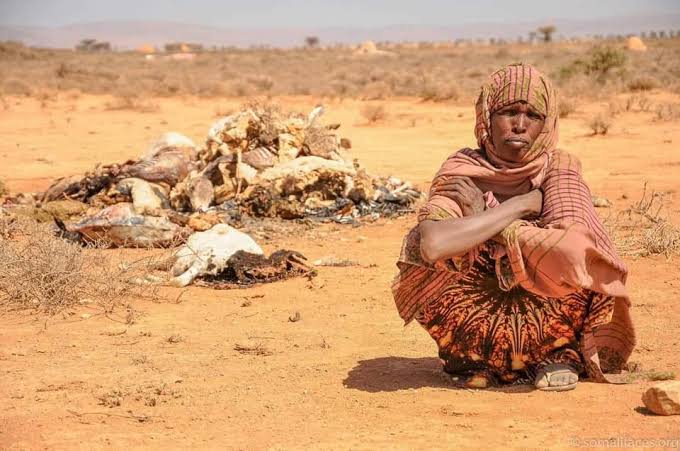
In Mandera, a goat that sold for Sh10,000 just months now goes for as little as Sh1,000 if a buyer can even be found. That single fact captures the scale of a humanitarian disaster unfolding across North Eastern Kenya, where drought has stripped livelihoods bare, erased years of resilience, and pushed entire communities to the edge. This is no longer a warning. It is a full-blown emergency happening in real time.
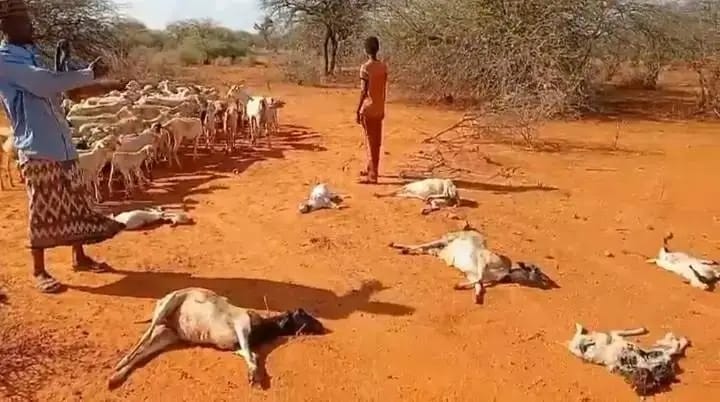
Across Mandera, Wajir, Garissa and neighbouring pastoral zones, the land has turned unforgiving. Water pans are dry, grazing fields are dust bowls, and the animals that once sustained families are collapsing where they stand. For pastoralist communities, livestock is not just property; it is food, school fees, social security, and dignity. When livestock dies or becomes worthless overnight the entire survival system crashes.
Markets that once bustled with traders and herders now tell a story of desperation. Sellers outnumber buyers. Weak animals fetch humiliating prices. Some pastoralists are forced to sell multiple goats just to afford a jerrycan of water or a few kilos of food. Others watch helplessly as their animals die before they can even be sold. The collapse of livestock prices is not an economic adjustment; it is the final signal of distress.
This drought is tearing through households unevenly but relentlessly. Women and children are bearing the heaviest burden. Mothers walk for hours under punishing heat in search of water, often returning with empty containers. Children drop out of school to help their families look for pasture or migrate with livestock, while others sit in classrooms too hungry to concentrate. Health risks are rising as malnutrition weakens immune systems, and access to healthcare becomes more difficult with each passing day.
What makes this crisis particularly painful is that it was neither sudden nor unforeseeable. Early warning signs were there failed rains, shrinking water sources, increasing livestock stress but response has been slow, fragmented, and inadequate. Each delayed intervention has compounded the suffering. In the north, drought does not arrive overnight; it tightens its grip gradually, until suddenly everything collapses at once.
A HUMANITARIAN CRISIS DEMANDING URGENT ACTION
At its core, the drought in North Eastern Kenya is a humanitarian crisis that demands immediate and coordinated intervention. Emergency water supply is no longer optional; it is a matter of survival. Communities need sustained water trucking, rehabilitation of boreholes, and protection of existing water sources. Food aid must reach the most vulnerable households before malnutrition claims more lives. Livestock support through destocking programs, fodder provision, and veterinary services could still save what remains of pastoral livelihoods if implemented urgently.
Beyond emergency relief, this crisis exposes deeper structural failures. North Eastern Kenya remains chronically underserved despite being among the regions most vulnerable to climate shocks. Cycles of drought repeat with alarming regularity, yet long-term investments in water infrastructure, climate adaptation, and livelihood diversification lag far behind the need. Each drought then becomes a reset button that erases progress and pushes communities further into poverty.
Climate change is amplifying these extremes. Rains are more erratic, dry spells longer, and recovery periods shorter. Pastoral systems that survived for generations are now under unprecedented strain. Without serious adaptation strategies such as sustainable water harvesting, drought-resilient livelihoods, and early response mechanisms these crises will only grow more frequent and more deadly.
The emotional toll of this drought cannot be separated from its physical impacts. For communities whose identity is deeply tied to livestock and land, watching animals die is not just economic loss; it is psychological trauma. There is grief in every carcass by the roadside, frustration in every failed attempt to secure assistance, and anger in every unanswered appeal. This is a region that often feels seen only when disaster strikes, and forgotten once the headlines move on.
As a journalist from this region, writing about this drought is not an abstract exercise. It is reporting on neighbours, relatives, and familiar faces. It is documenting pain that is deeply personal. Yet that proximity also carries responsibility: to tell the story clearly, truthfully, and without dilution. To ensure that this crisis is not reduced to statistics or seasonal inevitability, but recognized as a failure of preparedness and response.
The residents of North Eastern Kenya are not asking for sympathy. They are asking for action swift, sustained, and respectful of their realities. They are asking to be treated as citizens whose lives matter as much as those in more visible parts of the country. The price collapse of a goat in Mandera should shock the conscience of the nation, because it signals something far worse than a market fluctuation. It signals a collapse of survival.
If decisive intervention does not come now, the cost will be measured not only in lost livestock and livelihoods, but in lives. Drought may be a natural phenomenon, but mass suffering in its wake is a policy choice. And history will judge how Kenya responded when its northern communities were pushed to the brink.