


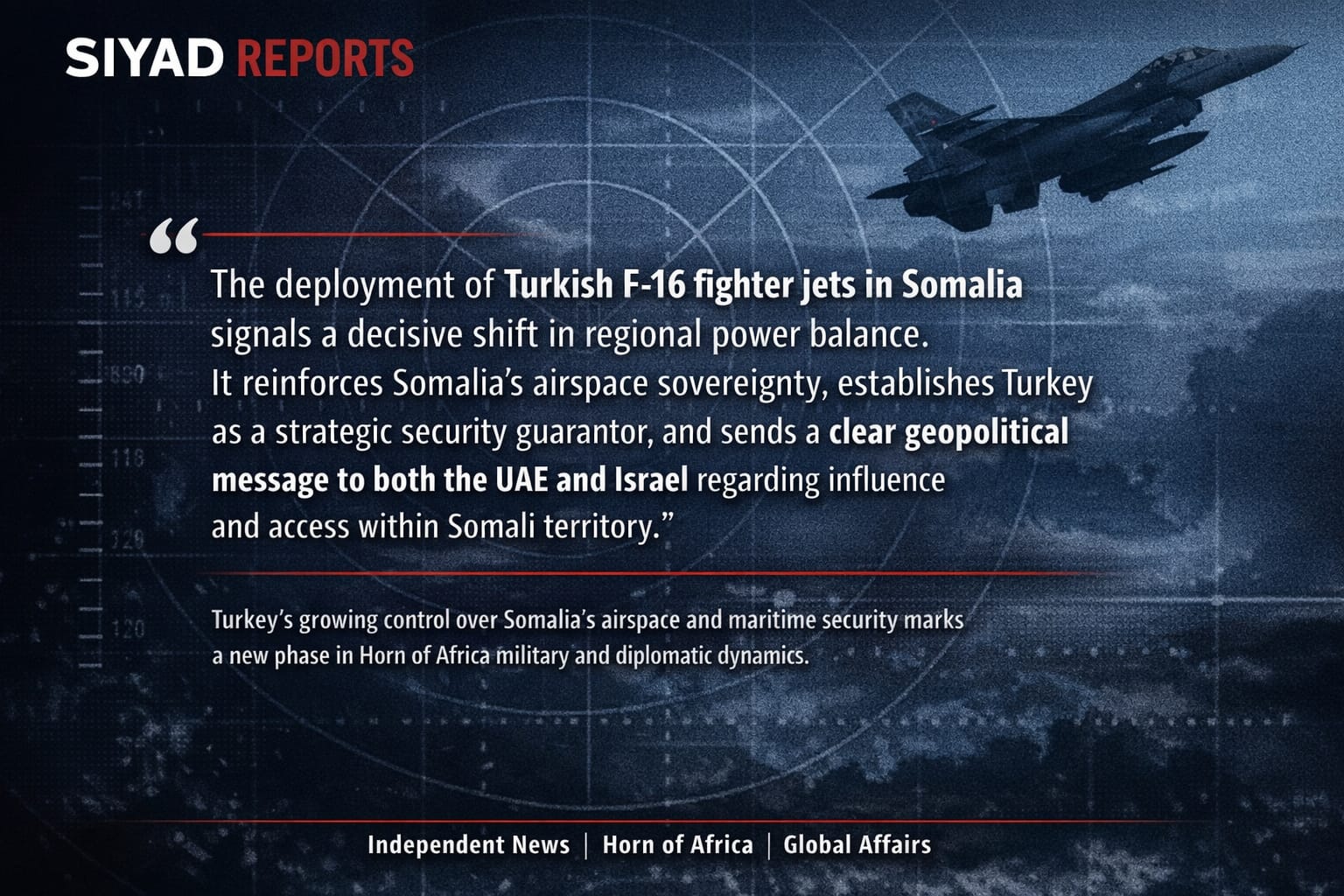
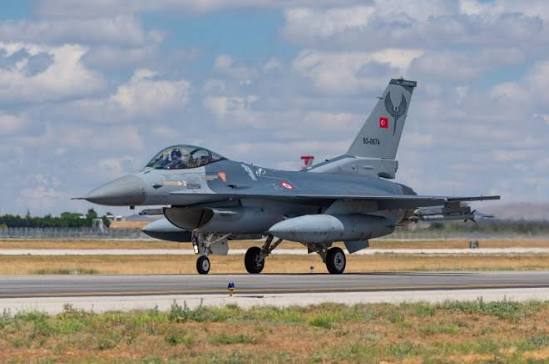
The arrival of Turkish F-16 fighter jets in Somalia represents a defining moment in the country’s evolving defense posture and signals a major transformation in regional military alliances across the Horn of Africa. The deployment of advanced fighter aircraft is not simply a tactical military maneuver but a strategic development tied to broader geopolitical calculations, sovereign defense structures, and the reshaping of air and maritime control within Somali territory.
On January 28, 2026, at least three Turkish F-16 Fighting Falcon jets landed in Mogadishu accompanied by T129 ATAK attack helicopters and heavy-lift military transport aircraft. Within days of arrival, the fighter jets were seen conducting rehearsals and aerial operational tests across Mogadishu’s airspace, a display that immediately captured both domestic and international attention. On Tuesday morning, residents of the Somali capital reported and recorded multiple sightings of the F-16 jets flying at controlled low and mid-altitude formations over Mogadishu, reinforcing growing public awareness of Turkey’s expanding operational military presence in Somalia. The presence of these aircraft reflects a shift from training-based military cooperation toward direct operational defense engagement between Turkey and Somalia.
Turkey’s expanded military posture follows a period of heightened diplomatic and geopolitical tension in the region, particularly after Israel’s recognition of Somaliland reignited debates surrounding Somalia’s sovereignty and territorial unity. In response to the diplomatic developments, Somali President Hassan Sheikh Mohamud on December 30,traveled to Ankara where he held high-level discussions with Turkish President Recep Tayyip Erdoğan. During the visit, Erdoğan repeatedly reaffirmed Turkey’s commitment to protecting Somalia’s sovereignty and territorial integrity, a statement widely interpreted as a signal of Ankara’s readiness to strengthen its strategic defense cooperation with Mogadishu.
The evolving military alignment gained further regional significance following reports that the United Arab Emirates previously utilized Somali airspace in facilitating the movement of Yemeni Southern Transitional Council leader Aidarous al-Zubaidi. Regional defense observers noted that al-Zubaidi, a prominent figure in Yemen’s internal political conflict and a leader widely viewed as aligned with UAE interests, was flown through Somali airspace toward Berbera. The incident sparked diplomatic concern within Somali federal leadership circles and is believed to have accelerated discussions between Mogadishu and Ankara regarding tighter airspace monitoring and enforcement mechanisms.
Analysts argue that the episode highlighted vulnerabilities within Somalia’s airspace management systems and underscored the strategic urgency of establishing stronger sovereign aerial control frameworks.
Strategic Expansion of Turkish Airspace and Maritime Security Presence
Turkey’s involvement in Somalia’s defense structure has now expanded beyond conventional military training missions into direct operational management of Somalia’s airspace monitoring and maritime security coordination. The deployment of F-16 fighter jets demonstrates Ankara’s growing role in supporting Somalia’s ability to monitor and regulate aerial movements within its internationally recognized borders. Defense analysts note that the aircraft provide Somalia with advanced radar surveillance capability, rapid interception readiness, and improved airspace enforcement infrastructure. Turkey’s expanding defense footprint also aligns with recently signed maritime security cooperation agreements designed to enhance Somalia’s ability to safeguard its extensive coastline, particularly as offshore energy exploration and regional shipping routes increase the geopolitical value of Somali territorial waters.
Another critical component of the deployment is the strategic positioning of the fighter aircraft within Somalia’s operational military geography. Military sources and regional defense observers indicate that the aircraft are expected to operate from facilities around Wargani in the Lower Shabelle region, an area that has increasingly become one of Somalia’s most sensitive strategic military zones. Wargani holds significant importance due to its proximity to Mogadishu while simultaneously providing expanded operational reach across southern and central Somalia as well as coastal maritime corridors. The location hosts several high-level military command elements, logistical coordination centers, and security installations supporting both Somali and allied defense operations. The area has also seen growing Turkish technical and engineering activity, including satellite-linked monitoring installations and defense infrastructure support units designed to strengthen aerial surveillance and communication capabilities.
From a strategic defense perspective, positioning advanced fighter aircraft in Wargani offers several military advantages.
The area allows rapid aerial response coverage across key Somali airspace sectors while maintaining close coordination with command headquarters in Mogadishu. Its geographical placement also enables efficient monitoring of maritime routes along Somalia’s southern coastline, which are increasingly important due to offshore energy exploration and international shipping movements. Additionally, Wargani’s relative distance from densely populated urban zones provides improved operational security and logistical flexibility for advanced military aviation assets. The establishment of forward-operating aerial infrastructure in the region reflects long-term planning aimed at creating an integrated air and maritime surveillance network capable of supporting Somalia’s evolving national defense strategy.
The Turkish-Somali security partnership has been steadily deepening over the past decade, with Ankara playing a central role in training Somali security forces, constructing military facilities, and supporting institutional defense reforms. However, the arrival of advanced fighter jets marks a transition from symbolic military partnership to active strategic defense coordination. Regional analysts interpret the move as part of Turkey’s broader Horn of Africa geopolitical engagement, positioning itself as a key security partner while simultaneously expanding its diplomatic, economic, and maritime influence in one of the world’s most strategically significant maritime corridors.
The development also reflects Somalia’s growing emphasis on asserting sovereign control over its airspace and territorial waters amid increasing foreign interest in the Horn of Africa. As regional alliances continue to evolve, Turkey’s operational presence in Somalia signals a new phase in the country’s defense policy direction, one that intertwines military modernization with diplomatic partnership and regional power balancing.