


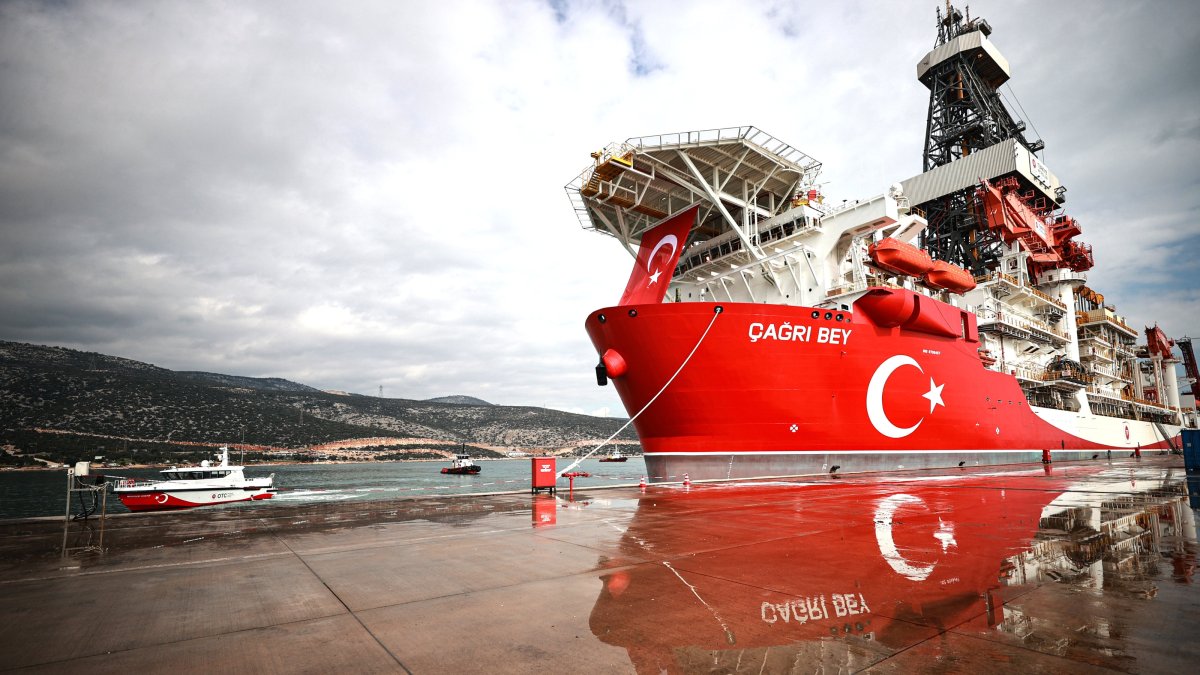
Turkey has officially dispatched its advanced deepwater drilling vessel, Çağrı Bey, to Somalia for offshore oil exploration, marking a historic escalation in Ankara’s strategic and economic footprint in the Horn of Africa. Speaking during a send-off ceremony in Mersin, Turkey’s Energy and Natural Resources Minister, Alparslan Bayraktar, confirmed that the vessel’s first well in Somalia has been named “Curad-1,” a Somali word used for a firstborn child symbolically describing what Ankara sees as the beginning of a new energy chapter between the two nations.
“In April, we named it Curad-1, which in Somali is the name given to newborn first babies. We also gave this name to our first well there,” Bayraktar said, expressing confidence that the vessel would soon reach its designated deepwater location and begin operations.
But beyond the ceremonial language lies a development that could reshape Somalia’s political economy and alter the geopolitical balance in the Horn of Africa.
This is not merely an energy story. It is about sovereignty, regional rivalry, maritime competition, military positioning, and the silent energy war unfolding beneath the waters of the Indian Ocean.
Turkey’s energy relationship with Somalia did not begin with this ship. Ankara has steadily expanded its influence in Somalia since 2011, when then-Prime Minister Recep Tayyip Erdoğan visited Mogadishu during the famine crisis becoming the first non-African leader to do so in decades. That visit opened the door to an era of Turkish engagement that extended far beyond humanitarian aid.
Over the years, Turkey built infrastructure, managed Mogadishu’s port and airport, established its largest overseas military base in Somalia, and became one of the federal government’s closest security and economic partners. What began as humanitarian diplomacy gradually evolved into strategic depth.
The offshore oil and gas agreement between Somalia and Turkey marked a turning point. Under the framework of energy cooperation and production-sharing arrangements, Turkey secured exploration rights in Somali waters. For Somalia, this represented hope a potential pathway to economic transformation after decades of instability. For Turkey, it represented access to untapped hydrocarbon reserves in a region increasingly contested by Gulf states, Western powers, and emerging players.
Somalia’s offshore basin is widely believed to contain significant hydrocarbon potential. Seismic surveys conducted in recent years suggested the possibility of commercially viable reserves. While exploration remains in early stages, industry estimates have speculated about billions of barrels in potential resources across the Somali basin. For a country struggling with fiscal deficits and dependence on foreign aid, even partial success would dramatically shift its economic trajectory.
Turkey’s ambition to produce 500,000 barrels per day of oil or equivalent hydrocarbons by 2028 and potentially double that figure through foreign partnerships underscores why Somalia matters. Ankara is seeking energy independence while expanding its global energy diplomacy. Somalia fits into that broader doctrine.
However, timing is everything.
The dispatch of Çağrı Bey comes at a moment of heightened geopolitical tension in the Horn of Africa. The recent diplomatic developments involving Somaliland and Israel triggered sharp regional reactions. While Somalia’s federal government has consistently defended its territorial integrity, reports of shifting diplomatic alignments in the region raised alarm bells in Ankara. Turkey, which positions itself as a key protector and partner of Somalia’s federal authority, moved swiftly to consolidate its presence.
Military cooperation between Turkey and Somalia has intensified in parallel with energy agreements. Ankara has trained Somali forces, provided advanced military hardware, and strengthened defense infrastructure. Reports of Turkish-supplied armored vehicles such as M60 tanks, M14 rifles, and advanced drone systems illustrate a broader pattern: energy diplomacy backed by security guarantees.
This dual-track strategy economic extraction alongside military support sends a clear signal to rival actors in the region. The Horn of Africa is not an empty geopolitical space. The United Arab Emirates has expanded port investments and influence across the Red Sea corridor.
Israel’s expanding diplomatic footprint in East Africa adds another dimension to regional competition. Egypt, Qatar, Saudi Arabia, and Western powers also maintain stakes in maritime security and trade routes.
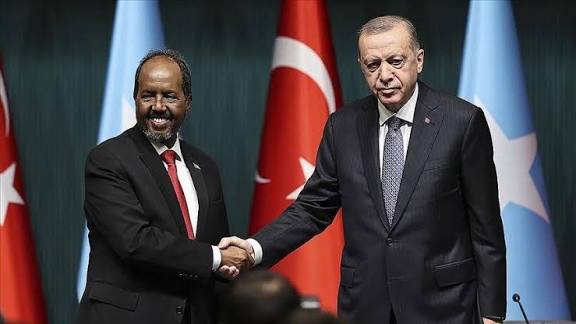
For Turkey, establishing Somalia as a strategic partner achieves multiple objectives. First, it secures maritime influence along the Indian Ocean corridor adjacent to the Bab el-Mandeb Strait a chokepoint critical to global trade. Second, it strengthens Ankara’s leverage in Red Sea geopolitics. Third, it reinforces Turkey’s broader narrative of being a decisive power in Muslim-majority regions.
The Çağrı Bey drilling vessel itself symbolizes Turkey’s growing technological capacity. Finalized and prepared for international deployment last year, it is equipped for deepwater operations, allowing exploration at significant depths that were previously inaccessible to Somalia. Deepwater drilling is complex and capital-intensive, requiring advanced seismic mapping, dynamic positioning systems, and subsea infrastructure. Turkey’s willingness to deploy such assets indicates high confidence in geological prospects.
Yet risks remain substantial.
Deepwater exploration carries financial, technical, and political risks. Somalia’s regulatory framework for hydrocarbons remains relatively young. Questions about revenue-sharing between the federal government and member states persist. Transparency mechanisms must be strengthened to prevent resource-driven political disputes a challenge that has destabilized many resource-rich states.
Furthermore, maritime boundaries in the region have historically been contested. While Somalia secured a favorable ruling in its maritime case with Kenya at the International Court of Justice, broader regional maritime sensitivities persist. Any significant hydrocarbon discovery could reignite dormant boundary tensions or trigger new competitive claims.
Security is another dimension. Offshore platforms require protection. Supply chains must operate without disruption. Piracy, though reduced compared to its peak years, has not vanished entirely from the Indian Ocean. Turkey’s expanded military cooperation may partly aim to ensure that energy infrastructure remains secure.
For Somalia, the potential upside is transformative. Oil revenues could fund infrastructure, healthcare, education, and national security. It could reduce reliance on donor funding and shift the balance from aid dependency to resource-driven development. But history warns that resource wealth without strong institutions can fuel corruption, conflict, and elite capture.
The symbolism of naming the first well “Curad-1” is powerful. In Somali culture, a firstborn represents continuity, inheritance, and hope. Ankara’s choice of that name reflects careful political messaging positioning Turkey not as an outsider extracting wealth, but as a partner in Somalia’s rebirth.
Still, regional observers view the move through a harder geopolitical lens. The Horn of Africa has increasingly become an arena of strategic rivalry between middle powers. Ports, military bases, maritime corridors, and now offshore hydrocarbons are pieces in a larger chessboard.
Turkey’s acceleration of energy and military engagement following shifting diplomatic developments in Somaliland demonstrates strategic urgency. By deepening its alliance with the federal government in Mogadishu, Ankara strengthens its influence before rival powers can consolidate alternative alignments.
The energy question also intersects with domestic politics in Turkey. As Ankara seeks to reduce its energy import bill and enhance economic resilience, overseas exploration becomes a national priority. Discoveries in the Black Sea boosted domestic confidence. Expanding to Somalia extends that ambition outward.
Meanwhile, for Somalia’s leadership, the partnership offers both opportunity and political capital. Delivering tangible progress on oil exploration can reinforce legitimacy at home. However, expectations must be carefully managed. Exploration does not guarantee production. Even successful discoveries require years of development before revenues materialize.
International oil markets add another layer of complexity.
Price volatility, global energy transition pressures, and decarbonization policies may influence long-term profitability. Somalia’s potential hydrocarbon era is emerging at a time when the world debates moving beyond fossil fuels.
Yet for developing nations with untapped reserves, hydrocarbons remain a powerful development lever. The challenge is ensuring that extraction aligns with sustainable governance and equitable distribution.
Turkey’s move also redefines Somalia’s external partnerships. While Mogadishu maintains relationships with multiple global actors, Ankara’s comprehensive approach combining infrastructure, defense, and energy positions it uniquely. Few partners offer such integrated engagement.
As Çağrı Bey sails toward Somali waters, it carries more than drilling equipment. It carries geopolitical weight, economic expectation, and strategic messaging. It represents Turkey’s ambition to project power beyond its immediate neighborhood. It embodies Somalia’s hope of converting offshore potential into national prosperity.
The Horn of Africa stands at a crossroads where energy, sovereignty, and foreign influence intersect. If Curad-1 proves commercially viable, it could mark the beginning of a new chapter in Somalia’s economic story. If it fails, the geopolitical realignments already set in motion will still endure.
For now, one thing is certain: Turkey’s deepwater gamble in Somalia is not just about oil. It is about shaping the future balance of power in one of the world’s most strategically significant regions.