


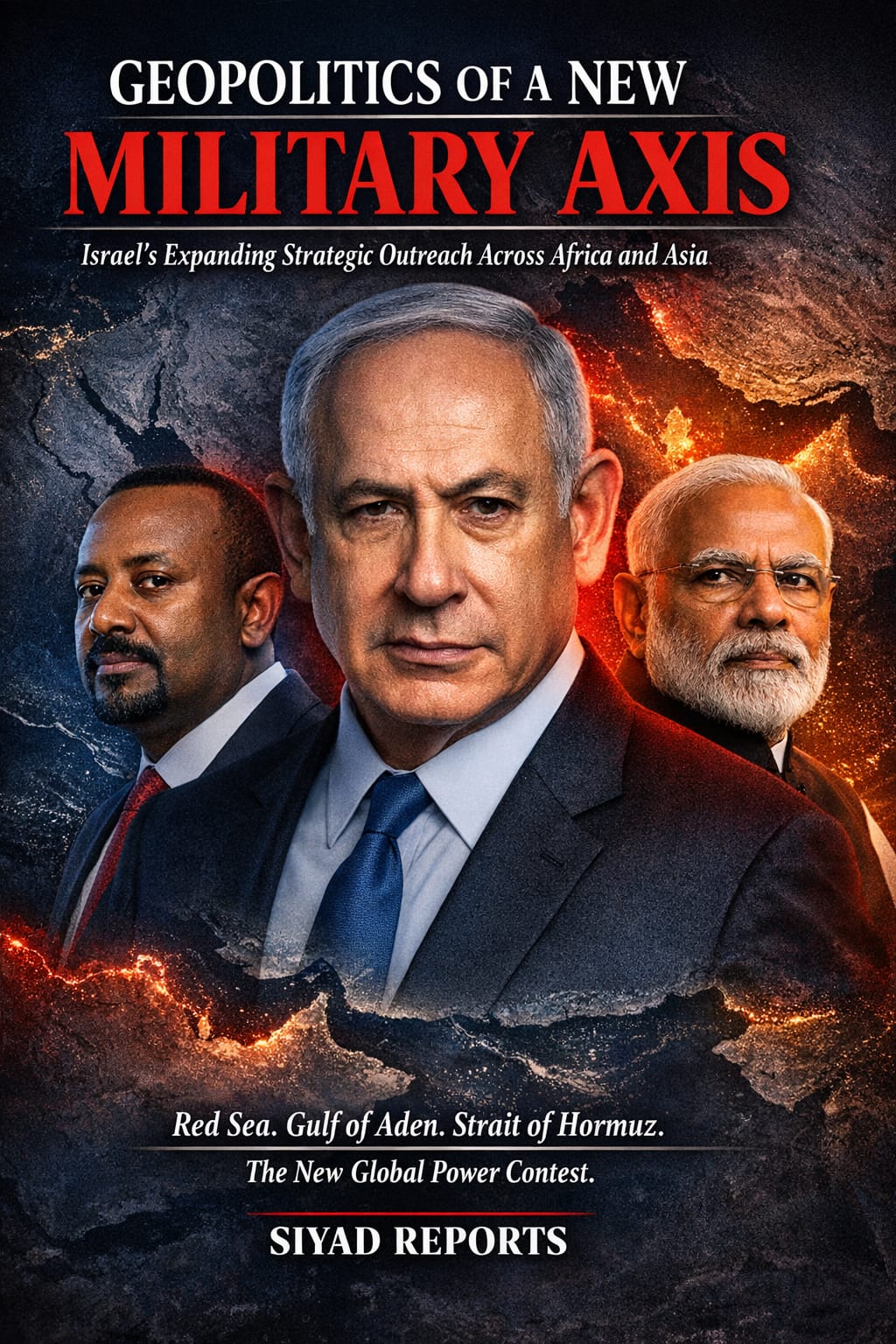
Global geopolitics is witnessing the gradual formation of competing strategic partnerships stretching across the Middle East, Africa and Asia, as major powers recalibrate their security and military influence. Recent diplomatic movements have triggered intense speculation following the visit of Isaac Herzog to Ethiopia and simultaneous diplomatic activity involving other global leaders in the region.
At the center of international attention is the growing perception that Israel is working to expand its security partnerships beyond traditional Western alliances. The diplomatic engagement between Israel and African leadership has intensified as geopolitical rivalry expands across maritime chokepoints and politically volatile regions.
The meeting between Herzog and Abiy Ahmed in Ethiopia has been interpreted by some analysts as part of a broader security and technological cooperation agenda. Ethiopia’s strategic location in the Horn of Africa, close to critical Red Sea maritime routes, makes it a valuable partner in any emerging regional security framework.
At the same time, the diplomatic visit of Narendra Modi to Israel and his discussions with Benjamin Netanyahu have reinforced speculation about a deeper security partnership between Israel and
Asian maritime powers.
Reports from diplomatic insiders suggest that Israel is exploring the possibility of forming a loosely coordinated security and intelligence partnership network similar in concept to existing military cooperation structures among Middle Eastern states such as Turkey, Saudi Arabia, Egypt and Pakistan. Although no official confirmation has been issued about a formal military pact, geopolitical observers argue that the pattern of diplomatic engagements suggests long-term strategic planning.
Israel’s strategic motivation is widely believed to be linked to counterbalancing the growing diplomatic and security influence of Turkey in Africa. Over the past decade, Turkey has expanded its economic, military and humanitarian presence across several African countries, including training programs, infrastructure investments and defense cooperation agreements.
Some political analysts argue that the competition is not purely military but also ideological and economic, reflecting broader struggles for influence across the Global South.
There are also unconfirmed discussions circulating in diplomatic circles regarding the possibility that Israel is considering including an East African partner in its emerging strategic network. Speculation has focused on whether the partner could be Ethiopia, given its regional weight, or Somaliland, which has been increasingly mentioned in informal geopolitical conversations following its search for international recognition.
However, neither Israel nor the governments involved have publicly confirmed any recognition or formal security agreement related to Somaliland.
Maritime Competition, From the Red Sea to the Strait of Hormuz
One of the most sensitive dimensions of the emerging geopolitical landscape is maritime security across some of the world’s most strategic shipping corridors.
The focus of international security planners is increasingly shifting toward the wider maritime belt connecting the Red Sea, the Gulf of Aden and the Strait of Hormuz. These waterways are vital arteries of global energy transportation and commercial shipping.
Security developments in these waters are particularly significant because any military escalation could disrupt global oil supply chains and international trade.
The Horn of Africa region sits near the entrance of the Gulf of Aden, a maritime zone that has historically experienced piracy, armed insurgencies and competing foreign military bases. Several global powers have established logistical and surveillance installations along the coastlines of the region in an effort to secure shipping lanes.
Strategists believe that the formation of overlapping security partnerships across the Middle East and Africa could lead to a new kind of naval diplomacy where alliances are defined less by ideology and more by maritime security interests.
The strategic logic behind such cooperation is linked to the protection of energy routes, counterterrorism operations and early warning intelligence sharing.
Some diplomatic commentators have suggested that Israel’s outreach is partially influenced by concerns about regional military cooperation among states aligned with Shia Islam political movements, particularly in the context of Iran’s growing influence network.
Regional observers often point to Iran’s support relationships with allied non-state actors and partner governments as a counterweight to Western-aligned security architectures in the Middle East.
Although there is no public declaration of a formal opposing alliance, the perception of competing geopolitical blocs is shaping diplomatic behavior across multiple continents.
The Silent Geopolitical Chessboard Between Africa, Asia and the Middle East
The contemporary security environment is increasingly characterized by indirect competition rather than open confrontation.
Israel’s diplomatic doctrine over the past decade has emphasized normalization of relations with African and Asian countries through technology transfer, agricultural innovation and defense cooperation.
Military technology collaboration is believed to be one of the core components of this strategy, particularly in areas such as surveillance systems, cybersecurity infrastructure and intelligence data analysis.
African states facing internal security challenges have shown interest in such cooperation because it offers modernization opportunities for their defense and communication systems.
Ethiopia’s position is particularly important due to its demographic weight, economic ambitions and geopolitical location near major maritime corridors connecting Africa to the Arabian Peninsula.
Meanwhile, India’s engagement with Israel reflects a broader Indo-Middle Eastern security convergence focused on counterterrorism intelligence sharing and naval security.
Some analysts describe this pattern as an emerging “security triangle” connecting South Asia, the Middle East and parts of Africa.
Turkey’s African Diplomacy and Strategic Competition
Turkey’s growing influence across the African continent has reshaped regional diplomacy.
Through development projects, military training agreements and diplomatic investments, Turkey has positioned itself as an alternative partner to Western and Middle Eastern powers.
The competition between Turkish and Israeli diplomatic outreach is not necessarily direct confrontation but rather a race for influence through economic development and security cooperation.
In the Horn of Africa, this competition is visible in port management interests, trade infrastructure projects and defense advisory partnerships.
Some intelligence analysts believe that future geopolitical rivalry in Africa may increasingly revolve around access to maritime ports rather than territorial control.
The Uncertain Future of Regional Security Architecture
Despite widespread speculation, there is no official confirmation that Israel is forming a formal military pact comparable to historical Cold War-style alliances.
Diplomatic experts caution that modern geopolitics is more fluid, relying on flexible partnerships rather than rigid military treaties.
The interactions between Israel, Asian powers and African governments may instead represent what analysts call “network diplomacy” a system where countries maintain multiple overlapping strategic relationships.
The possibility that East Africa could become a focal point of such network diplomacy reflects the region’s rising strategic value.
However, unresolved political tensions, maritime security challenges and ideological rivalries continue to complicate long-term alliance formation.
A New Era of Strategic Uncertainty
The diplomatic movements involving Israel, Ethiopia and India are part of a broader transformation of global power structures.
The intersection of maritime security, technological cooperation and regional influence competition suggests that the coming decade may witness intensified geopolitical positioning across the Red Sea corridor and surrounding regions.
Whether these developments will eventually crystallize into a formal military alliance remains uncertain. What is clear, however, is that Africa, the Middle East and Asia are becoming central arenas in the evolving architecture of global security.
As world powers navigate this shifting landscape, smaller states situated along strategic maritime routes may find themselves playing increasingly important roles in shaping the future of international diplomacy.