


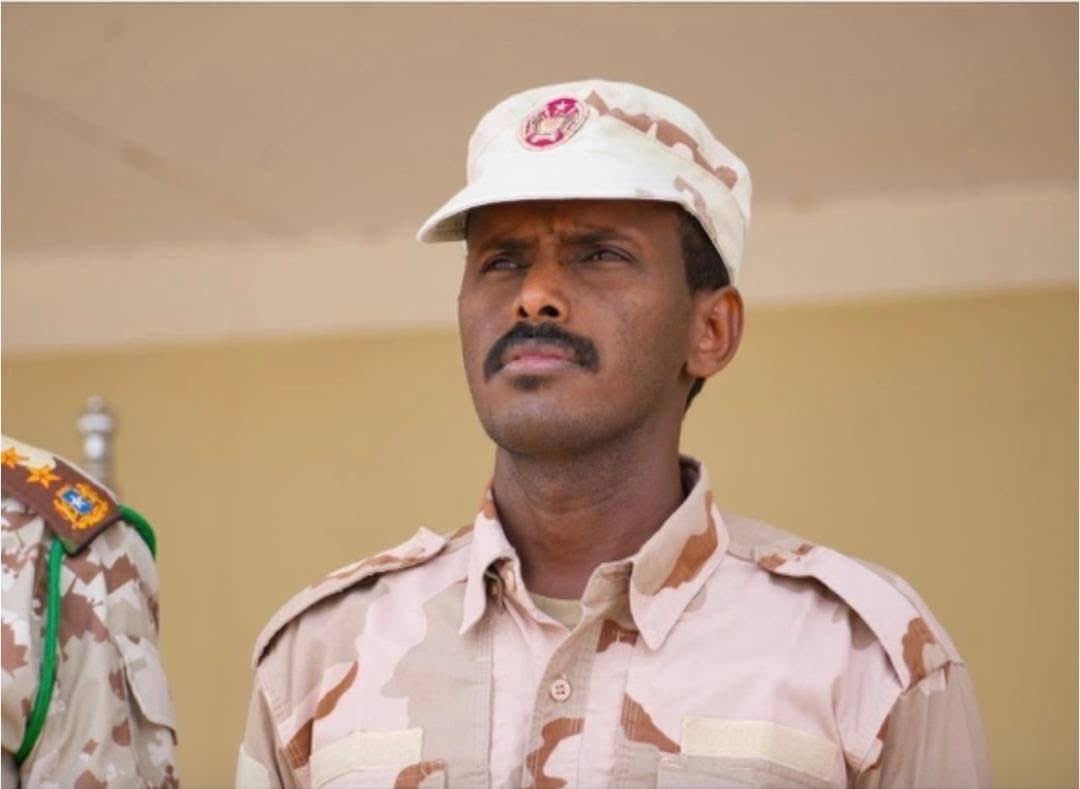
The appointment of Major General Cabdirsaaq Maxamuud Xaaji, widely known among Somalis as Qaloombi, as the new Commander of the Somali Air Force marks a significant turning point in the country’s ongoing efforts to rebuild and modernize its aerial defense capabilities. The move comes at a time when the Horn of Africa’s strategic military balance is increasingly shaped by regional security concerns, airspace sovereignty debates, and growing investment in military aviation infrastructure.
Known by many within military circles as Brigadier General “Eritrea” due to his training background, Cabdirisaaq brings a reputation built on discipline, operational experience, and leadership development gained during his military training abroad.
The new commander’s rise reflects Somalia’s broader military reform trajectory under the federal government of Somalia, which has been working to rebuild national security institutions after decades of instability. His previous role leading Somali troops trained in Eritrea positioned him as a figure familiar with modern military training structures, command discipline, and strategic operational coordination.
Military analysts within the region have often highlighted the significance of overseas training programs in shaping the next generation of Somali defense leadership, particularly as the country attempts to rebuild its armed forces from the ground up.
The appointment also reflects Somalia’s growing ambition to strengthen its air defense capabilities at a time when regional airspace security is becoming increasingly complex. Over the past few years, discussions surrounding the modernization of Somalia’s airpower have gained momentum, especially as the government seeks to reassert full control over its national airspace and reduce reliance on external protection mechanisms.
The Somali government has been gradually working to enhance its aviation security framework, focusing on surveillance systems, pilot training, and acquisition of combat-ready aircraft.
One of the most discussed developments in Somalia’s military aviation strategy is the reported plan to acquire fighter jets from Pakistan. Although official technical details about the procurement remain limited, the potential acquisition is widely viewed as part of a long-term effort to rebuild Somalia’s air combat readiness.
Military observers have noted that such a move would represent one of the most significant steps in Somalia’s post-conflict defense restructuring, especially considering the historical gaps that have existed in the country’s operational air force capabilities.
The idea of integrating new jets into the Somali defense structure is closely linked to concerns over airspace protection and territorial sovereignty. Somalia’s geographic location along the Horn of Africa places it at the intersection of important maritime and aerial corridors connecting the Middle East, Africa, and international shipping routes.
As a result, control of airspace is not only a military matter but also an economic and diplomatic priority. Strengthening aerial monitoring and response capabilities is seen as essential in safeguarding national resources, maritime zones, and strategic infrastructure.
International cooperation has also played a major role in Somalia’s evolving air defense narrative. The involvement of Turkey in providing military support and technical assistance has been widely reported as part of a broader security partnership between the two countries. Turkish defense institutions have previously contributed to training Somali military personnel, improving command systems, and supporting institutional capacity building within Somalia’s security forces.
Security analysts have noted that Turkey’s engagement in Somalia extends beyond military hardware and includes training programs, airport security modernization, and aviation management support. The strategic partnership is often viewed as part of Ankara’s broader diplomatic and economic engagement across Africa, where military cooperation is combined with infrastructure development and humanitarian initiatives.
The Horn of Africa region has experienced periodic tensions involving airspace monitoring and security surveillance, prompting Somalia to accelerate its air defense modernization plans. While officials have not publicly confirmed any specific external aerial threat, security discussions within military and diplomatic circles have emphasized the importance of strengthening early warning systems and rapid response aviation units.
The expansion of Somalia’s air capabilities is therefore being framed as a defensive modernization effort rather than an offensive military strategy.
Major General Cabdirsaaq’s leadership is expected to focus on professionalizing the air force structure, improving pilot readiness programs, and enhancing coordination between aviation intelligence units and ground security operations.
Military insiders suggest that his experience with disciplined training environments may influence reforms aimed at strengthening operational standards within the Somali air service.
The rebuilding of the Somali Air Force is particularly significant given the historical legacy of aviation in the country. Before the collapse of central governance structures in the early 1990s, Somalia maintained a relatively functional air military capability.
The current modernization push is therefore seen by many Somalis as a restoration project rather than the creation of a completely new institution.
Public reaction to the appointment has been largely positive, especially among younger military professionals and national security commentators who view leadership renewal as essential for institutional transformation.
Many discussions across Somali communities have highlighted the symbolic importance of appointing a commander with overseas military training experience, arguing that exposure to international military standards may contribute to operational professionalism.
The broader strategic picture also reflects Somalia’s intention to become more self-reliant in defending its national airspace. For years, external assistance has played a role in managing parts of Somali air traffic security, but policymakers are increasingly advocating for locally managed systems supported by international partnerships rather than dependency.
The potential acquisition of aircraft from Pakistan is also interpreted as a signal of deepening military-diplomatic relations between Mogadishu and Islamabad.
Defense cooperation between the two countries has historically included training exchanges and technical consultations. If finalized, the jet procurement would represent a major milestone in Somalia’s defense modernization journey.
At the regional level, Somalia’s military aviation development is being closely monitored by neighboring states due to the strategic implications of a strengthened Somali Air Force. However, officials in Mogadishu have repeatedly emphasized that the modernization program is aimed at defensive deterrence, border protection, and safeguarding national sovereignty.
Economic considerations are also intertwined with the defense strategy. A more secure airspace is expected to support commercial aviation growth, international investment confidence, and the expansion of civilian transportation networks. Somalia’s leadership has often linked security sector reform with broader national development goals.
As Major General Cabdirsaaq assumes command, expectations are high that the Somali Air Force will undergo structural reforms focusing on training, maintenance systems, and operational readiness.
Military sources suggest that pilot training partnerships, technological upgrades, and intelligence coordination will likely form the backbone of the new leadership’s agenda.
The future of Somalia’s air defense capabilities will depend not only on equipment acquisition but also on institutional stability, sustainable funding, and international collaboration.
The appointment of a new commander signals a clear message that Somalia is entering a phase where rebuilding military professionalism is becoming a national priority.
For many observers across the Horn of Africa, the transformation of the Somali National Armed Forces and its air component represents more than a military story; it reflects the country’s broader ambition to reclaim stability, assert sovereignty, and position itself as a more secure and strategically influential state in the region.
As developments continue to unfold, the leadership of Major General Cabdirsaaq Maxamuud Xaaji will be watched closely as Somalia charts the next chapter of its aerial defense revival.