

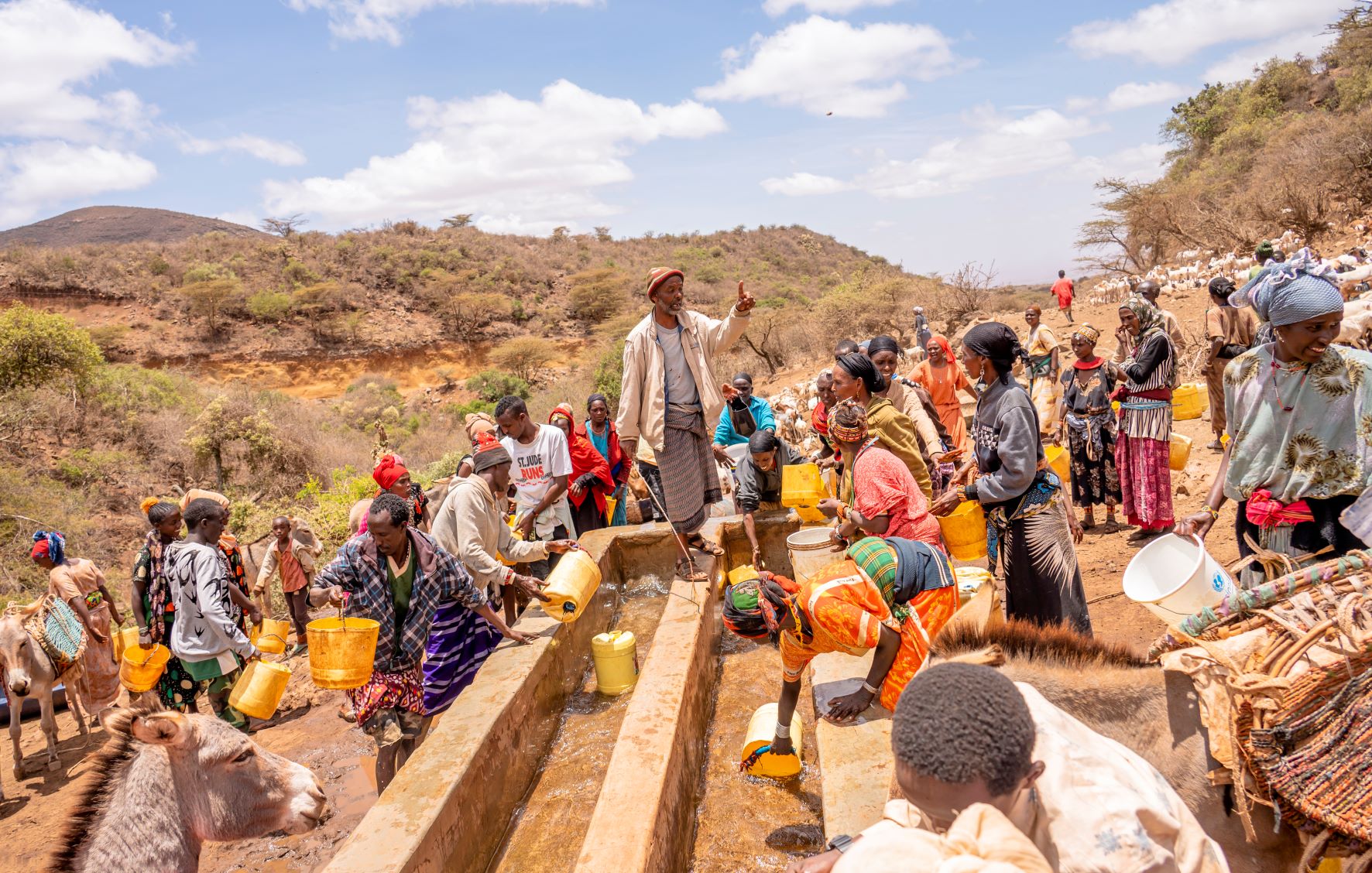
A Region in Crisis
North Eastern Kenya is experiencing one of the most severe droughts in decades, pushing millions of pastoralists, herders, and rural families to the brink of famine. Garissa, Wajir, and Mandera the three counties that make up the region are facing prolonged dry spells, failed rains, depleted water sources, and devastating livestock losses. These conditions have serious social, economic, and environmental consequences for the largely pastoral communities.
The Current Drought Situation
Failed Rainfall Seasons and Climatic Impact
Meteorological data indicate that the October–December 2024 rains failed, followed by the March–May and October–December 2025 seasons. This lack of precipitation has placed the region in severe drought conditions. Wajir County Governor Ahmed Abdullahi who is also the Council of Governors Chairman has warned that livestock a primary source of livelihood are too weak to reach grazing and watering points, signaling a crisis worse than previous years.
Drought Classification by NDMA
According to the National Drought Management Authority (NDMA), Mandera County is in the ‘Alarm’ drought phase, requiring urgent humanitarian intervention. Wajir and Garissa counties are classified in the ‘Alert’ phase, indicating worsening conditions that could escalate into a full-scale crisis without immediate action.
Food and Water Scarcity
The drought has dried up water sources, leaving both people and livestock struggling for survival. Pastoralists report significant livestock losses due to dehydration and lack of pasture, exacerbating food insecurity and poverty. More than 2.1 million people in northern Kenya are facing crisis-level hunger, particularly in Garissa, Wajir, Mandera, Turkana, and Tana River counties.
Regional Economic Impact
Livelihoods and the Pastoral Economy
Northern Kenya’s economy relies heavily on livestock camels, cattle, goats, and sheep for both food and income. Prolonged drought is forcing herders to travel longer distances for water and pasture, increasing the risk of livestock loss, conflicts over resources, and migration. Smallholder farming already limited due to arid conditions has largely collapsed, leaving communities dependent on strained local markets for food.
County Funding and Devolution
Total Allocations Since Devolution
Since 2013, county governments have received funding through Kenya’s Equitable Share system:
Mandera: KSh 116.4 billion
Wajir: KSh 94.1 billion
Garissa: KSh 80.0 billion
These allocations cover health, infrastructure, water, education, and other key services.
Recent Development Funding
In late 2025, the national government released additional development funds:
Mandera: ~KSh 4.05 billion
Wajir: ~KSh 3.47 billion
Garissa: ~KSh 2.93 billion
These resources are intended for healthcare, water infrastructure, roads, and drought mitigation efforts.
Government and Humanitarian Response
Despite these allocations, local leaders report that the severity of the drought has outpaced county and national response capacities. Governors from Wajir, Mandera, and Garissa have called for urgent national and international intervention to prevent further loss of life and livelihoods.
Cash Transfers and Food Distribution
The government, through the Hunger Safety Net Programme (HSNP) and NDMA, has disbursed targeted cash transfers to vulnerable households. Members of Parliament representing the affected counties have also coordinated the distribution of food supplies, including cereals, pulses, and cooking essentials, to provide immediate relief to families facing severe food insecurity.
Challenges in Financing and Implementation
Delays in Funds Disbursement
County leaders have repeatedly urged the National Treasury to release pending equitable share funds promptly. Delays have hindered the counties’ ability to maintain essential services such as water supply, livestock support, and food distribution, leaving vulnerable communities at greater risk.
Competing Needs and Budget Pressures
Large portions of county budgets are consumed by recurrent expenditures such as salaries and operational costs, leaving limited resources for development projects and long-term drought mitigation. Programs such as borehole drilling, irrigation schemes, and rangeland restoration often face funding gaps, reducing the counties’ capacity to build resilience against recurring droughts.
Human Stories, Lives on the Line
“The wells are dry, our animals are dying, and we have no money to buy food. Our children are weakening every day.” Resident, Wajir County. Families in the region are struggling with food insecurity, school dropouts, and rising prices as the drought devastates daily life.
Conclusion, A Critical Moment for North Eastern Kenya
The drought affecting Garissa, Wajir, and Mandera is not only a natural phenomenon but a humanitarian and economic crisis. While devolved funds have supported essential services, the scale and severity of the drought demand urgent national, regional, and international attention.
MPs from the North Eastern counties and neighboring ASAL areas are pushing the national government to declare the ongoing drought a national disaster. They warn that repeated failed rainy seasons and severe water shortages have pushed over 2.1 million people into crisis-level food insecurity if immediate action is not taken. Leaders highlighted soaring food prices, livestock losses, and strained community resources, calling for expanded emergency aid, water trucking, borehole drilling, and long-term drought resilience initiatives.
Information in this article was compiled from NDMA reports, county officials.”