

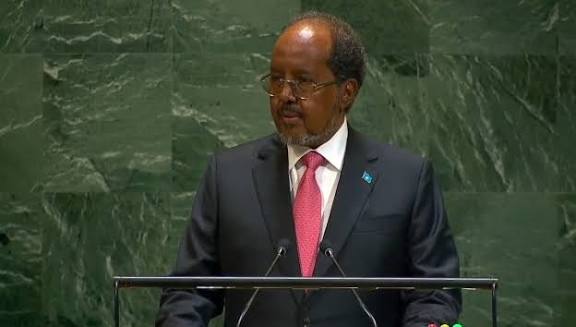
President of the Federal Republic of Somalia, Hassan Sheikh Mohamud, is expected to travel to New York, United States, where he will preside over a session of the United Nations Security Council (UNSC) a historic moment that will make him the first Somali president to chair a Security Council meeting. Beyond its symbolic weight, the event represents a significant shift in Somalia’s international posture, reflecting the country’s evolving role from a state long defined by crisis to one increasingly asserting itself within global diplomatic structures.
For much of the past three decades, Somalia has appeared before the Security Council primarily as an agenda item discussed in relation to peacekeeping mandates, sanctions, humanitarian emergencies, and counterterrorism operations. The opportunity to chair the Council reverses that dynamic, placing Somalia not merely at the table, but at the head of it. This moment signals growing international confidence in Somalia’s federal institutions and acknowledges the country’s gradual political stabilization, despite persistent security and governance challenges.
President Hassan Sheikh’s presence in New York comes at a time of heightened geopolitical competition in the Horn of Africa, the Red Sea corridor, and the wider Middle East. As global powers recalibrate their interests across Africa, Somalia’s geographic position, maritime access, and security relevance have elevated its strategic importance. Chairing the UNSC offers Somalia a rare opportunity to shape international narratives, articulate its national interests directly to major powers, and reinforce its status as a sovereign state whose voice matters in global security deliberations.
The Message Somalia Is Expected to Deliver to the World
At the core of President Hassan Sheikh’s expected address to the Security Council is Somalia’s sovereignty and territorial integrity. Diplomatic sources suggest the president will use the platform to reaffirm Somalia’s internationally recognized borders and to warn against external political actions that Mogadishu views as undermining national unity.
This message is particularly significant amid renewed international debates surrounding Somaliland, a self-declared administration that Somalia continues to regard as an integral part of its sovereign territory.
Recent speculation around potential Israeli recognition of Somaliland has intensified diplomatic sensitivities. For Somalia’s federal government, such a move if realized would not merely be a bilateral issue but a fundamental challenge to international legal norms that protect state sovereignty and territorial integrity. By raising the issue within the UN framework, Somalia seeks to elevate the matter beyond regional politics and anchor its position in international law, UN charters, and long-standing Security Council resolutions.
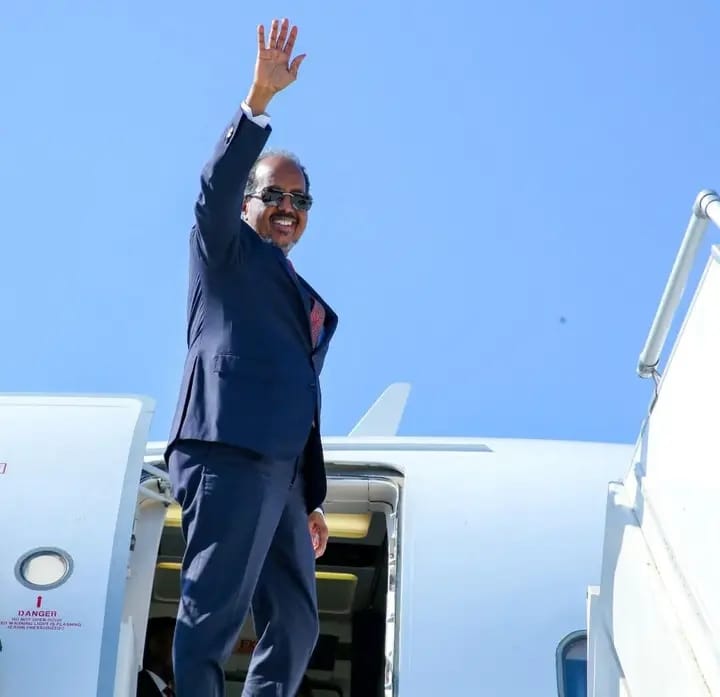
The president is also expected to address regional security dynamics, positioning Somalia as both a frontline state in the fight against terrorism and a key contributor to broader stability in the Horn of Africa. The ongoing campaign against Al-Shabaab remains central to Somalia’s security narrative, and the president is likely to call for sustained international support while emphasizing the importance of Somali-led solutions. This includes transitioning from externally driven security mechanisms to nationally owned institutions capable of sustaining long-term stability.
Beyond Somalia’s borders, President Hassan Sheikh may highlight how instability in neighboring countries such as Sudan’s conflict, Ethiopia’s internal challenges, and the militarization of the Red Sea has direct implications for Somalia’s security and economic prospects. By framing Somalia’s challenges within a regional context, the president can underscore the argument that Somalia’s stability is not an isolated concern, but a critical component of wider regional and international security.
In addition, the address is expected to touch on multilateralism and international cooperation, reinforcing Somalia’s commitment to the UN system at a time when global consensus is increasingly strained. By chairing the Security Council, Somalia positions itself as a defender of multilateral diplomacy and international norms, a notable shift for a country that once struggled to maintain basic state functions.
Diplomatic Realignments and Somalia’s Strategic Calculations
Somalia’s elevated role at the UN comes against the backdrop of shifting regional alliances and strained bilateral relationships, particularly with the United Arab Emirates. Once a key security and economic partner, relations between Mogadishu and Abu Dhabi have deteriorated over disagreements linked to security cooperation, political influence, and competing regional agendas. These tensions reflect broader geopolitical rivalries playing out across the Gulf, the Horn of Africa, and the Red Sea basin.
Rather than retreating diplomatically, Somalia has responded by diversifying its foreign policy approach, seeking engagement through multilateral institutions and expanding diplomatic ties beyond traditional partners.
Chairing the Security Council fits squarely within this strategy, allowing Somalia to offset bilateral frictions by reinforcing its legitimacy within the international system.
At the same time, Somalia is navigating an increasingly complex geopolitical environment shaped by great-power competition. The United States, China, Russia, and European powers all maintain strategic interests in the Horn of Africa, ranging from counterterrorism and maritime security to trade routes and military access. Somalia’s role at the UNSC provides an opportunity to engage these powers collectively, rather than being drawn into zero-sum alignments that could compromise its sovereignty.
The timing of this diplomatic moment is particularly significant. With conflicts escalating globally from Eastern Europe to the Middle East and international institutions under pressure, Somalia’s leadership of a Security Council session offers a platform to assert the relevance of African voices in global decision-making. It also allows Somalia to challenge the perception that African states are merely arenas for external competition, rather than actors with agency and strategic interests of their own.
Domestically, the UN engagement strengthens the federal government’s political narrative. It reinforces the message that Somalia is reclaiming its place in the international community and that its leadership is capable of engaging at the highest levels of diplomacy. This symbolism carries weight not only internationally, but also within Somalia’s internal political landscape, where questions of legitimacy, unity, and national direction remain deeply contested.
Ultimately, President Hassan Sheikh’s appearance at the UN Security Council represents more than a diplomatic first. It reflects Somalia’s broader effort to secure diplomatic victories alongside security gains, recognizing that sovereignty in the modern world is defended not only on the battlefield, but also in international forums where norms, recognition, and legitimacy are negotiated.
As Somalia steps into the chair of the Security Council, it sends a clear message: the country is no longer content to be a passive subject of international concern. It is asserting itself as a state with defined interests, legal standing, and a voice that must be heard. In an era of fragmented alliances and contested global order, Somalia’s moment at the UN underscores its determination to shape its own diplomatic destiny and to defend its unity and sovereignty on the world’s most influential stage.