


Northern Kenya has long occupied a complex and often overlooked position within Kenya’s national development narrative geographically vast, culturally diverse, and historically underdeveloped despite its strategic importance along key border corridors. For decades, the region’s challenges have been compounded by systemic marginalisation, climatic hardships, insecurity, and infrastructural neglect. President William Samoei Ruto’s recent development tour across Wajir County and the wider North Eastern region signals a determined effort by the national government to change this trajectory, blending symbolic recognition with tangible interventions designed to reposition Northern Kenya as an integral part of the country’s socio-economic landscape.
At the heart of the President’s tour was the announcement that this year’s Madaraka Day celebrations will be held in Wajir County, marking the first time a national holiday is hosted in the Northern Frontier.
President Ruto officiated the
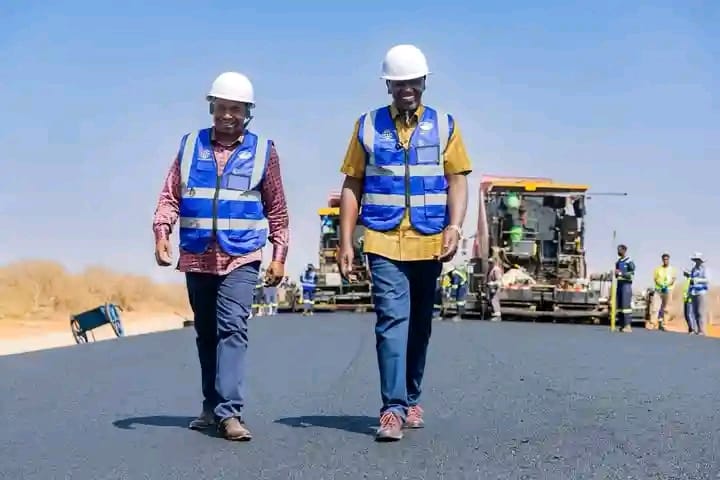
groundbreaking of a 10,000-seater Wajir Stadium, which will host the celebrations, describing the initiative as a signal that “every Kenyan is equal and every region of this country deserves recognition and development.” Government leaders and regional stakeholders framed the visit as a milestone that combines symbolism with action. Beyond the stadium, the tour highlighted multiple strategic infrastructure projects poised to transform the socio-economic fabric of North Eastern Kenya. Foremost among these is the Isiolo-Wajir-Mandera highway, a 750-kilometre road corridor designed to enhance connectivity within the region and with neighbouring countries. Officials argue that the highway will not only facilitate cross-border trade with Somalia and Ethiopia but also improve access for government service delivery, enabling remote communities to connect with health, education, and economic opportunities that were previously out of reach.
Similarly, the President underscored the region’s energy transformation agenda. The planned integration of Wajir into the national electricity grid through a transmission line from Ethiopia is expected to end persistent power shortages that have historically limited industrial and commercial growth. Interim solutions, such as the deployment of a 300-megawatt generator, are already in place to stabilise supply. Complementing these initiatives are solar hybrid electrification projects aimed at connecting 20,000 households across six sub-counties, reducing reliance on diesel generators and promoting environmentally sustainable energy solutions.
Healthcare infrastructure is another critical pillar of the region’s transformation. The government has committed to expanding the Wajir County Teaching and Referral Hospital, with regional leaders emphasising the importance of improving access to specialized care. Plans include establishing advanced treatment facilities, including cancer care centres, mirroring similar developments in other regions like Kisii. Such investments are not only designed to enhance medical outcomes but also to address historical inequities in healthcare availability, a concern that has long troubled communities in arid and semi-arid areas of the country.
Aviation infrastructure has also received a significant boost, with the expansion of Wajir Airport and the formalisation of the Wajir Airbase, complete with its own budget and operational status. These upgrades are intended to facilitate both economic and security objectives, enhancing regional connectivity and allowing Northern Kenya to better participate in national and cross-border trade and security collaborations.
President Ruto positioned these projects as part of a deliberate strategy to integrate Northern Kenya into the national economy while addressing historical injustices. “To further advance balanced national development, we are building infrastructure that connects Northern Kenya to the rest of the country,” he said. Regional leaders echoed similar sentiments, emphasizing that improved infrastructure could unlock Northern Kenya’s economic potential, particularly in livestock trade, cross-border commerce, and renewable energy investment.
Governor Ahmed Abdullahi linked current development initiatives to decades of advocacy by Northern Kenya communities seeking equitable government resource allocation. “The promises on roads, electricity, and connectivity are the single antidote to decades of marginalisation,” he said.
The nationwide NYOTA youth empowerment programme also represents a significant social intervention within Northern Kenya, where youth unemployment remains a critical challenge. By combining financial grants, mentorship programmes, and access to credit, government officials hope to stimulate entrepreneurship and reduce economic vulnerability among young populations. The programme has already distributed billions of shillings nationally, with thousands of beneficiaries emerging from arid and semi-arid regions.
Beyond infrastructure and economic programmes, drought mitigation remains a central concern for Northern Kenya communities heavily dependent on pastoralism.
Regional leaders have collectively called on the government to elevate drought response as a national priority, citing the urgent need for structured interventions to safeguard livelihoods, livestock, and food security. President Ruto responded by highlighting the government’s commitment, noting that over KSh 10 billion had been allocated in the past three months alone for drought response initiatives. Leaders emphasised that the support must be predictable, sustained, and integrated with broader development strategies. “Drought response cannot be an afterthought. It must be central to our development strategy,” one senior regional official said.
Transforming Marginalisation into Opportunity
The President’s development tour further reinforced the region’s long-standing call for equitable treatment and recognition after decades of systemic neglect. Northern Kenya’s communities have endured repeated cycles of underdevelopment, limited service delivery, and political invisibility. Past policies, including the widely criticised Sessional Paper No. 10 of 1965, entrenched these inequalities by prioritising agriculturally productive regions while sidelining arid and semi-arid areas.
Governor Abdullahi highlighted the significance of the current interventions, framing them as tangible proof of the government’s intent to integrate the region into the national development agenda. “Sisi kama viongozi tunajua mheshimiwa Rais cannot bring 49 rivers here… but his actions day by day are reversing sixty years of marginalisation,” he said, emphasising that systemic change requires coordinated action between national and local leadership.
Equally important, regional leaders and the President addressed the issue of leadership accountability and community participation. Past perceptions of neglect, combined with allegations of corruption by some local politicians, had created a sense of disillusionment among Northern Kenya residents. By directly involving leaders and communities in planning, infrastructure oversight, and the youth empowerment initiatives, the government aims to ensure that the benefits of development are felt broadly and that economic and social gains are sustained.
Economic opportunities arising from roads, electricity, airports, and youth financing programs are expected to catalyse a broader transformation. Roads and airports will facilitate livestock trade, cross-border commerce, and investment in renewable energy projects, while electrification will allow small and medium enterprises to thrive. The NYOTA programme complements these efforts by equipping youth with both capital and mentorship to establish viable businesses capable of contributing to local economies. Governor Abdullahi noted: “The actions we are seeing now are not just development projects; they are signals that Northern Kenya is being integrated into the national economy. Every road, every kilowatt of electricity, every new business supported is a step toward reversing the cycle of neglect.”
Security considerations also remain intertwined with development. Northern Kenya’s proximity to Somalia and Ethiopia necessitates infrastructure that supports both economic growth and regional stability. The operationalisation of Wajir Airbase, the expansion of the airport, and improved road networks all serve dual purposes enabling commerce and safeguarding communities from cross-border threats. Analysts note that integrating security with economic and social development reflects a strategic shift in how Northern Kenya is approached by the national government.
Despite the ambitious development agenda, experts caution that sustained implementation, transparency, and community participation will ultimately determine whether Northern Kenya’s transformation is long-lasting. Climate variability, administrative challenges, and socio-political dynamics remain potential obstacles. Long-term success requires consistent government engagement, monitoring, and adaptation of programs to local realities, particularly in drought-prone pastoralist areas.
President Ruto’s tour, coupled with regional advocacy and leadership support, marks a decisive step toward inclusive national development. From symbolic recognition through hosting Madaraka Day to substantial investments in roads, energy, healthcare, youth empowerment, and drought mitigation, Northern Kenya is gradually emerging from decades of marginalisation. The region is being repositioned not as a periphery but as a critical player in Kenya’s economic, social, and political future. Regional leaders continue to call for drought response and climate resilience to be elevated as national priorities, underscoring the importance of integrated, long-term strategies to ensure sustainable development.
As these interventions take root, Northern Kenya has the potential to transition from a historically marginalised frontier to a region that is economically vibrant, socially inclusive, and politically influential.
The challenge now lies in translating promises into measurable outcomes, ensuring that development is equitable, and sustaining progress through ongoing national and regional collaboration.