

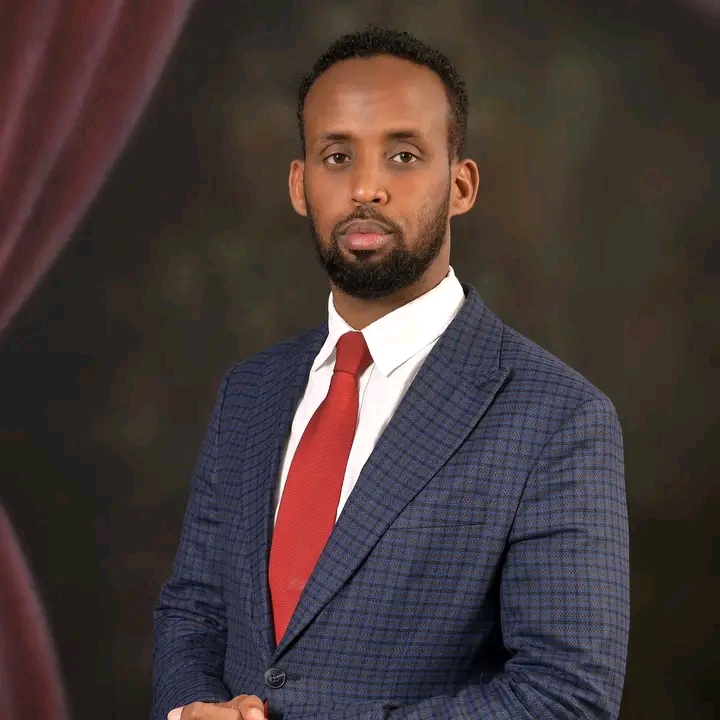
The political landscape in Wajir County has received another significant jolt following the decision by County Chief Officer for Accounting Services, Revenue and Pending Bills Resolution, Yahya Mohamed Dahiye, to resign from his position and formally pursue his gubernatorial ambitions ahead of the 2027 General Election.
Dahiye’s resignation notice, dated November 10, 2026, and addressed to Governor Ahmed Abdullahi, signals a decisive transition from public administration to electoral politics. In the letter, he expresses gratitude to the Governor for the trust placed in him throughout his service in different capacities within the county government, including Director of Communications, Chief of Staff, Chief Officer for Water Services and ultimately Chief Officer for Finance.
He also commits to facilitating an orderly transition, ensuring that institutional records, pending assignments and operational responsibilities are properly handed over.
But beyond the administrative significance of his departure, the timing carries a much bigger political message. One of the county government’s senior financial administrators is now preparing to challenge for the highest political office in Wajir, entering a contest already crowded with experienced politicians, established political families and competing community interests.
The Independent Electoral and Boundaries Commission’s 2025–2027 Election Operations Plan identifies February 9, 2027, as the deadline by which public officers intending to contest the August 10 General Election must resign. Dahiye’s move therefore comes ahead of that statutory deadline.
However, the most interesting dimension of his candidature is not necessarily his resignation. It is the political constituency from which he comes and the competition he faces within it.
Dahiye belongs to the Matan sub-clan of the larger Degodia community, a politically influential constituency that has played a significant role in Wajir’s gubernatorial politics. The incumbent Governor Ahmed Abdullahi also comes from Matan, making the succession contest particularly consequential for the community.
But Dahiye is not the only political figure from this constituency seeking to occupy the governor’s office.
Former Wajir West MP Ahmed Kolosh Mohamed is also pursuing the same ambition, creating a contest between two individuals whose political interests intersect within the same community.
This is where the question of negotiated democracy becomes unavoidable.
In August 2026, the Reer Aw-Mohamud family, a sub-clan within the Degodia community, endorsed Ahmed Kolosh as its preferred representative in the 2027 gubernatorial contest. The endorsement was announced during a gathering in Wajir town on August 12.
Dahiye, on the other hand, had already received endorsements from women, young people and professionals within Matan. Reports published in August documented his growing mobilisation efforts, including support from these groups as he sought broader recognition within the community.
These developments expose an important distinction: support from a particular family or organised group does not automatically amount to a unified endorsement by the entire Matan community.
Indeed, the competing ambitions of Dahiye, Kolosh and another aspirant, Omar Sheikh Ali, demonstrate that the process of reaching a common political position within Matan remains complicated.
The question is whether the community will eventually reach a negotiated agreement on one candidate or allow its competing political interests to proceed independently to the ballot.
For Ahmed Kolosh, the political equation is equally significant. His experience as Wajir West MP between 2017 and 2022 gives him an established political profile and familiarity with elective politics. He has previously navigated constituency-level elections, including a 2019 by-election.
His family endorsement is an important political development, but it should not be confused with a unanimous Matan-wide decision.
For Dahiye, the challenge is to demonstrate that his support among sections of the community can translate into a broader political constituency. His grassroots approach, which has involved direct engagement with residents rather than relying exclusively on meetings with influential political figures, has become a defining feature of his campaign.
He has publicly questioned the dominance of negotiated and clan-based political arrangements, arguing that leadership should ultimately reflect the wishes of voters rather than decisions made behind closed doors.
That message introduces an interesting contradiction into the political environment. While Dahiye is benefiting from endorsements within sections of his own community, he is also challenging the wider political culture that gives such endorsements considerable influence.
Can he persuade voters to embrace direct electoral choice while navigating a political system in which community negotiations remain influential?
This may become one of the defining tests of his candidature.
His experience in county government also provides an important foundation for public scrutiny. Having served in communications, the Office of the Chief of Staff, water services and finance, Dahiye has been exposed to different aspects of county administration.
His latest position placed him within the financial management structure of the county government, an area central to budget implementation, revenue mobilisation, pending bills and accountability.
This background could become relevant as voters examine his understanding of county operations.
However, administrative experience alone does not automatically establish readiness for the governorship. The governor’s office carries wider constitutional responsibilities, including executive leadership, policy direction, coordination of county departments and accountability for public resources.
Dahiye will therefore need to explain what he would do differently, particularly in areas where Wajir residents continue to demand improvements.
Healthcare, water infrastructure, livestock development, education, youth unemployment, roads and financial accountability will all require clear policy commitments.
The question of whether Wajir is ready for youthful leadership also deserves serious consideration.
For years, county politics has largely revolved around established political personalities, experienced administrators and influential community structures. Dahiye’s emergence represents a growing conversation about generational renewal and whether younger professionals should have a greater opportunity to occupy senior elective positions.
But youthfulness cannot become a political qualification on its own.
Wajir residents will want more than a generational argument. They will want evidence of leadership experience, sound judgement, a realistic development agenda and the ability to unite different communities.
Dahiye’s grassroots campaign could help him engage voters who feel disconnected from traditional political arrangements. His meetings with residents provide an opportunity to hear concerns directly and build relationships beyond established political networks.
Nevertheless, grassroots visibility must eventually translate into a properly organised countywide political structure. A gubernatorial campaign requires coordination across all six constituencies, credible political partnerships, resources, campaign personnel and the ability to communicate a consistent message.
His relationship with influential political figures will also matter, particularly as negotiations begin to shape the wider contest.
The challenge is that Wajir’s gubernatorial race is not being contested in isolation. Other political figures are already positioning themselves, including Hassan Wehliye Khalid, Ambassador Mohamed Abdi Affey, Ugas Sheikh Mohamed, Mohamed Ibrahim Elmi, former Governor Mohamed Abdi and Dr Hassan Mohamed Adan, popularly known as Fuje.
Within the Degodia community, the Fai sub-clan has already endorsed Dr Hassan Fuje as its preferred gubernatorial candidate. Meanwhile, Matan’s competing political interests present a different picture, with no verified community-wide agreement establishing a single candidate.
These developments make the negotiations between aspirants and their respective political constituencies particularly important.
For Dahiye, the wider contest creates both opportunities and obstacles. His administrative background and grassroots mobilisation offer him a platform to build his political identity, but competing interests within Matan could complicate efforts to consolidate support.
There is also the question of whether he can establish meaningful relationships with political constituencies beyond his immediate community. A countywide gubernatorial campaign requires engagement with Degodia, Ogaden, Ajuran and other communities whose interests and electoral participation will shape the final contest.
His political message will therefore need to extend beyond generational change and opposition to negotiated democracy. It must demonstrate how his leadership would deliver equitable development across the county.
Another important consideration is the legacy of the outgoing administration. Governor Ahmed Abdullahi’s tenure will inevitably become part of the 2027 political debate. As aspirants present themselves as potential successors, residents will examine the county government’s record and demand explanations about what should continue, what should change and what has not been delivered.
Dahiye’s previous position within that administration makes this scrutiny particularly relevant. He will need to explain how his experience inside government has shaped his understanding of its successes, shortcomings and institutional challenges.
Ultimately, the biggest obstacle facing Dahiye may not be the resignation of a public officer’s position, but the transition from being part of the county’s administrative leadership to convincing an entire electorate that he can lead the county politically.
His candidature also raises a fundamental question for Matan: will political negotiations produce one recognised candidate, or will competing ambitions redefine the community’s approach to the 2027 election?
The answer will have implications beyond Dahiye and Kolosh. It will influence the wider calculations among aspirants seeking to assemble alliances across Wajir’s political landscape.
Dahiye’s resignation has now placed his gubernatorial ambitions firmly at the centre of Wajir’s unfolding political contest. However, the road ahead will require more than administrative credentials and youthful appeal.
His ability to navigate the competing interests within Matan, manage the political challenge presented by Ahmed Kolosh and build relationships beyond his immediate constituency will be central to how his candidature develops.
The question of negotiated democracy will also remain significant: whether the community eventually settles on one candidate or allows its competing ambitions to proceed independently could have wider implications for the county’s political arithmetic.
As the race to succeed Ahmed Abdullahi gathers momentum, Dahiye’s candidature introduces a bigger conversation about political succession, generational change and the future of leadership in Wajir. His resignation marks the end of one chapter in county administration and the beginning of a demanding political journey.
But the real contest will be fought through political negotiations, public scrutiny, development proposals and the ability to command support across the county.
For Dahiye, the challenge is no longer simply to enter the gubernatorial race; it is to establish himself as a serious contender in a contest where established political networks, community interests and competing ambitions will all have a bearing on the road to 2027.