

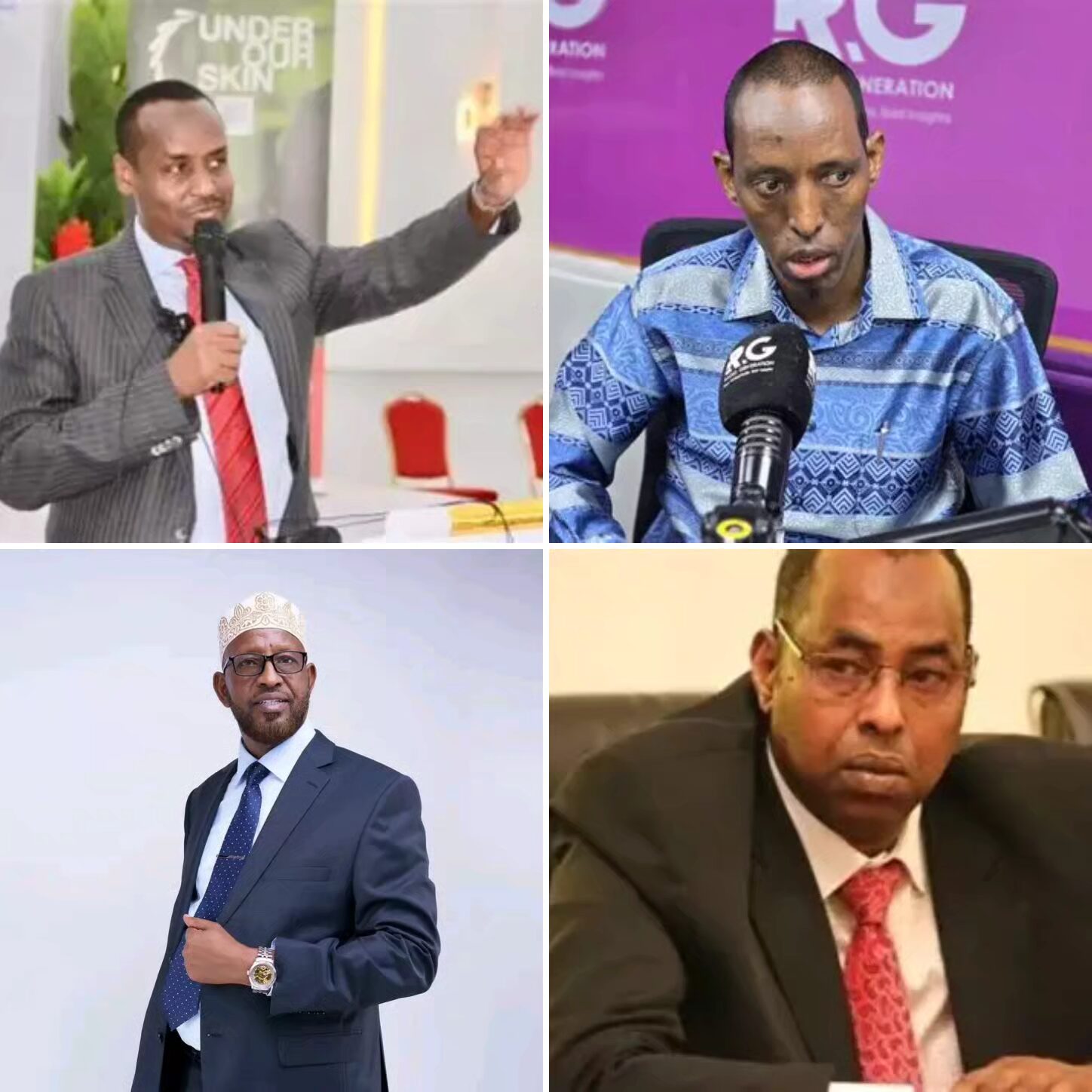
As the 2027 General Election approaches, Wajir South is gradually becoming one of the most politically interesting constituencies in Wajir County, with competing ambitions, clan consultations and emerging alliances reshaping the constituency’s political establishment.
What makes the unfolding contest particularly significant is that the conversation is no longer exclusively about who succeeds the incumbent Member of Parliament. It is increasingly connected to the battle for the Wajir governorship, the Deputy Governor position and how the four principal Ogaden sub-clans Mohamed Zubeir (MZ), Makhabul (Maqabul), Bah Geri and Geri intend to negotiate their political interests.
The emergence of new parliamentary aspirants, the proposed endorsement of Ambassador Mohamed Abdi Affey, the renewed Fuje–Salel partnership and the political ambitions of serving and former county officials are creating an interconnected political equation.
Beneath the public declarations, a larger question is taking shape: who will represent Wajir South in Parliament, who will negotiate for a place in the next county administration, and can the Ogaden political establishment agree on a common direction?
To understand the current situation, it is important to look at the history of negotiated political representation in Wajir South. The four Ogaden sub-clans have historically participated in parliamentary consultations, with elders and community representatives seeking to establish preferred candidates before major electoral contests.
In 2022, Makhabul endorsed Mohamed Adow, Bah Geri backed former MP Mohamud Sirat, while other aspirants emerged from Mohamed Zubeir and the wider community. These endorsements demonstrated that parliamentary competition was already closely connected to clan negotiations.
However, they also illustrated that a clan endorsement does not necessarily settle the contest. Individual ambitions, political networks, party nominations and voters’ decisions can produce outcomes different from those anticipated during elders’ consultations.
The 2027 negotiations are therefore taking place against a history in which consensus and competition have existed side by side.
Makhabul appears to be entering this political cycle with several important considerations. The proposed candidature of Ambassador Mohamed Abdi Affey for the gubernatorial position introduces the possibility of a wider political arrangement in which the sub-clan seeks influence beyond the constituency parliamentary seat.
At the same time, the reported endorsement of Khalif Hirbate by Reer Sacad at Kursin and the emergence of Ahmed Muhumed Abdi as a possible parliamentary contender demonstrate that the parliamentary conversation within the larger Makhabul community is not necessarily settled.
Former Permanent Secretary Fatuma Hirsi has also received backing from Makabul Queens, introducing another dimension to the contest and bringing women’s political representation into the discussion. These developments raise a fundamental question: will Makhabul consolidate behind one parliamentary candidate or will different sections maintain separate political ambitions?
The answer could influence not only the parliamentary contest but also the sub-clan’s negotiating position in the wider county political arrangement. Importantly, endorsements from Reer Sacad, Ibrahim elders or women’s organisations should not automatically be interpreted as a unanimous decision by the entire Makhabul community.
Mohamed Zubeir, meanwhile, faces a different but equally important political calculation. Its interests appear concentrated around the parliamentary seat and the Deputy Governor position. Abdi Salel’s public declaration that he intends to deputise Dr Hassan Mohamed Fuje in the 2027 gubernatorial contest places the sub-clan’s political considerations directly within the countywide race.
The Fuje–Salel partnership finished second in the 2022 gubernatorial election, and their renewed commitment to contest together provides an existing political arrangement around which negotiations could develop. However, the emergence of Afey’s gubernatorial ambitions presents another possible direction for Ogaden political engagement.
MZ could therefore find itself balancing support for the Fuje–Salel ticket with its parliamentary interests and the wider discussions around Afey. Whether it maintains its existing alliance, seeks alternative negotiations or pursues independent parliamentary representation remains an important question. The two positions are interconnected, but they do not necessarily require the same political alliance.
For Bah Geri, the parliamentary question remains particularly relevant given its previous involvement in Wajir South elections. In 2022, its elders endorsed former MP Mohamud Sirat as their preferred candidate, demonstrating the sub-clan’s continued interest in parliamentary representation.
Ahead of 2027, Bah Geri could once again seek to field a candidate, support an aspirant from another sub-clan or negotiate a place within a broader political arrangement involving the gubernatorial and Deputy Governor positions. Its decision could become particularly significant if Makhabul consolidates behind a preferred parliamentary candidate.
The question is whether Bah Geri will pursue an independent political route or participate in negotiations aimed at establishing a common Ogaden position. Geri, equally, remains an important stakeholder whose interests cannot be overlooked. Its possible options include pursuing parliamentary representation, seeking consideration for the Deputy Governor position or negotiating support for a gubernatorial candidate in exchange for a place in the next county administration.
Although its precise political demands remain unclear, its eventual position could influence the ability of the elders to establish a consensus involving all four sub-clans.
The parliamentary contest also raises important questions about the future of incumbent MP Adow Aden Mohamed. Having secured the seat in 2022 with 13,990 votes, Adow enters the next electoral cycle as the sitting legislator, but the emerging political environment presents a different set of challenges. His possible re-election will have to be considered against the emergence of new aspirants, renewed clan consultations and the possibility of a negotiated alternative.
The proposed Afey alignment, the different parliamentary ambitions within Makhabul and the historical interests of Bah Geri and Geri could all influence the political environment in which he seeks another term. His political options include defending his parliamentary record and seeking re-election, negotiating a different political arrangement or facing a more competitive nomination process.
His previous electoral victory provides an important starting point, but it does not automatically guarantee the same political support in 2027. Ultimately, his future will depend on his political networks, performance, nomination arrangements and the decisions of Wajir South voters.
The gubernatorial contest adds another layer to these calculations. Ambassador Mohamed Abdi Affey’s reported interest in the Wajir governorship introduces a possible alternative political centre within the Ogaden community. His experience as a former Wajir South MP, Kenyan ambassador to Somalia and former IGAD Special Envoy gives him a profile extending beyond constituency politics.
If his candidature receives wider support from the Ogaden elders, the question will be whether he can translate that backing into a countywide political coalition involving Degodia, Ajuran and other communities. His challenge would be to move from community consultations to broader political negotiations while establishing a clear county development agenda.
The proposed endorsement should nevertheless be distinguished from a formally concluded community agreement or an electoral nomination. His candidature could also affect how the four Ogaden sub-clans negotiate parliamentary and county representation.
On the other side, Dr Hassan Mohamed Fuje and Abdi Salel have already signalled their intention to maintain their political partnership. Fuje secured the endorsement of his Fai sub-clan for the gubernatorial contest, while Salel received community backing for the Deputy Governor position and publicly reaffirmed his commitment to the ticket.
Their political arrangement is therefore an established part of the emerging 2027 contest. For Wajir South, Salel’s ambitions are particularly relevant because the Deputy Governor position could become a major negotiating point among the Ogaden sub-clans. If the Fuje–Salel ticket attracts wider support, it could provide one avenue for Ogaden political representation in the next county administration.
However, if Afey develops a competing gubernatorial coalition, the community could face difficult decisions about which political arrangement best accommodates its different interests. Neither alliance should be assumed to have secured the support of the entire Ogaden community.
The current Deputy Governor, Ahmed Muhumed Abdi, adds another interesting dimension. His reported parliamentary ambitions create the possibility of a transition from county executive leadership to national parliamentary representation.
If he proceeds with the bid, his candidature could become part of the competition within the larger Makhabul political establishment, particularly alongside other aspirants seeking the same seat. This would also introduce a question about how serving county leaders and emerging parliamentary candidates will negotiate their respective ambitions.
The political establishment could therefore face a situation in which the same community is negotiating for the Deputy Governor position while another serving Deputy Governor seeks to move into Parliament. Such competing interests could make the elders’ consultations more complicated.
The December Laqdima primaries and the consultations preceding them could provide an important indication of how these political arrangements are developing. One possible outcome is a negotiated settlement in which the Ogaden elders agree on a parliamentary candidate while distributing political support across the gubernatorial and Deputy Governor contests.
Another possibility is that individual sub-clans maintain separate parliamentary candidates and negotiate independently with different gubernatorial aspirants. A third possibility is a broader Ogaden political coalition around a gubernatorial candidate, with parliamentary representation negotiated as part of the overall arrangement.
Each scenario presents different considerations for MZ, Makhabul, Bah Geri and Geri. However, even a community-wide endorsement would not necessarily eliminate individual candidacies or guarantee that voters follow the elders’ preferred direction.
Ultimately, Wajir South’s 2027 political contest is becoming a test of the constituency’s political establishment and its ability to reconcile competing ambitions. The parliamentary seat, gubernatorial contest and Deputy Governor position are increasingly interconnected, while the interests of the four Ogaden sub-clans add further complexity to the negotiations.
Adow’s future, Afey’s gubernatorial ambitions, Fuje and Salel’s renewed partnership, Ahmed Muhumed Abdi’s possible parliamentary transition and the emerging parliamentary interests within Makhabul, Bah Geri and Geri all form part of the same political equation. The central question is whether the Ogaden Council of Elders can develop an arrangement that accommodates these interests without creating competing political centres. But beyond clan endorsements and political negotiations, the ultimate decision rests with voters.
The candidates will also have to demonstrate what they offer on development, representation, accountability and public service.
As 2027 approaches, Wajir South is not simply preparing for another parliamentary election; it is entering a wider contest over political representation and influence in the next Wajir County administration.