

Somalia is quietly entering a new chapter in its geopolitical history, and the events unfolding in Mogadishu this week may have consequences far beyond its borders. As diplomatic relations between Mogadishu and Abu Dhabi deteriorate, Turkey is deepening its military engagement with Somalia, raising important questions about the changing balance of power in the Horn of Africa and the strategic interests of regional and international players.
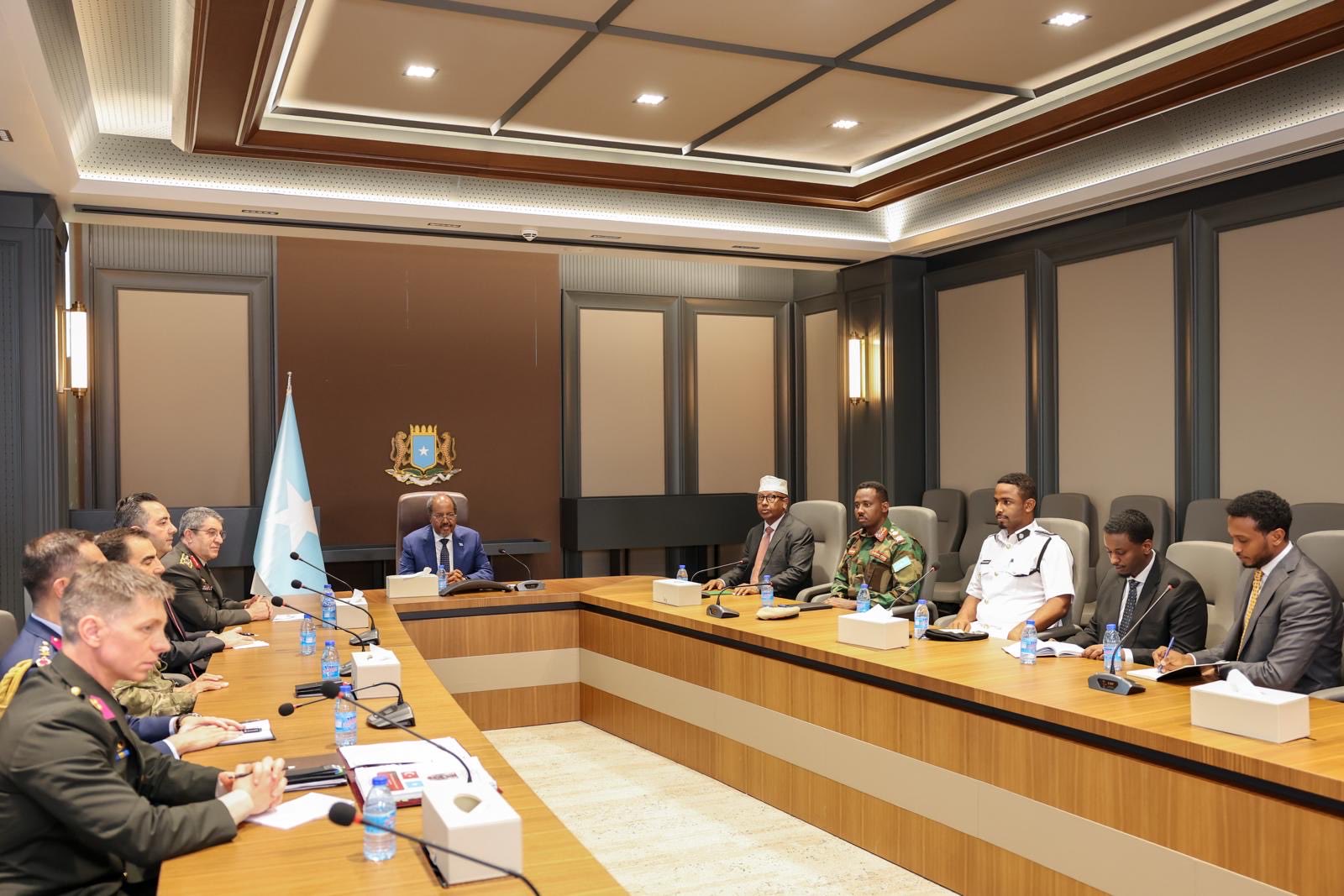
On November 21, 2026, Somalia’s President Hassan Sheikh Mohamud received Turkey’s Chief of General Staff, General Selçuk Bayraktaroğlu, in Mogadishu. Their meeting focused on strengthening bilateral defence cooperation, military security and joint efforts to combat terrorism. However, what made the visit particularly significant was the subsequent groundbreaking ceremony for the new headquarters of the Somali Naval Forces, attended by both President Hassan Sheikh and the Turkish military chief.
The development comes at an exceptionally sensitive moment. Just days earlier, Somalia’s government had ordered the United Arab Emirates’ ambassador to leave the country within 72 hours, recalled its ambassador from Abu Dhabi and accused the Emirates of interfering in Somalia’s internal affairs and undermining its sovereignty. The diplomatic confrontation represents the latest escalation in a relationship that has progressively deteriorated over disagreements surrounding security agreements, regional administrations and foreign influence in Somalia.
The timing of Turkey’s military engagement, therefore, cannot be ignored.
For years, Turkey has positioned itself as one of Somalia’s most important strategic partners. Its involvement extends beyond conventional diplomatic relations, encompassing military training, infrastructure development, economic investment and humanitarian assistance. The establishment of Camp TURKSOM in Mogadishu provided a foundation for rebuilding Somalia’s national army, with thousands of Somali soldiers receiving training from Turkish military personnel.
The defence and economic cooperation agreement signed between the two countries in February 2024 further elevated this relationship, particularly in maritime security. The agreement provided a framework for Turkey to assist Somalia in developing its naval capabilities and strengthening the protection of its extensive coastline.
Now, with the Somali government moving towards establishing stronger naval institutions and Turkey visibly participating in the process, the partnership is entering a more consequential phase.
The new naval headquarters is particularly important because Somalia possesses one of Africa’s longest coastlines, stretching along strategically significant waters connecting the Indian Ocean and the Gulf of Aden. These waters are essential to international trade, maritime transportation and the movement of energy resources. Yet, for decades, Somalia has struggled to establish the military capabilities necessary to effectively protect its maritime territory.
The proposed facilities, which include a Maritime Operations Coordination Centre and naval infrastructure, represent an attempt to address that institutional weakness. They also demonstrate that Turkey’s engagement is becoming increasingly connected to Somalia’s long-term maritime and defence ambitions.
But there is another dimension that makes these developments particularly interesting: the growing diplomatic confrontation between Somalia and the UAE.
Abu Dhabi has maintained a significant economic and security presence in Somalia for years. Its involvement includes port investments, infrastructure projects and security cooperation. Through partnerships with different regional administrations, particularly Somaliland and Puntland, the UAE has developed relationships that have sometimes operated independently of Mogadishu’s preferred federal framework.
For Somalia’s federal government, the central question is increasingly one of sovereignty. President Hassan Sheikh’s administration has argued that foreign governments should not establish security and political arrangements within Somali territory without the consent of the federal government.
The disagreement intensified in January 2026 when Somalia cancelled several agreements with the UAE covering ports, security, defence and other areas of cooperation. The decision was rejected by regional administrations maintaining relationships with Abu Dhabi, exposing the deeper political divisions within the Somali federal system.
The latest diplomatic measures demonstrate how far the relationship has deteriorated.
However, while Mogadishu and Abu Dhabi exchange diplomatic accusations, Ankara appears to be strengthening its position as Somalia’s principal security partner.
This brings back memories of one of the most significant diplomatic confrontations in the Middle East in recent history: the 2017 Qatar blockade.
On June 5, 2017, Saudi Arabia, the United Arab Emirates, Bahrain and Egypt announced the severing of diplomatic relations with Qatar. The countries also imposed restrictions on land, air and sea connections, creating one of the most serious political crises within the Gulf Cooperation Council.
Qatar suddenly found itself facing an unprecedented regional isolation campaign. Its land border with Saudi Arabia was closed, flights were restricted and economic uncertainty increased. The confrontation was driven by competing regional interests, disagreements over Qatar’s foreign policy and accusations that Doha supported movements and organisations considered a threat by its neighbours. Qatar rejected the accusations.
At the time, the pressure placed on Qatar was enormous. The country faced the challenge of maintaining its economic stability, protecting its independence and preventing the crisis from developing into a broader security confrontation.
But Qatar was not alone.
Turkey emerged as one of its most important strategic supporters. Ankara had already established a military presence in Qatar through an agreement signed in 2014, with its military base officially inaugurated in 2016. Following the blockade, the Turkish parliament accelerated legislation authorising the deployment of additional Turkish troops to Qatar.
Turkey also provided political backing and helped facilitate economic supply routes, particularly as Qatar adjusted to the restrictions imposed by its neighbours.
The significance of Turkey’s intervention was not necessarily that it entered a direct military confrontation with Saudi Arabia, the UAE and Bahrain. Rather, it changed the strategic calculations surrounding the crisis.
Qatar now had a powerful NATO member with military infrastructure on its territory and a clear interest in preventing its isolation from becoming a military confrontation.
The blockade eventually ended in January 2021 through the Al-Ula agreement, restoring diplomatic relations and reopening regional connections. Qatar survived the crisis without surrendering its political independence, while Turkey emerged with a stronger strategic relationship with Doha.
That history offers an interesting lens through which to examine the emerging situation in Somalia.
There are similarities between the two situations, particularly the involvement of Turkey at a moment when a country with which it maintains close strategic relations is experiencing serious tensions with the UAE.
However, the circumstances are not identical. Qatar was a sovereign Gulf state facing a coordinated blockade by neighbouring countries. Somalia, on the other hand, is dealing with an internal political struggle involving federal and regional authorities, competing foreign partnerships and disagreements over the constitutional balance of power.
Nevertheless, the geopolitical implications deserve attention.
Turkey is not simply providing Somalia with military instructors or attending diplomatic ceremonies. It is helping develop military institutions that could eventually give Mogadishu greater control over its territorial waters and maritime resources. Its involvement also coincides with wider Turkish interests in the Horn of Africa, including energy exploration, maritime security and access to strategically important shipping routes.
Turkey’s military and economic interests in Somalia are substantial. The country is also important to Ankara’s broader ambitions in Africa and the Red Sea region.
It would therefore be premature to conclude that Turkey and Somalia have entered a coordinated military confrontation against the UAE. There is currently no publicly established evidence of such an agreement. Turkey has not declared that its military cooperation with Somalia is directed against Abu Dhabi.
Nevertheless, the growing alignment between Mogadishu and Ankara inevitably changes the regional calculations.
For the UAE, the situation presents a complicated strategic environment. Its relationships with regional administrations have given it considerable influence in Somalia, but the federal government’s determination to challenge those arrangements could make its position increasingly difficult.
For Turkey, the opportunity is equally significant. By strengthening Somalia’s federal military institutions, Ankara can consolidate its influence while presenting itself as a partner in rebuilding a country that has spent decades struggling with insecurity and institutional weakness.
But Somalia must also understand the implications of becoming increasingly dependent on external military partners. Building a capable navy is a national necessity, not simply a diplomatic achievement. Protecting territorial waters, preventing illegal fishing, securing maritime resources and defending national sovereignty must remain Somali priorities.
Ultimately, the most important question is whether Somalia can transform these international partnerships into sustainable national institutions without becoming a battleground for competing foreign interests.
The events of November 21 may eventually be remembered as an important milestone in Somalia’s military reconstruction. Yet their timing also signals a changing geopolitical environment in which Turkey’s influence is expanding while the UAE’s relationship with Mogadishu is deteriorating.
The 2017 Qatar crisis demonstrated how Turkish involvement could alter the strategic calculations of a regional confrontation without necessarily producing a military war.
Whether a similar dynamic will emerge in Somalia remains to be seen.
One thing, however, is increasingly clear: Somalia is no longer merely a country seeking international assistance to rebuild its institutions. It is becoming an increasingly important strategic arena where regional powers are competing for influence, access and long-term interests.
And as Mogadishu looks towards Ankara for military partnership, the balance of power in the Horn of Africa may be entering a new and consequential chapter.