


Kenya’s Political temperature is heating up fast with sharp public exchanges, party tensions and shifting loyalties redefining the national conversation. As President William Ruto intensifies his criticism to the United opposition, former Deputy President Rigathi Gachagua openly confronts him, and ODM battles internal divisions, the country finds itself in the middle of one of the most dramatic political moments in recent years.
Ruto Pushes for Policy-Based Politics
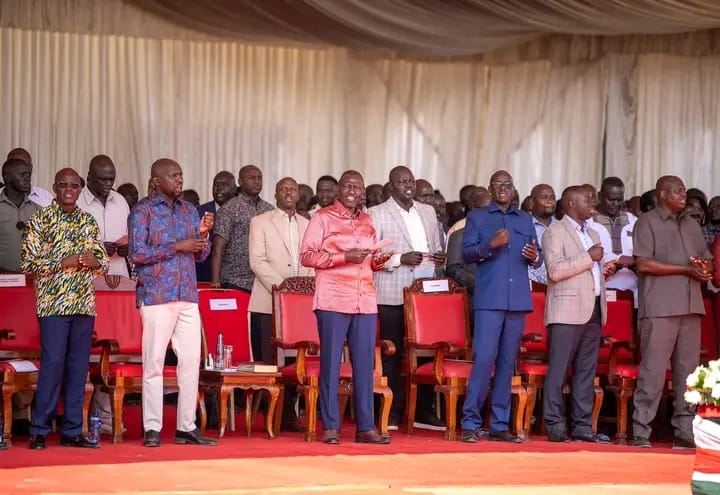
President William Ruto has accused opposition leaders of relying on divisive rhetoric instead of presenting credible national policy alternatives. Speaking during a interdenominational church service in Chesombur, Sigor constituency in West Pokot county, the President said leadership should be anchored on proven track records, realistic manifestos and implementable economic strategies.
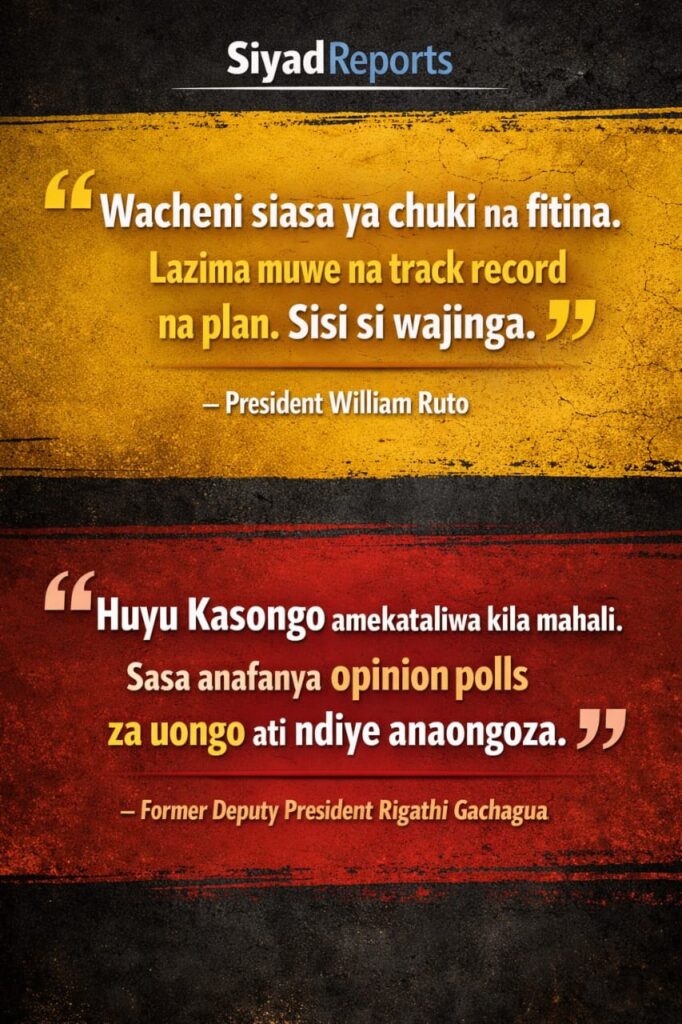
“Wacheni siasa ya chuki na fitina. Lazima muwe na track record na plan. Sisi si wajinga,” Ruto said, insisting that those seeking national leadership must show both vision and capacity.
He added that his administration has a clear development blueprint and revenue strategy arguing that Kenyans deserve leaders who can explain not only what they want to do, but how they will fund it.
Ruto’s message was seen as a challenge to the opposition coalition to shift away from protest politics toward policy competition.
Gachagua Breaks Ranks as ODM Battles Internal Divisions
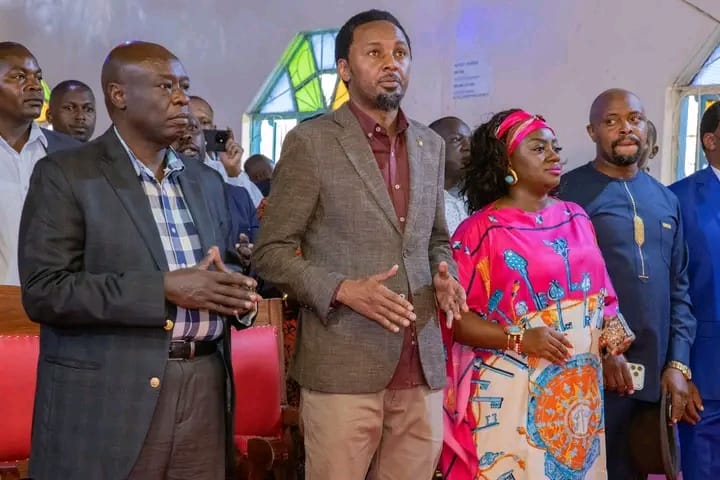
In a bold counter-move, former Deputy President Rigathi Gachagua during a church service in Kiambu county has intensified his criticism to President Ruto even referring to him as “Kasongo” while accusing him of relying on fabricated opinion polls to project popularity.
“Huyu Kasongo amekataliwa kila mahali. Sasa anafanya opinion polls za uongo ati ndiye anaongoza,” Gachagua said, claiming the figures were computer-generated and misleading. He further argued that his party, DCP, was being unfairly represented in the surveys.
These remarks mark one of the clearest public breaks between the former political partners signalling rising uncertainty in Mt. Kenya politics and within Kenya Kwanza’s broader coalition.
Meanwhile, ODM the country’s largest opposition party is facing growing internal wrangles centred on succession politics, strategic direction and leadership influence. Senior figures appear divided on the party’s future path, weakening its once-strong cohesion and raising questions about the opposition’s ability to consolidate national messaging.
A Political Season Defined by Uncertainty
The unfolding tensions between President Ruto and United opposition leaders combined with internal divisions in ODM point to a political environment marked by mistrust, strategic repositioning and heightened competition ahead of 2027 elections.
Kenya now enters a period where alliances will be tested, party discipline will be challenged, and leaders will increasingly be forced to justify both their records and their ambitions. While Political contestation is normal in a democracy, the key question is whether it will ultimately produce genuine policy debate or simply deepen divisions.
For now, one thing remains clear:
Kenya’s politics has entered a new and unpredictable chapter and the country will be watching closely.