


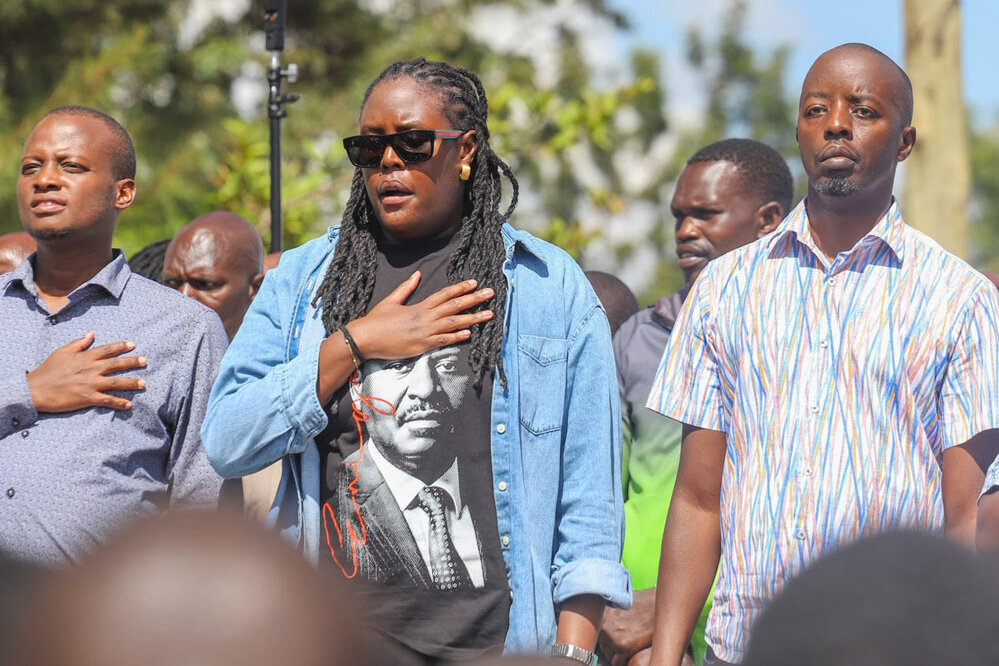
The Orange Democratic Movement (ODM), long defined by the towering political presence of Raila Odinga, is facing one of the most consequential moments in its history. What was once an ideologically unified party anchored around a single figure has now fractured into competing camps, rival rallies, and sharply divergent interpretations of what Raila Odinga stood for and who, if anyone, has the authority to inherit that legacy.
At the center of this political storm is Winnie Odinga, speaking not just as Raila’s daughter, but as a defiant voice against what she and her allies describe as political entitlement, silencing, and an attempt to “copy-paste” leadership.
“You Cannot Copy-Paste Leadership” – Winnie Odinga’s Rebellion
Speaking at a high-energy rally at Kamukunji Grounds in Kibra, Winnie Odinga delivered a message that cut directly into the heart of ODM’s internal power struggle. Rejecting claims by some party officials that they are acting on “instructions from Baba,” Winnie insisted that Raila Odinga never operated through secrecy or backroom directives.
“Baba alikuwa anasema maneno yake hadharani. Wale wanasema Baba aliongea na wao peke yao, hiyo ni kukosa adabu,” she said.
(“Baba always spoke his words publicly. Those who claim he spoke to them privately are being disrespectful.”)
Her words carried a deeper political accusation: that some leaders are weaponising Raila’s name to consolidate power and suppress internal debate. When party members question decisions, she said, they are threatened with expulsion.
“Wakituuliza maswali, wanasema tutoke kwa chama. Tutoke kwa chama ibaki na nani? Chama ni ya wananchi,” Winnie stated.
(“When we ask questions, they tell us to leave the party. If we leave, who will remain? This party belongs to the people.”)
Winnie’s declaration“Hamunitishi, hamnibabaishi” was both a personal and political line in the sand. It signaled that fear and inherited authority would no longer be enough to command loyalty within ODM.
Parallel Rallies, Parallel Futures
The depth of the crisis was symbolised on Sunday, January 18, 2026, when ODM effectively split into two competing national events.
In Nairobi, Winnie Odinga and Raila Jr. rallied supporters in Kibra, portraying their father as “irreplaceable” and accusing unnamed officials of “rushing to the steering wheel” and treating party members like “luggage.”
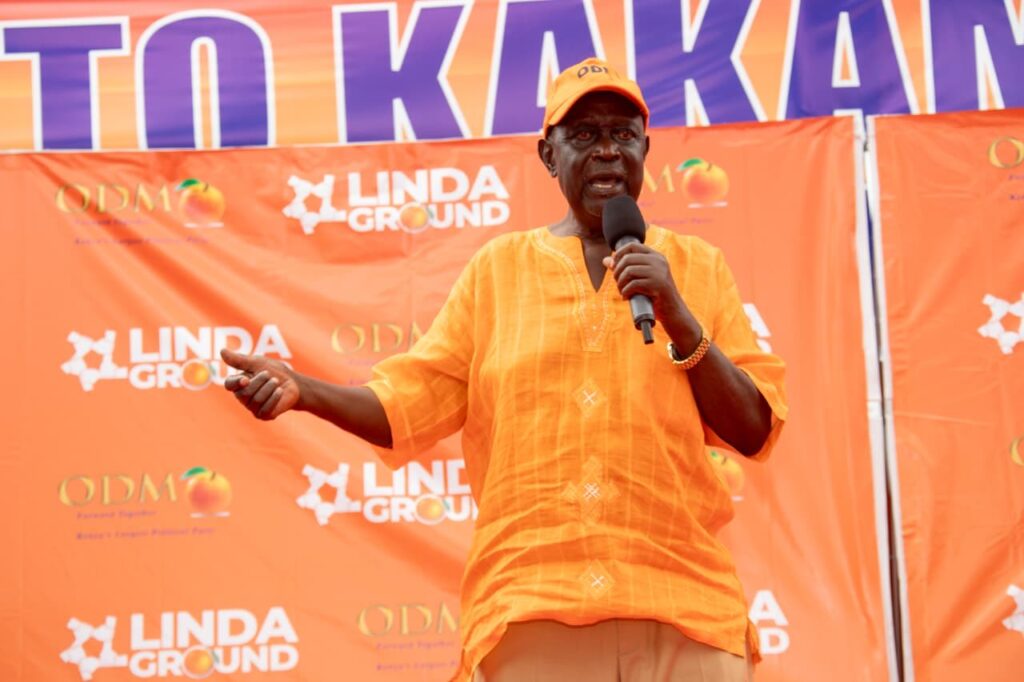
At the same time, in Western Kenya, ODM Party Leader Dr. Oburu Oginga led the “Linda Ground” tours in Busia and Kakamega. Calling for unity and discipline, Oburu defended the current leadership structure and the party’s strategic direction, including engagement with President William Ruto’s UDA.
Yet to critics especially the so-called “Young Turks” Oburu’s leadership represents continuity without renewal, an old guard prioritising elite negotiations over grassroots energy.
This duality has exposed what many now describe as a generational war, not just within ODM, but within the broader opposition movement.
Power, Pragmatism, and the UDA Question
The most divisive fault line remains ODM’s evolving relationship with the ruling establishment. Suna East MP Junet Mohamed has been unapologetic about the party’s ambitions.
“ODM is not an NGO. It was founded to seek political power,” Junet said during the Linda Ground tour.
“If you want to run an NGO, go and start yours. We want ODM to be in government in 2027.”
Junet and Oburu argue that structured talks with UDA are a pragmatic path to power, positioning ODM as a national party capable of governing. They frame internal dissent as destabilising and accuse unnamed actors of trying to plunge the party into chaos.
But to Winnie Odinga and her allies, this pragmatism borders on ideological surrender. Cooperation with UDA, they argue, risks hollowing out ODM’s identity as a movement of resistance, justice, and people-centered politics.
Legacy, Legitimacy, and the Fight for the Future
Perhaps the most profound question emerging from this crisis is not who leads ODM, but what ODM is meant to be without Raila Odinga at its helm.
Winnie Odinga’s message has been consistent: legacy cannot be inherited by bloodline, nor seized through titles.
“You cannot inherit the struggle without understanding the pain of the people,” she said.
“The Odinga name has always stood for sacrifice and justice but that legacy is owned by the people.”
Reports of closed-door meetings, including claims that Edwin Sifuna could be positioned for party leadership in February 2026, only underline how high the stakes have become. What was once a unified political vehicle is now an arena where legitimacy, ideology, and generational authority are being renegotiated in real time.
As ODM marches toward the 2027 General Election, the party faces a defining choice, manage this internal rebellion through dialogue and reform or risk fragmentation that could permanently weaken its grip on opposition politics.
One thing is already clear. Raila Odinga’s absence has not ended the struggle he embodied. It has merely transformed it into a battle over who truly speaks for the people and who is merely speaking in his name.