


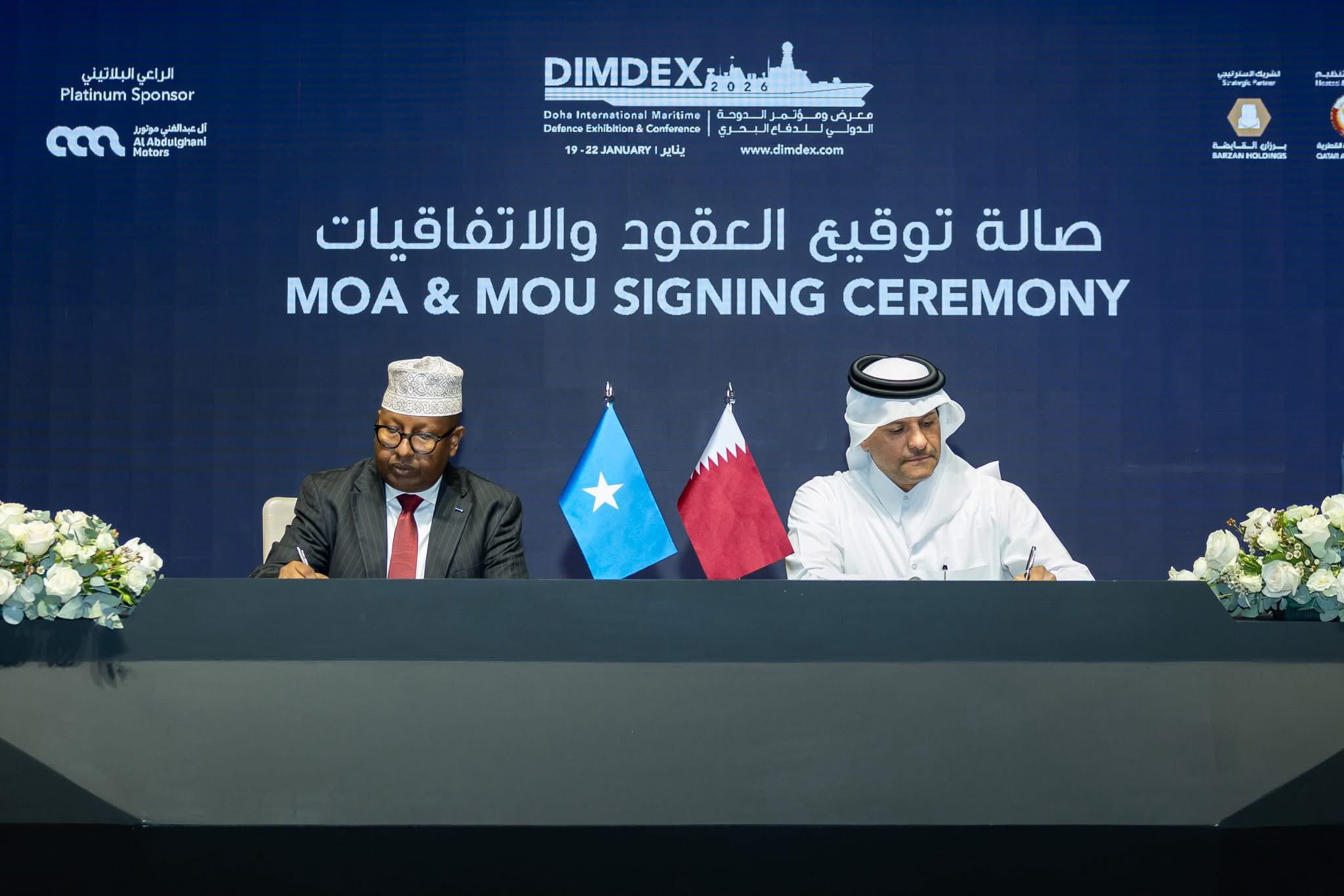
Somalia has taken a decisive step in reshaping its defence and security partnerships by signing a landmark defence cooperation agreement with the State of Qatar in Doha, on the sidelines of the DIMDEX 2026 maritime defence exhibition. The agreement, signed by Somalia’s Minister of Defence Ahmed Moalim Fiqi and Qatar’s Minister of Defence Sheikh Saud bin Abdulrahman Al Thani, marks a significant realignment in Somalia’s regional security policy following the recent suspension of security agreements with the United Arab Emirates.
Minister Fiqi, who is in Doha accompanied by General Odowaa Yusuf Rage, Chief of the Somali National Army, and the Commander of the Somali Navy, underlined the strategic importance of the agreement, stating “We are committed to developing our National Army’s capabilities.”
The pact focuses on military training, exchange of expertise, development of defence capabilities, and enhanced security cooperation, reinforcing Somalia’s efforts to rebuild professional, self-sustaining national security institutions. The agreement also reflects a shared commitment by Mogadishu and Doha to promote regional security and stability, particularly at a time of heightened geopolitical competition in the Horn of Africa and the Red Sea corridor.
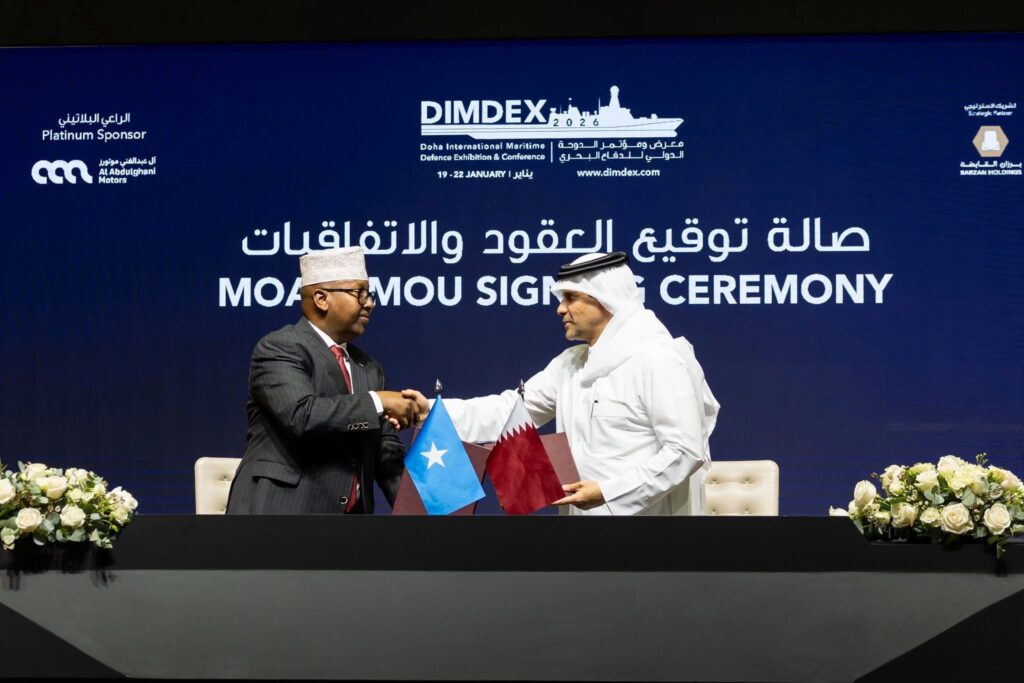
DIMDEX 2026 and Somalia’s Renewed Maritime Security Agenda
Somalia’s participation in DIMDEX 2026, one of the region’s most influential maritime defence exhibitions, underscores a renewed strategic emphasis on maritime security. The forum brings together senior military officials, policymakers, and global defence industry leaders, offering Somalia a platform to engage potential partners and strengthen defence diplomacy.
The presence of Somalia’s top military leadership in Doha highlights the growing priority placed on naval capability development, coastal protection, and maritime domain awareness.
For decades, limited naval capacity exposed Somalia’s long coastline to illegal fishing, arms trafficking, piracy, and other transnational security threats. By deepening maritime cooperation with Qatar, Somalia is seeking to strengthen its navy, enhance training and operational readiness, and integrate maritime defence into its broader national security framework.
Beyond military considerations, improved maritime security is also viewed as essential for economic recovery, protection of marine resources, and safeguarding international shipping routes linking the Indian Ocean and the Gulf of Aden.
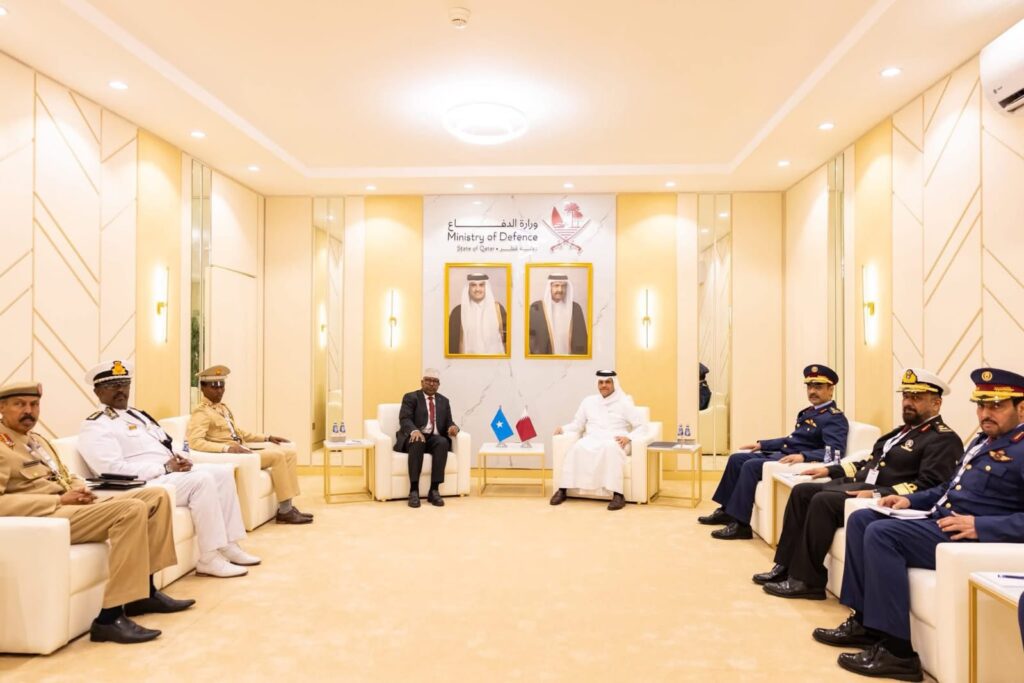
Post-UAE Shift and the Recalibration of Somalia’s Defence Partnerships
The defence agreement with Qatar comes amid a significant diplomatic transition, following Somalia’s recent suspension of security agreements with the United Arab Emirates. The timing has fueled reports that Qatar may step in to support training, funding, and institutional development for the Somali National Army, alongside a parallel strengthening of security ties with Saudi Arabia.
This evolving alignment signals a broader recalibration of Somalia’s defence policy, aimed at reducing dependency on a single external partner and asserting greater national ownership over security institutions. Analysts view the Somalia–Qatar pact as part of a deliberate strategy to diversify alliances while maintaining a sovereignty-centered approach to defence cooperation.
By formalizing long-term military cooperation with Qatar, Somalia is not only filling immediate capability gaps but also positioning itself within a new regional security framework. The agreement represents a strategic investment in institutional resilience, signalling Mogadishu’s intent to build a disciplined, capable national force aligned with regional stability objectives rather than short-term security arrangements.