

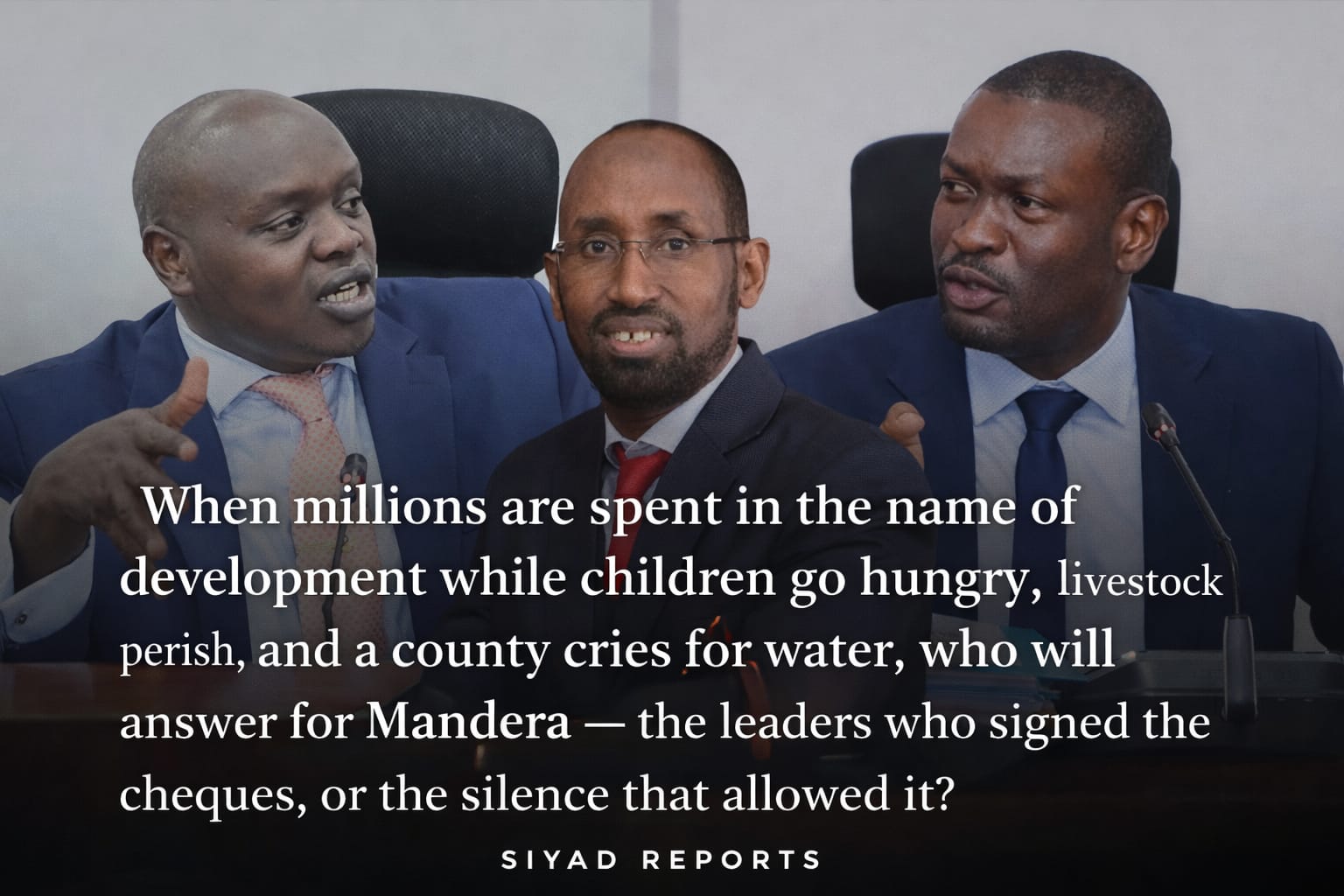
Leadership, by its very nature, is not ceremonial. It is not decorative, and it is certainly not a license for comfort while the people suffer. Leadership is a trust heavy, moral, and unforgiving especially in regions where survival itself is a daily struggle. Few places in Kenya embody this reality more starkly than Mandera County today.
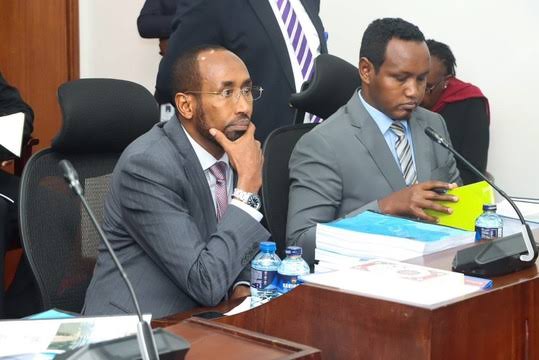
As the county grapples with one of the worst droughts in recent memory, Mandera Governor Mohamed Khalif’s appearance before the Senate County Public Accounts Committee (CPAC) on January 30, 2026, laid bare a disturbing disconnect between public spending and public suffering. What unfolded was not merely a technical audit session, but a moral trial of governance in the face of human catastrophe.
As Mandera slips deeper into an alarm-phase drought, Senate revelations expose troubling questions about leadership priorities, accountability, and the true cost of governance when human lives are on the line
At the centre of the storm was an expenditure of KSh 55.9 million on tree seedlings and farm inputs a figure that left senators visibly stunned. Led by CPAC Chair Moses Kajwang’ and Senator Samson Cherargei, the committee questioned not only the documentation behind the spending but its very logic. In a county officially classified as being in an “alarm” phase of drought, where water is scarce, livestock are dying, and families depend on relief food, senators asked a simple yet devastating question: what kind of seedlings survive where even camels are perishing?
When pressed, the Governor pointed to the River Dawa as the site of the project. But the explanation raised more questions than answers. Auditors confirmed that only a small portion of the expenditure could be physically verified, while senators noted inconsistencies including references to maize “seedlings,” a crop grown from seeds, not seedlings. The Senate’s concern was not academic; it was existential. Every shilling misdirected in Mandera today translates into thirst, hunger, and death.
Beyond the seedlings controversy lay an even graver issue, the handling of KSh 449 million in emergency-related funds. In a county repeatedly hit by drought, floods, and humanitarian crises, the Senate revealed that Mandera had failed to establish a legally constituted Emergency Fund, as required by law. Yet hundreds of millions were reportedly spent under the banner of emergency response, relief aid, and refugee assistance much of it unsupported by proper documentation.
This revelation cut deep. Emergency funds are not discretionary luxuries; they are lifelines. Their misuse or mismanagement in a place like Mandera is not a bureaucratic lapse it is a potential death sentence for the vulnerable.
The session further exposed pending bills, unsupported vehicle maintenance costs, and inherited salary arrears running into billions, painting a picture of administrative fragility at a time when institutional strength is most needed. Even more troubling was the Governor’s late submission of mandatory reports just one day before the Senate appearance a move senators interpreted as an attempt to frustrate scrutiny and accountability.
Outside the Senate chambers, the human cost of these failures is painfully visible. Humanitarian agencies estimate that over 335,000 residents in Mandera urgently require food aid. Livestock carcasses dot the landscape. Water points have dried up. Families are forced to migrate in search of survival. One local leader even reported a death from starvation in Mandera South a chilling reminder that this crisis is not theoretical.
It is against this backdrop that former Deputy President Rigathi Gachagua issued a scathing moral indictment on his Facebook page, framing the crisis not just as political failure, but as a spiritual and ethical collapse. He wrote:
“Leadership is not a privilege granted for personal gain; it is a sacred responsibility entrusted for the protection of human life and dignity… Today, conditions in the region have deteriorated so severely that even camels… are dying from thirst and hunger. If this is the fate of such resilient creatures, what hope remains for human beings?”
Invoking the Qur’an, Gachagua warned leaders that unjustly consuming the wealth of orphans, widows, and the Ummah is tantamount to consuming fire a reminder that accountability does not end in this world. Whether one agrees with his politics or not, the moral weight of his words resonates deeply in a region where faith and survival are inseparable.
Former Mandera Senator Billow Kerrow added a ground-level perspective that further dismantled the official narrative. Questioning the seedling expenditure, he remarked:
“My hometown of Rhamu on River Dawa with 22,000 hectares of farmland doesn’t enjoy free inputs from the County administration. The same county that purports to supply free seedlings charges Sh 6,000 per hour for the only plough tractor they have.”
Kerrow’s conclusion was blunt and damning: “If they only supported farmers along River Dawa, we wouldn’t be on famine relief on which they reportedly spent Sh 359 million. Akili ni mali.”
Wisdom is wealth and its absence is costly.
As whispers of a possible impeachment motion circulate within the Mandera County Assembly, the political implications of the Senate grilling continue to unfold. Yet impeachment alone will not quench thirst, feed children, or resurrect dead livestock. What Mandera urgently needs is truth, accountability, and a realignment of priorities.
The drought must be declared a national disaster, not as a symbolic gesture, but as a call to mobilize resources at scale. The national government, county leadership, development partners, and the international community must act swiftly and transparently to prevent further loss of life.
But beyond emergency declarations lies a deeper question, one that neither audits nor Senate sessions can fully answer.
when a county is dying of thirst, hunger, and neglect, and millions are spent with little to show on the ground, who truly bears the responsibility and who will answer for the tears of the Ummah when history, and God, come calling?