

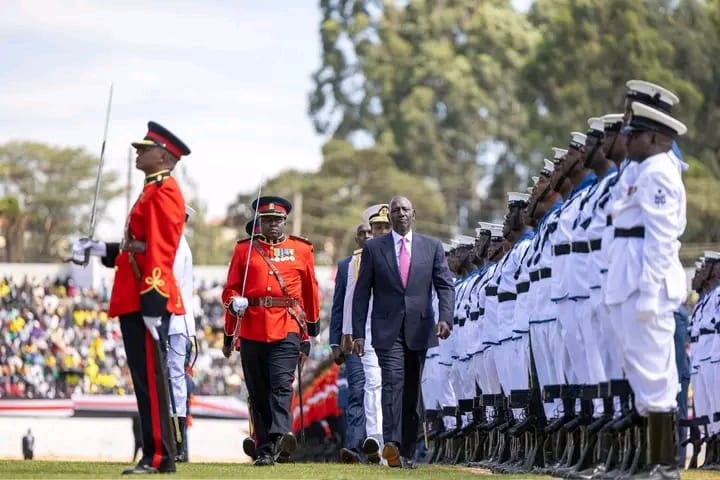
President William Ruto has announced a series of proposed tax relief measures, expanded youth employment opportunities and fresh financial commitments to farmers, using this year’s Mashujaa Day celebrations to outline his administration’s economic priorities ahead of the 2027 General Election.
Speaking on Tuesday, October 20, during the 63rd Mashujaa Day celebrations at Kipchoge Keino Stadium in Eldoret, Uasin Gishu County, the President said his government was preparing measures intended to ease the cost of living, increase disposable incomes, make land ownership more affordable and expand opportunities for young Kenyans seeking employment.
The announcements came as the Head of State defended his administration’s economic record and signalled that next year’s General Election would provide an opportunity for Kenyans to assess his leadership and the progress made during his time in office.
President Ruto said Kenyans would return to the ballot in 2027, when he would present an account of what his administration had achieved and the work delivered so far. The remarks placed the economy, employment and household welfare at the centre of his message as the country approaches another election cycle.
Among the most significant announcements was a proposal to exempt workers earning KSh 32,333 or less per month from Pay As You Earn (PAYE) income tax. The President said the measure was intended to provide relief to low-income earners who continue to face pressure from everyday expenses, including food, transport, education and other household necessities.
The proposed exemption, if approved and implemented, would allow eligible workers to retain a greater share of their monthly earnings. However, the measure is not yet an implemented tax change, as the relevant legal and administrative processes must first be completed.
The National Treasury is expected to present the proposed tax measures to Parliament for consideration, where the details of the changes will determine how and when Kenyans can benefit.
The President also announced plans to exempt land and property transactions valued at KSh 1 million or less from stamp duty, a move intended to reduce the financial burden associated with transferring property and make ownership more accessible to ordinary Kenyans.
For prospective buyers seeking to acquire lower-value properties, stamp duty can form a significant part of the transaction costs. The proposed exemption could therefore provide some relief to individuals and families hoping to purchase land, although its eventual impact will depend on the final policy and legislation.
In another announcement targeting the digital economy, President Ruto proposed the removal of the 25 per cent import duty on mobile phones.
He argued that mobile phones had become essential tools for education, business, communication and employment, particularly for young people seeking opportunities in the digital space.
Reducing the cost of importing phones, the President suggested, would help expand access to digital opportunities and make technology more affordable to a wider section of the population.
For young Kenyans pursuing online work, digital entrepreneurship and other technology-based activities, the proposal could offer potential benefits if the reduction in import duty translates into lower retail prices. The extent of any savings, however, will depend on implementation and how the changes affect the wider supply chain.
The announcements reflect the administration’s effort to address several concerns facing households and businesses, particularly taxation, purchasing power and access to economic opportunities.
President Ruto further announced plans to inject an additional KSh 5 billion into the Hustler Fund before the end of 2026, reinforcing the government’s commitment to expanding access to credit for individuals and small businesses.
The fund, launched as part of the administration’s economic agenda, is intended to provide affordable financing to Kenyans who may struggle to access loans through conventional financial institutions.
The additional allocation is expected to strengthen the programme’s lending capacity, although the benefits will ultimately depend on how the money is distributed, the terms offered to borrowers and the ability of beneficiaries to use the credit productively.
Youth unemployment also featured prominently in the President’s address, with the government planning to expand the National Internship Programme to accommodate 50,000 young Kenyans beginning in January 2027.
The proposed expansion will target graduates from universities, technical and vocational education and training institutions, and other colleges. Successful participants are expected to receive monthly stipends while gaining workplace experience.
President Ruto said the selection process would be based on a transparent, digital and merit-based system, an approach intended to ensure that opportunities are allocated fairly.
The programme seeks to address one of the persistent challenges facing young graduates: the difficulty of securing employment without previous work experience.
For thousands of young people entering the labour market, paid internships could provide an opportunity to develop professional skills, gain practical experience and improve their prospects of securing longer-term employment.
Nevertheless, the programme’s success will depend on the availability of meaningful placements, transparent recruitment, adequate financing and the ability of participating institutions to provide relevant training.
The President also turned his attention to agriculture, particularly the dairy sector, announcing that dairy farmers would receive KSh 65 per litre of milk from October 2026, alongside an additional KSh 2 per litre bonus payable quarterly.
The commitment is aimed at improving farmers’ earnings and strengthening the agricultural sector, which remains a major source of livelihoods across the country.
Dairy farmers have frequently raised concerns about production costs, market access and the prices they receive for their produce. Better returns could help farmers meet the costs of animal feed, veterinary services, transport and other farm operations.
However, the impact of the announced rates will depend on the arrangements governing payments and whether farmers receive the promised amounts consistently.
Agriculture remains a central pillar of the administration’s economic agenda, with the President pointing to interventions aimed at lowering production costs and supporting farmers as part of his broader defence of the government’s performance.
Throughout the address, Ruto sought to connect the proposed tax changes, affordable credit, employment initiatives and agricultural support to his administration’s Bottom-Up Economic Transformation Agenda.
The approach is intended to expand economic participation by supporting households, small businesses, farmers and young people seeking opportunities in the labour market.
Yet the announcements also raise questions about implementation, fiscal sustainability and the speed at which the proposed measures can translate into tangible improvements in people’s lives.
For many households, the central concern remains whether incomes will stretch further, whether essential goods and services will become more affordable, and whether the economy will generate enough jobs to accommodate the growing number of young people entering the labour market.
The proposed measures will therefore be judged not only by the commitments made during national celebrations but also by the practical results achieved after the announcements.
With the 2027 General Election approaching, the economic commitments are likely to form part of the broader national debate over the government’s performance and the direction of the country.
President Ruto has indicated that he intends to present his administration’s record to voters when they return to the ballot next year. That account will be assessed against the commitments made, the policies implemented and the experiences of Kenyans across different economic sectors.
The Mashujaa Day celebrations in Eldoret consequently served two purposes: honouring the country’s heroes and providing the President with a national platform to outline his latest economic proposals while preparing the ground for the political contest ahead.
Whether the proposed tax relief, additional credit, internship opportunities and agricultural commitments will substantially ease the financial pressures facing ordinary Kenyans remains to be seen.
For now, the focus shifts to Parliament, the relevant government agencies and the implementation plans that will determine whether the President’s announcements become concrete benefits for the people they are intended to serve.