

The escalating tension surrounding Iran is more than a bilateral dispute; it is a multi-layered regional challenge that involves the United States, Gulf countries, and key regional players such as Turkey and Qatar. In recent weeks, developments have revealed a delicate dance of diplomacy, influence, and strategic maneuvering aimed at either averting or preparing for conflict. Reports indicate that Saudi Arabia has advised the U.S. to carry out a potential military strike against Iran, reflecting its deep anxiety over Tehran’s regional influence. Meanwhile, Turkey and Qatar have taken an active role in mediating and steering the situation toward negotiation rather than war.
At the center of this unfolding drama is President Donald Trump’s approach to Iran. Known for his unpredictable yet strategic decision-making, Trump appears to have shifted from direct threats to a more cautious stance, influenced in part by Turkey and Qatar’s diplomatic interventions.
This shift underscores the complex interplay of regional interests, power balances, and the potential consequences of military escalation in the Middle East. Understanding the dynamics at play requires a deep dive into the motivations of each actor, the regional context, and the strategic calculations shaping current developments.
Saudi-U.S.-Iran Dynamics: From Threats to Hesitation
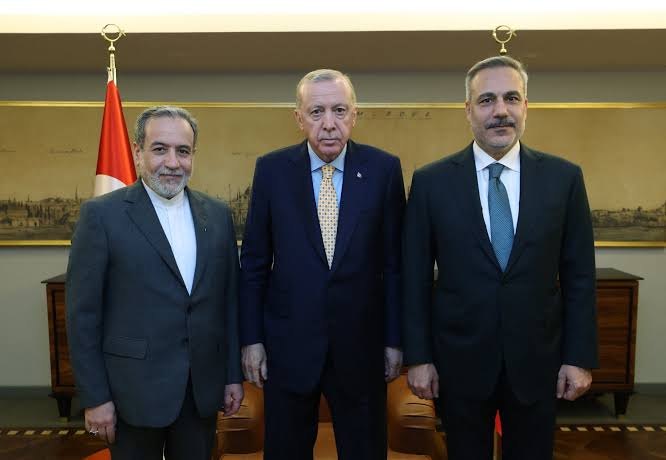
Recent reports in U.S. media revealed that Saudi Arabia had urged President Trump to follow through on his threats to strike Iran. The backdrop to this advice is Riyadh’s longstanding concern over Iran’s influence in the Gulf, particularly through its support for proxy groups and its nuclear ambitions. For decades, Saudi Arabia has viewed Tehran as a strategic rival whose regional expansion could undermine Gulf security. However, shortly after these reports emerged, Iran’s Foreign Minister Abbas Araghchi released a photo showing him holding hands with Turkish President Recep Tayyip Erdoğan and Turkey’s Foreign Minister Hakan Fidan. The photo symbolized Turkey’s role as a “brotherly” mediator and indicated efforts to stabilize the region without resorting to military action. The visual message was clear, Turkey seeks dialogue and diplomacy, positioning itself as a central player capable of preventing a larger conflict.
Following this, it was reported that a senior Saudi official indicated to Turkey that Riyadh would not participate in a joint defense agreement with Pakistan against Iran. This statement hinted at a growing divergence between Saudi Arabia’s hardline stance and Turkey’s preference for diplomatic engagement. It became increasingly apparent that the Gulf and Turkey were advocating for different approaches to the Iran question. In parallel, Trump appeared to soften his position. Media outlets reported that over a 24-hour period, the former U.S. president shifted from issuing aggressive threats to acknowledging ongoing negotiations with Iran. Reports suggested that the efforts of Turkey and Qatar were instrumental in halting the possibility of a U.S.-led strike, highlighting the influence regional powers can exert on Washington’s decisions.
The role of Turkey and Qatar in this delicate situation cannot be overstated. Both countries have historically sought to balance power in the region, and neither seeks the removal of the Iranian regime.
For Turkey, Iran represents a counterbalance to Israel and other Gulf powers, and its stability serves Ankara’s broader strategic interests. A collapse of the Iranian government could unleash chaos, including a resurgence of Kurdish movements in Syria, directly affecting Turkey’s security calculus. Qatar, with its diplomatic channels and ties to both the West and Iran, has similarly positioned itself as a mediator. By supporting negotiation over conflict, Doha seeks to maintain regional stability while preserving its economic and political influence. Both Turkey and Qatar have proven in previous conflicts, such as the Gaza crisis, that they can broker arrangements beneficial to all parties while preventing large-scale military interventions.
One illustrative scenario under discussion involves Iran potentially agreeing to transfer a portion of its enriched uranium to Turkey. Reports suggest that around 440 kilograms of uranium, enriched to approximately 60%, could be removed from Iran under international guarantees that it would not return for nuclear weapons purposes. This proposal, if accepted, would signal Iran’s willingness to curb its nuclear ambitions temporarily while preserving sovereignty and avoiding the fate of past conflicts like Iraq’s invasion. It reflects a pragmatic approach where regional actors aim to reduce the likelihood of war while maintaining a delicate balance of power.
Saudi Arabia and its allies continue to advocate for a strong stance against Iran, fearing Tehran’s growing influence in the Gulf and beyond. The divergence between Gulf hardliners and Turkey-Qatar mediation efforts reveals competing visions of how stability should be maintained. While Riyadh seeks to curb Iran’s power through deterrence and, if necessary, military means, Turkey and Qatar prioritize negotiation and controlled de-escalation, preventing a potentially catastrophic conflict. For the United States, the challenge lies in navigating these competing pressures. Trump’s historical preference for rapid and decisive military action has been tempered by Turkey and Qatar’s influence, illustrating the leverage regional powers hold in guiding American foreign policy. The situation highlights a broader lesson: regional diplomacy often shapes U.S. strategic decisions more than unilateral threats, particularly when potential conflict carries high economic and human costs.
The stakes extend beyond Iran and its immediate neighbors. A destabilized Iran would reverberate throughout the Middle East, potentially triggering proxy conflicts, disrupting energy markets, and challenging global security frameworks. Turkey’s strategic interest in maintaining a stable Iran reflects concerns about refugee flows, border security, and Kurdish movements, while Qatar’s investment in diplomacy preserves its role as a regional power broker. The Iran nuclear issue remains central. While Tehran’s potential concession to transfer enriched uranium could prevent immediate conflict, it does not erase the long-term strategic calculus. Iran’s ambitions, historical grievances, and regional influence make a lasting resolution difficult.
The question of whether Iran will resume nuclear development once international attention shifts remains open, highlighting the temporal nature of negotiated solutions.
Can a U.S. Strike on Iran Be Averted?
Given the current landscape, a U.S. military strike on Iran is not inevitable. Reports suggest that diplomatic interventions by Turkey and Qatar have already prevented escalation, emphasizing negotiation over confrontation. However, achieving a sustainable resolution requires addressing multiple factors: Iran’s security and sovereignty, the regional power balance, U.S. domestic politics, and international oversight to ensure that any uranium transfer or nuclear limitation is verifiable under global supervision. While these factors provide a framework for negotiation, uncertainty remains. Iran’s ambitions, regional rivalries, and shifting U.S. policies mean that any agreement is fragile and contingent on continuous diplomatic engagement.
The current situation illustrates the complexity of Middle East diplomacy, where local, regional, and global interests intersect. Turkey and Qatar have demonstrated that careful negotiation can temporarily prevent conflict, protect strategic balances, and limit the likelihood of war. However, the broader question remains: if Iran agrees to limit its nuclear program and transfer enriched uranium, is this a genuine step toward lasting peace, or merely a temporary measure to avoid a trap similar to Iraq’s invasion? Time will ultimately reveal whether these diplomatic efforts succeed in stabilizing the region or whether underlying tensions will resurface, creating conditions for renewed confrontation.
For now, the delicate interplay of power, diplomacy, and strategic calculation has opened a window for negotiation
a window that, if handled wisely, may prevent a catastrophic conflict and maintain regional stability in one of the world’s most volatile regions.