

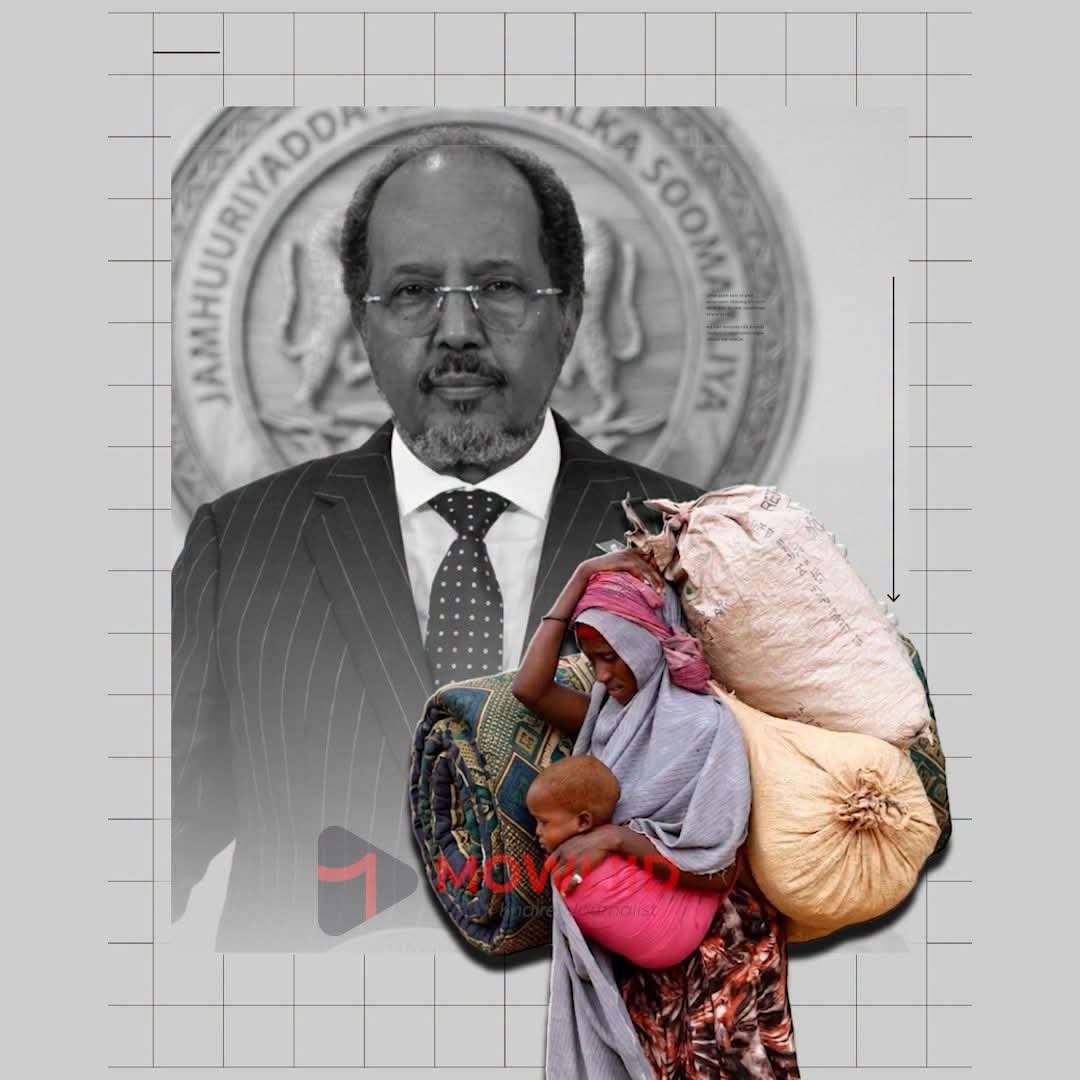
Mogadishu is confronting a deeply disturbing question: what happens when the government that is supposed to protect citizens becomes the force standing between those citizens and their homes?
The scenes emerging from Yaaqshiid district on Sunday have once again placed Somalia’s capital at the centre of a growing crisis over land, forced evictions, state power and the rights of ordinary citizens. In the Tookiyo neighbourhood, residents resisted an operation involving security forces and bulldozers as authorities moved to demolish homes on land the government says belongs to the state. Local reports said nearly 10 people were injured, while other accounts circulating from the area alleged deaths. The exact casualty toll remains unclear and had not been independently established at the time of writing.
But the significance of what happened in Yaaqshiid goes far beyond the number of houses demolished, people displaced or casualties reported.
It raises a much larger question about the relationship between the Somali state and the people it governs.
When bulldozers arrive with armed security forces behind them, the dispute ceases to look like an ordinary disagreement over land ownership. It becomes a test of whether institutions, courts and the rule of law are functioning or whether force has become the fastest route to resolving disputes involving land and property.
The government maintains that some of the land being reclaimed is public or state-owned. That claim cannot simply be dismissed. A government has a legitimate responsibility to protect public property and prevent illegal occupation of state land. But ownership disputes cannot be settled merely by the arrival of bulldozers and heavily armed personnel. If the state possesses documentation proving that land belongs to it, the stronger argument is not the gun; it is the court, the land registry, the transparent legal process and the evidence.
That is precisely why the events in Yaaqshiid have generated such anger.
Residents say they are being removed from places they consider their homes and properties, while critics accuse powerful actors of using state institutions to facilitate land acquisition. Those allegations including claims that businessmen connected to President Hassan Sheikh Mohamud or his political network could benefit from land cleared through evictions are serious allegations that require independent investigation rather than being presented as established fact.
And that investigation is now more necessary than ever.
The Somali Union of Islamic Scholars had already warned this week that property should not be taken from citizens through administrative orders, intimidation or force without a fair legal and judicial process. The scholars called for investigations into complaints from residents who said their properties had been challenged or demolished despite possessing documents they considered valid.
That warning matters because it demonstrates that the anger surrounding Mogadishu’s land crisis is not simply coming from political opponents.
It is becoming a broader societal concern.
Former President Sharif Sheikh Ahmed has condemned the Yaaqshiid operation, arguing that the national forces established to defend citizens are instead being used to displace them. Former Prime Minister Hassan Ali Khaire has similarly called on the public to resist what he described as forceful evictions and injustice. Their statements are political, and they must therefore be understood within Somalia’s intense political contestation. But their criticism reflects a concern that has been growing beyond the opposition camp.
The most uncomfortable part of this crisis is the symbolism of the security forces.
Somalia has spent years rebuilding an army whose primary justification is the protection of the country from Al-Shabaab and other armed threats. Citizens have been repeatedly told that the national security forces are being strengthened so that the state can eventually assume full responsibility for national security.
So what does it communicate to an ordinary Somali family when the same state that asks them to trust its security forces sends armed personnel to the neighbourhood where they live?
Sharif Sheikh Ahmed’s criticism captures this contradiction sharply. His argument, in essence, is that soldiers should not appear more confident confronting unarmed civilians than confronting Al-Shabaab. Whether one agrees with his political position or not, the question deserves public debate.
A government cannot build legitimacy through security operations alone.
It builds legitimacy when citizens believe that the law protects them even when they have no political connections, no powerful relatives and no money to fight the state.
This is where the land crisis becomes much more dangerous than a property dispute.
The European Union Agency for Asylum, citing displacement and conflict-monitoring data, reported in June that Mogadishu’s forced-eviction crisis had worsened, with deaths, physical assaults and destruction of housing and property reported. Between April 2025 and March 2026, ACLED recorded 84 protests against forced land evictions across Somalia, 78 of them in Banadir/Mogadishu. The EUAA also reported that government-led evictions had increased as the federal government reclaimed properties it said belonged to the state.
This means Yaaqshiid did not suddenly appear from nowhere.
It is another explosion in a crisis that has been building for years.
Earlier this month, residents of Waberi also protested demolitions and forced evictions, with local reporting alleging that live ammunition was used and at least one civilian was wounded.
The pattern is therefore becoming politically dangerous: eviction, resistance, deployment of security forces, confrontation, casualties and then another neighbourhood enters the cycle.
That is not sustainable governance.
And the most explosive allegation surrounding the current crisis is the claim that land cleared through government operations could ultimately end up in private hands.
Again, those claims must be investigated rather than assumed to be true.
But the fact that such allegations are spreading so rapidly tells us something important about public confidence. When citizens begin to believe that public authority is being used to enrich politically connected individuals, every government land operation becomes suspect. Even a legitimate reclamation of public property can lose credibility if the process is opaque.
The answer, therefore, cannot simply be another security operation.
The answer must be transparency.
Every disputed plot should have an identifiable legal history. Every eviction should have a documented legal order. Every affected family should know why it is being removed, who owns the land, which institution authorised the operation and what mechanism exists for appeal. Where compensation is legally required, it should be addressed. Where alternative accommodation is necessary, the government should have a credible plan.
Instead, the image currently emerging from Mogadishu is of families carrying their belongings into the streets while bulldozers destroy the places they once called home.
That image is politically devastating.
It is also socially dangerous.
As analyst Abdiwahab Sheikh Abdisamad warned in the statement provided to Siyad Report, “Bulldozing poor people’s homes is NOT good governance. It is a recipe for anger, unrest, and eventually social revolution.”
The language is deliberately strong, but the underlying point deserves attention. Governments ignore housing grievances at their own peril. A person can lose income and eventually recover. A business can collapse and later be rebuilt. But when a family loses its home, its sense of security and dignity can disappear overnight.
The solution proposed in that warning — a serious housing programme built around affordable, long-term financing and partnerships — deserves consideration as part of a broader response. Somalia cannot resolve urban land disputes simply by clearing communities. Mogadishu is growing, and the capital needs an urban housing policy that recognises both public land rights and the human reality of families who have nowhere else to go.
The reported appearance of Turkish F-16 aircraft over Mogadishu during the unrest adds another layer of controversy. Residents have alleged that the aircraft were intended to intimidate communities resisting eviction. Footage circulating online appears to show a fighter aircraft over an area where smoke was visible, but the footage alone does not establish the aircraft’s mission or prove that it was connected to the eviction operation. No confirmed evidence has emerged showing that Turkish aircraft were deployed specifically to support the demolitions.
That distinction is essential.
Somalia’s relationship with Turkey is strategically important, particularly in defence and security. Turning an unverified allegation into a fact would therefore be irresponsible. But the controversy itself demonstrates how deeply distrust has penetrated the public conversation.
When people see military aircraft overhead while security forces are confronting residents over their homes, fear naturally becomes part of the story.
The bigger danger for President Hassan Sheikh Mohamud’s administration is therefore not merely the political criticism of Sharif Sheikh Ahmed, Hassan Ali Khaire or Mohamed Abdullahi Farmaajo.
It is the erosion of public trust.
Farmaajo’s statement, as provided to Siyad Report, describes the demolitions as a “barbaric act” and accuses the administration of using national institutions to displace citizens. Those are political accusations, not independently established findings. But they illustrate the scale of the political narrative now forming around the government.
The administration can defeat that narrative only through evidence.
If the land is government property, publish the records.
If residents are occupying public land illegally, explain the legal basis.
If businessmen are alleged to have benefited, investigate and disclose the findings.
If security forces used excessive force, investigate the officers responsible.
If civilians were killed, establish how they died and who fired the fatal shots.
And if government officials acted outside the law, hold them accountable.
Silence will not resolve this crisis.
Neither will another bulldozer.
Mogadishu needs a land governance system that is stronger than political connections and more credible than armed force. It needs courts capable of resolving property disputes, reliable land records, transparent public auctions and allocations, meaningful notice before evictions, and an independent mechanism for investigating allegations of abuse.
The government must understand that every demolished home is not merely a structure made of bricks and metal.
It is somebody’s history.
It is where children sleep.
It is where a mother stores her belongings.
It is where a father built his hopes.
It is where a family believes the state will allow it to exist in peace.
The government may have the physical power to remove those families.
But political power is not the same as legitimacy.
Somalia has spent decades trying to rebuild a state after war destroyed institutions and public trust. The greatest mistake would be to rebuild the machinery of government while simultaneously teaching citizens that those institutions cannot protect them when their homes are threatened.
The Yaaqshiid crisis should therefore become a national turning point.
Not another cycle of condemnation, social-media outrage and political speeches followed by the next demolition.
A credible independent investigation should establish what happened, how the operation was authorised, what land was targeted, who claims ownership, what happened to the affected families and whether any public officials or private actors stand to benefit from the disputed properties.
The government should also immediately suspend contested demolitions where ownership has not been judicially determined.
Because if the state wins a land dispute by force but loses the confidence of its people, it has not truly won.
It has only moved the conflict from the courtroom to the street.
And Mogadishu has already seen enough of what happens when disputes over power, land and dignity are settled through guns instead of institutions.
The warning signs are no longer subtle.
Families are being displaced. Residents are resisting. Security forces are confronting civilians. Religious scholars are demanding legal process. Opposition leaders are accusing the government of abuse. Land-grabbing allegations are multiplying. And the public is watching every bulldozer, every gunshot and every demolished home through the lens of a much bigger question:
Who does Mogadishu belong to the people who live in it, the state that governs it, or the powerful individuals who can influence what happens to its land?
That question cannot be answered with bullets.
It must be answered with the law.