

Somalia’s recent political standoff, which saw Puntland and Jubbaland delegations barred from landing in Mogadishu due to security concerns, is a stark reminder of a chronic challenge, the country’s leaders too often rely on external actors to mediate disputes that should be resolved internally. The episode at Aden Adde International Airport, while dramatic, is symptomatic of a deeper problem the inability of Somali political actors to reach consensus and build trust without foreign pressure.
The federal government’s decision to turn back flights carrying security personnel for Puntland President Said Abdullahi Deni and Jubbaland President Ahmed Madobe has been defended legally, citing Articles 53 and 54 of the Provisional Constitution. These provisions grant the federal government exclusive authority over national defense and security, making any movement of armed forces into Mogadishu subject to federal approval. On paper, the government’s actions are defensible: allowing regional armed forces to operate in the capital without coordination could create parallel chains of command, jeopardize stability, and send the wrong message both domestically and internationally.
Yet legality alone does not solve political dysfunction. Puntland and Jubbaland argued that their security arrangements were agreed upon beforehand and that the federal government’s actions endangered the lives of their delegations. President Deni even characterized the move as an “attempted assassination,” reflecting the high levels of mistrust that define Somali politics today. The Somali Future Council (SFC) also condemned Mogadishu’s actions, highlighting how such interventions disrupt national dialogue processes and raise questions about the federal government’s good faith.
This incident illustrates a recurring pattern: internal disagreements in Somalia often escalate to the point where external actors such as the United Nations or the European Union are called in to mediate. UNTMS and EU representatives swiftly urged all parties to prioritize dialogue and create conditions conducive to talks. While international intervention can prevent immediate crises, it does not address the underlying governance deficit.
As aptly noted by our Chief Editor and political reporter, Abdihakim Siyad:
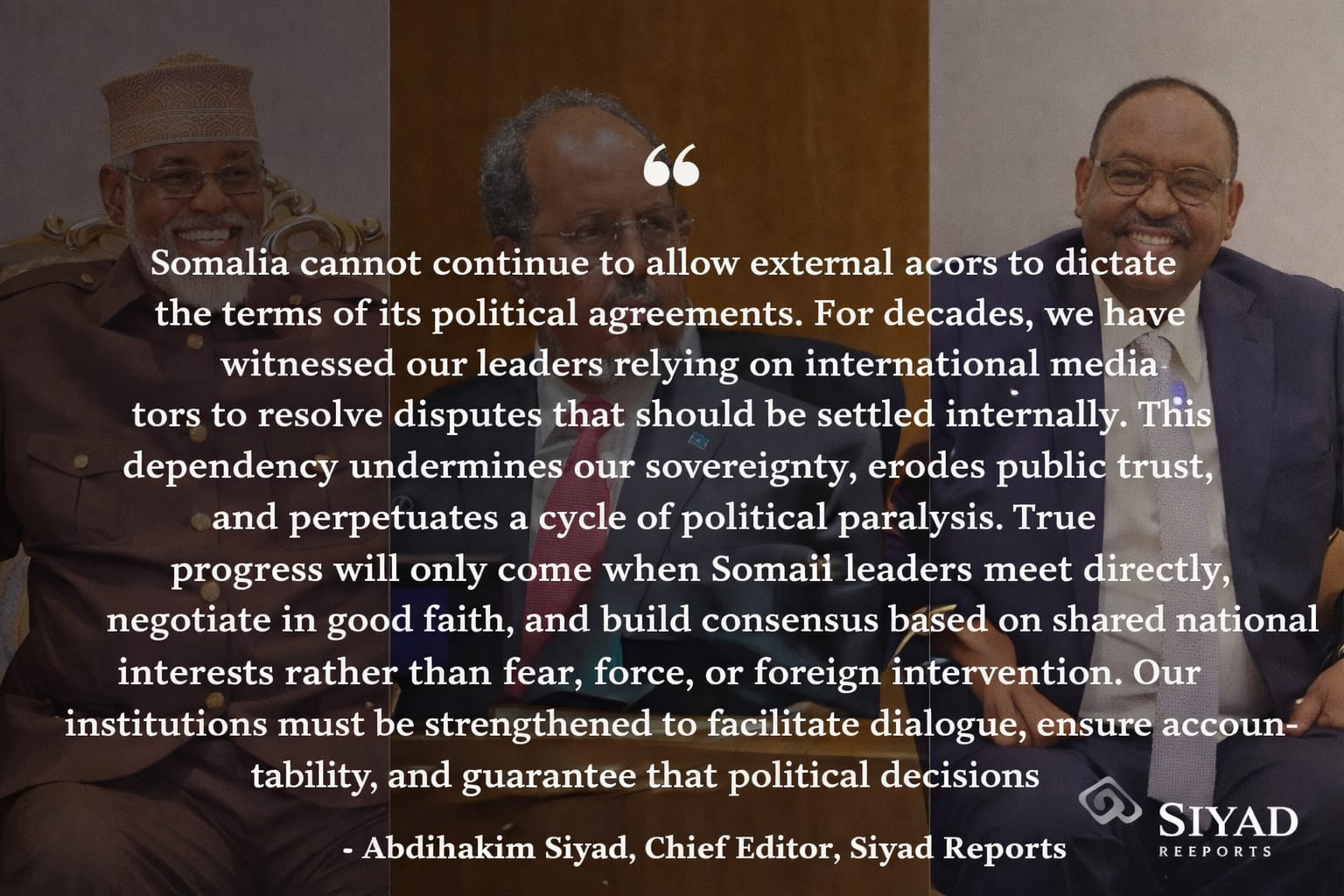
“Somalia cannot continue to allow external actors to dictate the terms of its political agreements. For decades, we have witnessed our leaders relying on international mediators to resolve disputes that should be settled internally. This dependency undermines the sovereignty, erodes public trust, and perpetuates a cycle of political paralysis. True progress will only come when Somali leaders meet directly, negotiate in good faith, and build consensus based on shared national interests rather than fear, force, or foreign intervention. The institutions must be strengthened to facilitate dialogue, ensure accountability, and guarantee that political decisions reflect the will of Somalis themselves. Anything less risks repeating the same mistakes that have held the country at a standstill for far too long.”
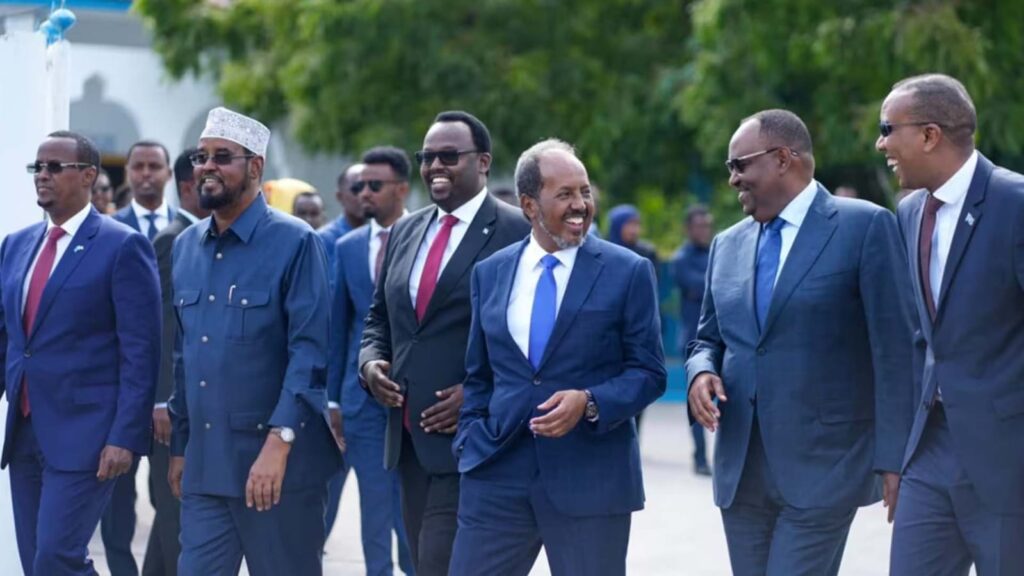
The analyst’s observation is both incisive and troubling. If Somali leaders cannot negotiate internally, every political dispute risks paralysis, every dialogue is contingent on foreign facilitation, and every crisis becomes an opportunity for external actors to shape the country’s trajectory. This weakens national sovereignty and reinforces a dangerous cycle where Somali institutions remain secondary to international mediation.
For Somalia to progress, a paradigm shift is essential. Political consensus must be built internally, not imposed externally. Federal and regional leaders need to cultivate a culture of trust, transparency, and respect for constitutional processes without defaulting to external actors as arbiters. The events at Mogadishu airport highlight that this culture is still absent: mistrust between the federal government and its member states is so deep that even a routine consultative meeting requires armed escorts, mid-air turnbacks, and emergency statements.
The danger of relying on external mediation is not hypothetical. It reinforces dependency and perpetuates the perception that Somali leaders cannot solve their own problems. Over time, this erodes confidence in Somali institutions, diminishes the legitimacy of both federal and regional governments, and signals to the public that governance is contingent on foreign influence rather than domestic consensus.
True political stability will only come when Somali leaders are willing to meet, negotiate, and compromise within their own frameworks. Dialogue must be rooted in mutual respect and constitutional understanding, not fear of reprisal or hope of foreign intervention. Puntland and Jubbaland’s concerns about security illustrate a legitimate problem, but the solution cannot be to bypass federal authority, nor should the federal government unilaterally assert control in ways that alienate regional partners. Both sides must accept that compromise is not a sign of weakness it is a prerequisite for national survival.
Somalia’s challenges are immense: elections, constitutional amendments, and contested mandates all require careful negotiation. External actors will continue to provide support, advice, and technical assistance but they should not determine outcomes. Somali leaders must reclaim agency over their own politics, forging agreements that reflect national interests rather than appease foreign observers. Only then can the country escape the cycle of political zero points and crisis-driven interventions that have defined much of its modern history.
The Aden Adde Airport incident is a warning, without internal consensus, Somalia remains vulnerable to deadlock and manipulation. Somali leaders must learn to negotiate directly, prioritize dialogue over displays of force, and trust in constitutional frameworks to resolve disputes. External partners can advise, but they cannot lead. The nation’s future depends on leaders taking responsibility not calling in others to enforce what they should agree upon themselves.
Somalia cannot continue to be guided by external pressures. Sovereignty, legitimacy, and stability demand that its political actors settle differences through dialogue and consensus. Anything less perpetuates the cycle of dependency, mistrust, and crisis that has kept Somalia on the edge for decades.
The next steps taken by federal and regional leaders will determine whether this cycle continues or whether Somalia finally asserts its capacity to resolve political disagreements internally.