

As leaders from countries contributing troops to the African Union Support and Stabilization Mission in Somalia (AUSSOM) gather in Kampala, Uganda, Somalia is making one of its most consequential diplomatic appeals in recent years. Facing renewed security challenges and growing uncertainty following the United States’ decision to halt support for the mission, the Federal Government of Somalia is urging regional partners to extend AUSSOM’s mandate by at least two more years.
The high-level conference comes at a critical moment for Somalia’s security landscape. While the Somali National Army (SNA), supported by local community forces and international partners, has made significant gains against Al-Shabaab over the past three years, recent militant offensives have exposed persistent vulnerabilities. The Somali government argues that withdrawing or significantly reducing the African Union mission now could reverse hard-won gains and provide Al-Shabaab with an opportunity to reclaim territory, particularly around the capital, Mogadishu.
Representing Somalia at the Kampala meeting are Security Minister Abdullahi Sheikh Ismail Fartag and the Chief of the Somali National Army. Their participation underscores the significance Mogadishu attaches to the discussions, which are expected to shape the future of AUSSOM and regional security cooperation.
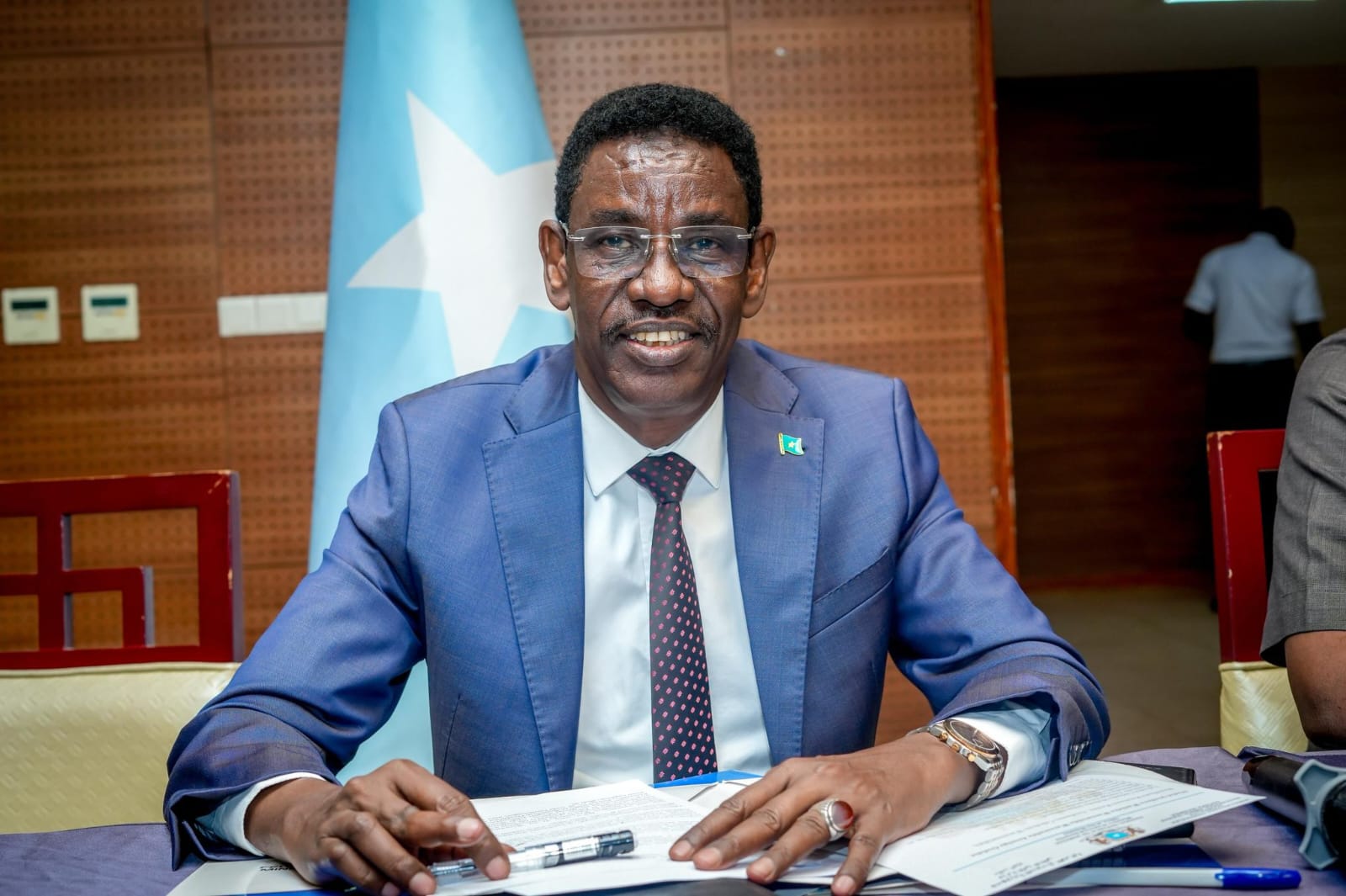
Adding diplomatic weight to Somalia’s position, Foreign Minister Abdisaalan Abdi Ali is carrying a letter from President Hassan Sheikh Mohamud addressed to the heads of state of troop-contributing countries. In the letter, the Somali President reportedly requests that AUSSOM’s mandate be extended for at least two more years, arguing that Somalia’s security institutions still require regional support to fully assume responsibility for national security.
The request reflects growing concern within the Somali government over the evolving threat posed by Al-Shabaab. Although government forces have intensified military operations in central and southern Somalia over recent weeks, the militant group has demonstrated its ability to regroup, launch coordinated attacks and exploit security gaps in areas where government presence remains limited.
For Mogadishu, the stakes could not be higher.
The capital remains the political, economic and administrative heart of Somalia. Despite improved security compared to previous years, Al-Shabaab continues to carry out deadly bombings, targeted assassinations and complex attacks within the city. Somali officials fear that a premature drawdown of AUSSOM forces could weaken security arrangements and increase the risk of militants expanding their operational reach toward strategic urban centres.
The Kampala conference also takes place against the backdrop of changing international dynamics.
The reported decision by the United States to halt support for AUSSOM has raised fresh questions about the mission’s financial sustainability. International funding has long been one of the pillars supporting African Union peace operations in Somalia. Any reduction in external assistance places additional pressure on troop-contributing countries, many of which already face economic constraints and competing domestic priorities.
This funding uncertainty is expected to dominate discussions among regional leaders.
Countries contributing troops—including Uganda, Kenya, Ethiopia, Djibouti and others—must now weigh Somalia’s request for an extension against the financial, political and security realities facing the mission. Their decision will influence not only Somalia’s internal security but also the wider stability of the Horn of Africa.
Since replacing the African Union Transition Mission in Somalia (ATMIS), AUSSOM has been tasked with supporting Somali security institutions, protecting key government infrastructure, mentoring Somali forces and assisting in operations against Al-Shabaab while gradually transferring security responsibilities to Somali authorities.
The transition has always been intended to end with Somali forces taking full responsibility for the country’s security.
However, Somali officials argue that the conditions necessary for a complete transfer have not yet been achieved.
Although the Somali National Army has expanded its operational capacity and demonstrated improved battlefield performance, challenges remain. Limited logistical capabilities, uneven force generation, intelligence gaps, inadequate equipment and the continued threat posed by Al-Shabaab all complicate efforts to maintain security independently across the country.
Military analysts note that Al-Shabaab has increasingly shifted its tactics over recent years. Rather than relying solely on controlling territory, the group has embraced mobile warfare, improvised explosive devices (IEDs), targeted assassinations and surprise attacks designed to stretch government forces and undermine public confidence.
These tactics have allowed the group to remain resilient despite sustained military pressure.
For President Hassan Sheikh Mohamud’s administration, maintaining momentum in the fight against Al-Shabaab requires continued regional and international support. Officials believe that an extension of AUSSOM would provide critical time to strengthen Somali security institutions, improve command structures and complete ongoing security sector reforms before assuming full responsibility.
The Kampala summit therefore represents more than a routine meeting of troop-contributing countries.
It is effectively a strategic review of Somalia’s security transition and a test of regional commitment to stabilising the country. The decisions reached could shape the trajectory of Somalia’s security for years to come.
Regional leaders are also expected to discuss how AUSSOM can adapt to emerging security realities, improve operational coordination and address funding challenges created by shifting international priorities. The future structure, financing and operational mandate of the mission are likely to feature prominently during the consultations.
For neighbouring countries, Somalia’s stability remains directly linked to regional peace and security. Al-Shabaab continues to pose threats beyond Somalia’s borders, having carried out attacks in Kenya and maintained ambitions to destabilise the wider region. As a result, troop-contributing countries have strong strategic interests in ensuring Somalia does not become a safe haven for extremist groups.
The Somali government’s appeal is therefore not simply about extending a military mission.
It is also about preserving regional security cooperation during a period of uncertainty and ensuring that the gains achieved through years of joint operations are not lost.
Whether troop-contributing countries agree to the requested two-year extension remains to be seen. Their deliberations in Kampala are expected to balance Somalia’s security concerns against operational realities, financial constraints and long-term plans for transitioning security responsibilities to Somali institutions.
What is already clear, however, is that Somalia has entered a decisive phase in its fight against Al-Shabaab.
The outcome of the Kampala conference could determine whether AUSSOM remains a central pillar of Somalia’s security architecture over the coming years or whether the country accelerates its transition toward independently managing one of Africa’s longest-running counter-insurgency campaigns.
For Somalia, the message being delivered in Kampala is straightforward: while significant progress has been made, the battle against Al-Shabaab is not yet over, and withdrawing regional support too soon could jeopardise both Somalia’s stability and the security of the wider Horn of Africa.