

At least nine people have been killed, around 30 injured and thousands of civilians displaced following deadly clashes between security forces associated with Ethiopia’s Somali Regional State and Oromia Regional State in the border town of Moyale, where longstanding territorial disputes have once again escalated into armed confrontation.
The fighting, which erupted on October 21, intensified the following day, with residents reporting sustained exchanges of heavy gunfire, damage to property and houses reportedly set ablaze. According to Reuters, a hospital official in Ethiopian Moyale reported that approximately 30 injured people had been admitted over several days, with nine subsequently reported dead. The figures have not been independently verified and may change as further information emerges.
The violence has spread beyond Moyale into parts of Gumi Eldallo, Wachile and Arero districts in southern Oromia, raising concerns that the confrontation could extend further into neighbouring areas. Reports from residents and local officials link the escalation to tensions surrounding the raising of the Somali Regional State flag in a disputed area administered by Oromia.
The killing of a 13-year-old girl, identified in local reporting as Diqqoo Jaataan Aagaa, on October 18, also reportedly contributed to the deterioration of an already fragile situation. Accounts of the circumstances surrounding her death remain contested, with conflicting claims about responsibility and the events that preceded the fighting.
Across the border, the consequences have become increasingly visible in the Kenyan town of Moyale. Marsabit County Commissioner Stanley Kamande reported that at least 2,500 displaced Ethiopians had crossed into Kenya by October 23, seeking refuge from the violence. Many of those fleeing are women and children, while Kenya Red Cross has mobilised assistance, including temporary shelter, food, clean water and other essential supplies.
The violence has also affected people on the Kenyan side, where a woman was reportedly struck in the neck by a stray bullet but survived after receiving treatment. The movement of civilians, disruption to trade and insecurity along a shared border have turned what began as a confrontation within Ethiopia into a humanitarian and security concern for both countries.
Yet the significance of Moyale extends beyond the immediate casualty figures. For Somali communities in Ethiopia and across the border in Kenya, the violence has revived a difficult question about the country’s federal system: why do disputes over territory, regional identity and administrative authority continue to expose civilians to armed confrontation, and what responsibility does the federal government bear when regional institutions fail to resolve them?
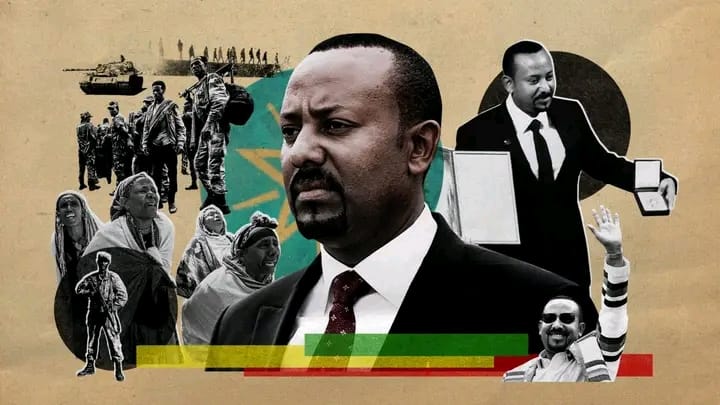
Under Prime Minister Abiy Ahmed, who came to power in 2018, Ethiopia has continued to grapple with the contradictions of an ethnic-based federal arrangement that grants regional states political and administrative authority while leaving some territorial disputes unresolved.
The arrangement was designed, in part, to accommodate the country’s diverse communities and their claims to self-government. In practice, however, disputes over regional boundaries, local administration and the authority to exercise control over contested areas have repeatedly become sources of tension.
Moyale illustrates how quickly these unresolved questions can move from political disagreement to violence. The raising of a regional flag may appear to be a symbolic act, but in a contested area, symbols of authority can carry implications for territorial claims, political recognition and control over local administration.
When communities disagree over which regional authority has the right to operate in a particular area, even a seemingly limited administrative dispute can acquire a much broader political meaning.
The flag dispute alone, however, does not explain the full depth of the crisis. The more fundamental issue is the absence of a sufficiently trusted and effective mechanism for resolving competing claims before they become security confrontations.
Where boundaries remain contested, administrative decisions lack broad acceptance and allegations of wrongdoing are not addressed transparently, local tensions can quickly become entangled with regional political interests.
For Somali communities, the historical record gives these concerns a particularly painful context. The conflict along the Oromia–Somali regional border in 2016 and 2017 resulted in hundreds of deaths and the displacement of more than one million people, according to historical humanitarian reporting. Human Rights Watch documented killings, assaults, looting and forced displacement during the violence, while noting that the federal government’s response did little to halt the crisis until much of the displacement had already occurred.
These findings demonstrate that the consequences of unresolved regional disputes can be devastating when security institutions fail to protect civilians effectively.
That history does not establish that the present fighting has the same causes in every respect, nor does it prove that one community or regional administration is solely responsible. It does, however, explain why renewed clashes generate anxiety among people who remember earlier displacement.
For families who have experienced the loss of homes, livestock, livelihoods and access to ancestral land, another outbreak of violence is not simply a temporary security incident. It raises the possibility that familiar patterns of insecurity could return.
The political responsibility of Abiy’s administration must therefore be examined through its response to the present crisis. The federal government has a responsibility to ensure that disagreements between regional administrations do not become prolonged armed confrontations.
That responsibility includes deploying appropriate security and mediation mechanisms, protecting civilians, facilitating humanitarian access and ensuring credible investigations into reported killings and property destruction.
The absence of an immediately visible and decisive federal response, as described by critics of the government’s handling of the situation, has contributed to questions about Addis Ababa’s ability and willingness to intervene. Nevertheless, the extent of the government’s operational response, including any measures not publicly reported, requires independent verification.
Silence or limited public communication alone cannot establish deliberate political complicity. The relevant test is whether federal institutions take effective action to stop the violence, protect those at risk and resolve the dispute through lawful processes.
Kenyan Somali politician Farah Maalim has articulated a more confrontational interpretation of the wider political dynamics. In remarks attributed to him concerning the Moyale fighting, he said, “You will never make Somalis surrender.”
His broader criticism has portrayed Oromo political elites under Abiy as seeking a dominant position within Ethiopia, which he has described through the phrase “the New Emperors of Ethiopia.” These statements reflect Maalim’s political assessment of the situation, rather than independently established proof of a coordinated expansionist project.
His remarks nevertheless capture a sentiment that can emerge when communities believe their territorial claims are being disregarded or that the institutions meant to protect them are failing. For those holding this view, Moyale is not an isolated dispute over a flag.
It represents a broader fear that administrative decisions and regional power struggles could gradually weaken the security and political standing of Somali communities.
That interpretation deserves scrutiny, but it must also be tested against evidence. Oromia is home to a major population with its own historical grievances, political aspirations and security concerns. Somali communities likewise have legitimate interests in their identity, representation, livelihoods and territorial rights. Neither community should be collectively blamed for the actions of armed personnel or political leaders.
Establishing responsibility for specific attacks requires evidence about who ordered, carried out or failed to prevent them.
Ethiopia’s wider experience under Abiy provides additional context for understanding the stakes. The Tigray war, which began in November 2020 and formally entered a ceasefire framework through the November 2022 Pretoria agreement, produced catastrophic civilian suffering. A joint investigation by the Ethiopian Human Rights Commission and the United Nations human rights office found reasonable grounds to believe that parties to the conflict committed serious violations of human rights and humanitarian law, some potentially amounting to war crimes and crimes against humanity.
The conflict demonstrated the devastating consequences when political disputes are militarised and civilian protection becomes inadequate.
The renewed insecurity reported in northern Ethiopia further illustrates the fragility of the country’s security environment. But the existence of multiple conflicts should not be used to suggest that every regional confrontation is directed by the same political strategy. Rather, it highlights the challenge facing a federal government expected to manage competing regional interests, prevent escalation and maintain confidence in national institutions.
Moyale is particularly significant because its consequences do not stop at Ethiopia’s administrative boundaries. The town sits astride an international frontier where families, pastoral livelihoods, commerce and social relationships connect communities on both sides. When people flee across that frontier, Kenya inherits part of the humanitarian burden.
Local families must find accommodation, aid organisations must mobilise resources, and authorities must maintain security while ensuring that displaced civilians receive protection. Continued violence could deepen these pressures and disrupt the movement of people and goods through an important cross-border corridor.
For this reason, the response cannot be limited to emergency relief. Humanitarian assistance is essential, but it does not resolve the political conditions that force people from their homes. Ethiopia’s federal authorities and the two regional administrations must establish an immediate cessation of hostilities, protect civilians, facilitate safe access for aid organisations and investigate the reported deaths, injuries and destruction of property.
Any findings must be followed by accountability measures that apply regardless of the identity or affiliation of those responsible.
Beyond the immediate emergency, a credible process is needed to address the underlying territorial and administrative disputes. That process should involve affected communities, establish clear and lawful procedures for determining jurisdiction, and provide an impartial mechanism for resolving disagreements.
Decisions affecting contested areas must not be imposed through armed force, and neither the display of a flag nor the presence of regional security personnel should become a substitute for a legitimate settlement.
Ultimately, the significance of Moyale lies in the test it presents for Ethiopia’s federal order under Abiy Ahmed. A system intended to accommodate the country’s diverse communities cannot command lasting confidence if disputes over authority repeatedly end in civilian deaths and displacement. Nor can regional peace depend on whether rival administrations happen to exercise restraint at a particular moment.
For Somali communities, the immediate concern is the safety of families fleeing the fighting and the prevention of another cycle of displacement. The wider question is whether their territorial and political concerns will receive a credible institutional response rather than being left to competing forces on the ground.
For Oromia’s communities, the same crisis demands protection from violence and a fair process for addressing their own security and administrative concerns.
Moyale should therefore be understood neither as proof of a predetermined political conspiracy nor as a routine local quarrel. It is a warning about the human cost of unresolved territorial disputes, contested authority and inadequate civilian protection.
The decisive measure of Ethiopia’s federal government will be whether it can stop the fighting, establish the facts, hold perpetrators accountable and create a process through which regional disagreements are settled without civilians paying the price.
Until that happens, the raising of a flag in a disputed town will remain a reminder of a much larger problem: when political authority is contested and institutions fail to command trust, it is often ordinary families who bear the consequences.