

Somalia finds itself navigating a precarious political landscape, as the federal government and regional administrations
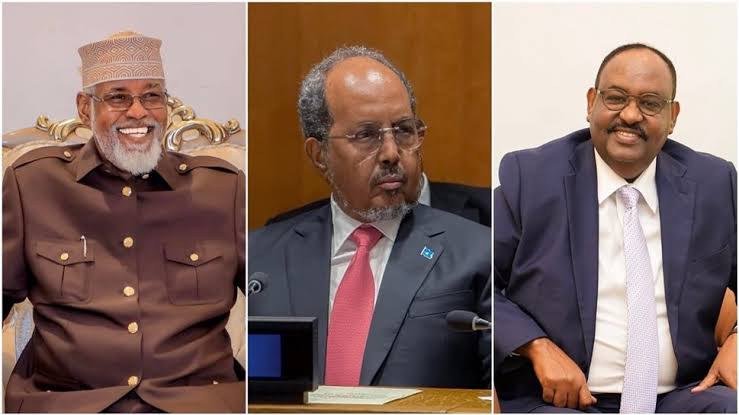
most notably Puntland and Jubbaland face mounting tensions. The events of February 1, 2026, when security details for the Puntland and Jubbaland presidents were denied airspace clearance and turned back, have drawn both national and international attention, highlighting the fragility of Somalia’s political processes and the challenges of sustaining a unified federal system.
Within just three days, Somalia’s federal government issued two statements that appear to convey conflicting messages. The first statement described the February 1 incident as “unfortunate” but stopped short of offering a formal apology to the affected regional administrations.
This hesitation reflects the delicate position the government is in: balancing domestic and international pressure to engage constructively with Puntland and Jubbaland, while maintaining political leverage and asserting federal authority. Analysts suggest that the lack of an explicit apology may have been a calculated strategy to appear firm yet keep channels for negotiation open.
The second statement by the federal government emphasizes Somalia’s commitment to national unity, social cohesion, and a system built on consultation and dialogue. According to the government, extensive preparations were carried out by technical committees, consultations were held with intellectuals and civil society, and meetings were conducted with counterparts from the Council for the Future, a key opposition-backed platform advocating dialogue. The government highlighted that all technical procedures for the national dialogue conference had been agreed upon, signaling official readiness to move forward despite recent political turbulence.
Yet uncertainty continues to cloud the process. No official date has been confirmed for the dialogue, and leaders from Puntland and Jubbaland have not indicated whether they will participate. The joint technical committees, responsible for facilitating the practical arrangements of the talks, remain largely inactive.
This inactivity has raised skepticism about whether the dialogue will take place in earnest and underscores the federal government’s struggle to navigate a web of competing political interests, local power dynamics, and international expectations.
Political observers interpret the federal government’s approach as an attempt to address multiple objectives simultaneously. By issuing measured statements that express regret over the February 1 incident without admitting fault, the government aims to manage criticism from the international community while retaining influence over Puntland and Jubbaland. The ambiguous language acknowledging the incident as “unfortunate” without specifying responsibility reflects this careful balancing act.
Regional administrations, however, are not passive actors. Leaders in Puntland and Jubbaland have publicly demanded a formal apology, framing the incident as a breach of federal protocol and a challenge to their autonomy. Their stance highlights the persistent tension between Somalia’s federal government and its semi-autonomous regions, where historical grievances, political ambitions, and local interests often collide. For the federal government, reconciling these demands with the expectations of international partners who have consistently advocated dialogue and political reconciliation presents a difficult diplomatic challenge.
In response, President Hassan Sheikh Mohamud has engaged traditional elders to act as mediators, seeking to ease tensions and create a conducive environment for dialogue. This reliance on customary authorities reflects Somalia’s complex political structure, where formal institutions and traditional structures coexist and often complement one another in conflict resolution. By involving elders, the federal government signals recognition of local sensitivities while attempting to bridge gaps between competing interests.
International partners, including countries and organizations supporting Somalia’s stabilization efforts, have remained closely engaged, urging all parties to prioritize dialogue and reconciliation over unilateral action.
These external actors are concerned that escalating tensions could undermine security efforts, delay governance reforms, and complicate counterterrorism operations. Yet, despite these pressures, the federal government faces internal constraints, including political competition, the need to maintain alliances, and the challenge of addressing regional aspirations for autonomy.
For political analysts, the February 1 incident and the federal government’s responses exemplify the broader struggle within Somali politics: the tension between centralized authority and regional autonomy, the balancing act between domestic legitimacy and international expectations, and the challenge of fostering inclusive governance in a country marked by historical fragmentation. Each statement, consultation, and negotiation becomes a strategic maneuver with implications far beyond the immediate actors.
Meanwhile, ordinary Somalis watch closely as these high-level negotiations unfold, understanding that the outcomes will shape the country’s political trajectory for years. The delay in the national dialogue, inactivity among joint technical committees, and ambiguity surrounding accountability contribute to widespread uncertainty. Citizens, analysts, and international partners alike question whether the federal government can manage these pressures without exacerbating divisions or alienating key regional actors.
The federal government continues to insist that the dialogue table remains open, reiterating its commitment to resolving disputes through mutual understanding, respect, and consultation. Whether the national dialogue will proceed as planned and whether it will produce tangible outcomes that strengthen peace, unity, and political stability remains unclear. The challenge for President Hassan Sheikh Mohamud’s administration is to navigate these tensions carefully, balancing strategic interests with the urgent need for national cohesion and reconciliation.
Somalia’s political reality demonstrates that solutions are rarely simple. Every action carries multiple interpretations, and each decision is weighed against both domestic and international repercussions. The federal government is attempting to address multiple objectives at once, yet the precariousness of this moment is evident. In a country where historical grievances, regional aspirations, and international pressures intersect, the path forward demands both prudence and boldness.
Ultimately, Somalia’s leaders must confront a pressing question: can dialogue, consultation, and mutual respect triumph over suspicion, delay, and political maneuvering or will this moment, like many before it, pass without resolving the deep-seated challenges shaping the nation’s political future?
Trending
- Drone Diplomacy: How Turkey’s Bayraktars Are Reshaping Somalia and Africa’s New Wars
- Ethiopia’s Somalia Ambassador Leaves Mogadishu After Just Over a Year, Raising Fresh Questions Over Diplomatic Ties
- Somalia and Qatar Move to Deepen Strategic Ties as Hamza Holds Talks in Doha
- “I Want to Declare Equalisation as Dead”: Keynan’s Explosive Attack Collides With Ahmed Abdullahi’s Case for More Resources to Kenya’s Periphery
- WHEN SOMALIA’S SUPREME COURT MOVES, POLITICS SHIFTS: The Galmudug Ruling and the Return of an Old Constitutional Fault Line
- WHEN THE WATCHDOG BECOMES THE CAMPAIGN MACHINE: THE QUIET COLLAPSE OF JOURNALISM IN NORTH EASTERN KENYA
- MOGADISHU’S EVICTION CRISIS: WHEN THE STATE TURNS ITS GUNS ON ITS OWN PEOPLE
- “THE KING OF THE NORTH?” THE WAR OVER ADEN DUALE’S POLITICAL EMPIRE AND WHY RUTO SHOULD BE WATCHING
Somalia at a Tipping Point: Authority, Autonomy, and the Struggle for National Unity
Keep Reading
Add A Comment
Siyad Reports
Quick Links
Subscribe to Updates
Get the latest news from Siyad Reports about world, sports and technology.
© 2026 Siyad Reports. Designed by Okumu Collince.