

Somalia’s political crisis appears to be entering a new diplomatic phase after carefully worded statements from the European Union signaled continued international recognition of President Hassan Sheikh Mohamud while simultaneously encouraging renewed negotiations with opposition leaders following the collapse of the latest political consultations in Mogadishu.
Behind the official diplomatic language, regional and international actors are now quietly increasing pressure on both Villa Somalia and opposition groups to return to the negotiating table amid growing concerns that prolonged political deadlock could destabilize the country at a sensitive moment for security, state-building, and international cooperation.
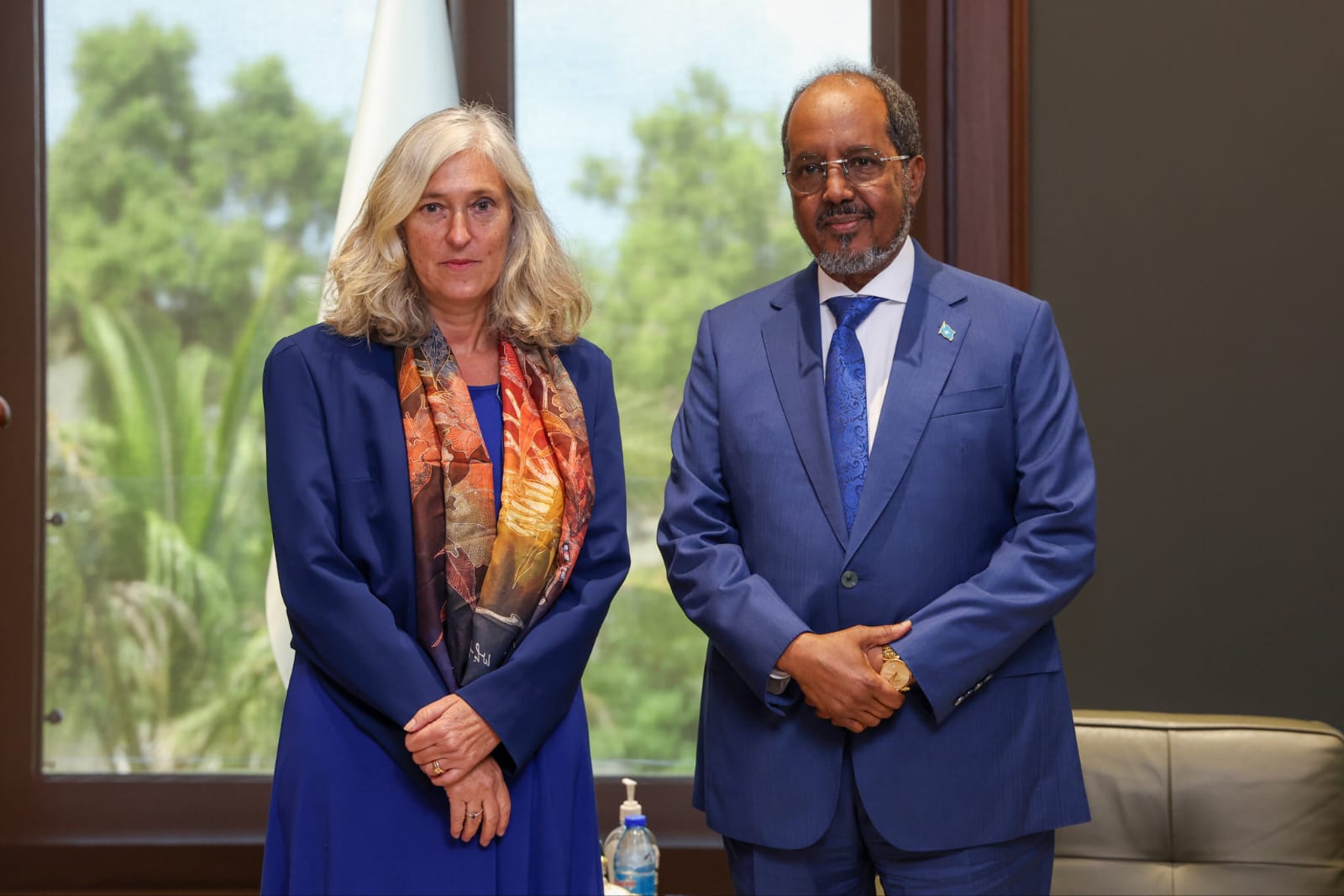
On Sunday, President Hassan Sheikh Mohamud hosted the European Union Ambassador to Somalia, Francesca Di Mauro, at Villa Somalia in what the presidency publicly described as discussions centered on strengthening cooperation, rebuilding institutions, and supporting Somalia’s development agenda. Yet political insiders familiar with the consultations say the discussions went far beyond routine diplomatic relations and heavily focused on the future of Somalia’s disputed electoral process and the failed talks between the federal government and opposition politicians.
The timing of the meeting itself carried major political significance. It came only a day after the Somali president also received the Turkish Ambassador to Somalia as diplomatic engagement surrounding Somalia’s political tensions intensified behind closed doors. The back-to-back meetings have reinforced growing indications that international partners are increasingly worried about the widening gap between the federal government and opposition actors over the direction of the country’s electoral model and governance structure.
What has attracted the most attention politically, however, were the words later issued publicly by Ambassador Francesca Di Mauro following her engagements with both sides of the Somali political divide.
“I was briefed by Hassan Sheikh Mohamud on his perspective on recent talks. Having spoken to Said Abdullahi Deni yesterday, I gather that both sides remain open to dialogue. Somalis will decide on their political settlement. As a key partner, the EU hopes for an inclusive and democratic one,” the EU envoy stated.
Diplomatically, the wording was measured and cautious. Politically, however, every sentence carried weight.
First, the EU ambassador directly acknowledged President Hassan Sheikh Mohamud as the central state authority capable of briefing international partners on the crisis. In diplomatic practice, such wording matters significantly. At a moment when opposition groups have intensified criticism against the federal leadership and questioned aspects of the government’s electoral direction, the European Union’s public engagement with the president sends a subtle but unmistakable message that the international community still recognizes the constitutional legitimacy of the current federal government.
The phrase “I was briefed by Hassan Sheikh Mohamud” was not accidental. Diplomats choose language carefully during political crises, especially in fragile states like Somalia where legitimacy battles often shape public narratives. By publicly referencing her meeting with the president first before mentioning opposition leader Said Abdullahi Deni, the EU envoy effectively reinforced the reality that Villa Somalia remains the internationally recognized governing authority despite growing political tensions.
At the same time, the statement also carefully avoided giving the government unconditional endorsement. Instead, the EU balanced its language by emphasizing inclusivity, dialogue, and democratic consensus. The sentence “both sides remain open to dialogue” was especially important because it suggested that despite the collapse of previous talks, international mediators still believe negotiations are salvageable.
This balancing act reflects the broader strategy currently being pursued by European nations and other international stakeholders involved in Somalia’s political mediation efforts. Western diplomats appear determined to avoid taking sides publicly while quietly preventing a total breakdown in communication between the federal government and opposition camps.
The EU’s message can therefore be interpreted in two parallel ways.
For the government, it represents continued diplomatic recognition and reassurance that international partners are not abandoning President Hassan Sheikh Mohamud despite opposition accusations and political confrontation. This matters greatly for Villa Somalia because international legitimacy remains critical for Somalia’s financial support, security partnerships, debt relief progress, and broader state-building agenda.
For the opposition, however, the statement also signals that international actors still expect meaningful political engagement and compromise from the federal leadership. The emphasis on an “inclusive and democratic” political settlement suggests that the EU and its allies are uncomfortable with any unilateral political direction that excludes key stakeholders from Somalia’s electoral future.
The wording “Somalis will decide on their political settlement” may appear simple on the surface, but it also reflects a deeper diplomatic principle increasingly being promoted by foreign partners. International actors want Somali leaders themselves to carry ownership of the final political agreement while external partners facilitate dialogue from behind the scenes rather than impose direct solutions.
This approach partly explains why recent international statements following the failed consultations have remained carefully calibrated. Foreign partners do not want to publicly isolate the government, but they also do not want to alienate opposition groups whose participation remains essential for political stability and electoral credibility.
Sources familiar with ongoing diplomatic contacts say international partners, including European nations, Turkey, regional actors, and other stakeholders, are quietly encouraging preparations for another round of consultations aimed at narrowing differences over electoral arrangements and governance disputes. Although no official date has been announced publicly, diplomatic channels remain active and efforts to revive dialogue have not stopped.
The urgency behind these efforts is linked to fears that Somalia could slide into deeper political polarization if compromise fails entirely. The memory of previous electoral crises in Somalia still lingers strongly among international observers, particularly the tensions surrounding delayed elections that once pushed the country toward dangerous uncertainty and security risks.
European partners are especially concerned because Somalia currently stands at a critical stage in its state-building process. The country is still managing the complex transition from international dependency toward greater institutional independence while simultaneously fighting the extremist group Al-Shabaab, expanding security responsibilities, and attempting to strengthen democratic governance structures.
Any prolonged political instability could therefore affect not only domestic governance but also international security cooperation and donor confidence.
The recent diplomatic movements also suggest that the international community believes a negotiated settlement is still possible despite the hardened rhetoric emerging from both camps in recent weeks. The fact that the EU envoy separately engaged both President Hassan Sheikh Mohamud and Puntland leader Said Abdullahi Deni demonstrates that communication channels remain open even as public political positions continue to diverge.
Importantly, the EU did not characterize the talks as permanently failed. Instead, the language used by Ambassador Di Mauro appeared designed to preserve space for future negotiations while lowering political temperatures publicly.
That may ultimately become the central diplomatic objective in the coming weeks: preventing Somalia’s political dispute from escalating into a full legitimacy confrontation while slowly rebuilding enough trust for another round of negotiations.
For now, the carefully crafted European message appears to have achieved two things simultaneously. It reaffirmed recognition of President Hassan Sheikh Mohamud’s administration as Somalia’s legitimate governing authority while also signaling that international support for the political process will depend heavily on inclusivity, dialogue, and consensus-building moving forward.
As diplomatic engagement intensifies quietly behind closed doors, Somalia’s political future may now depend less on public speeches and more on whether both the government and opposition can respond to growing international pressure to return to the negotiating table before divisions deepen further.