

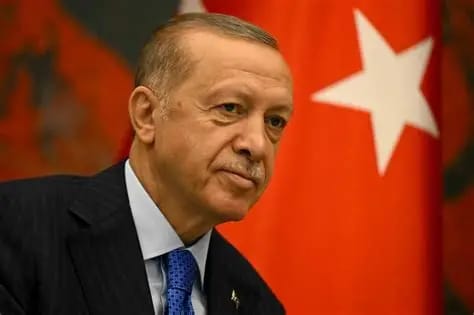
Turkish President Recep Tayyip Erdoğan has formally asked the country’s parliament to approve a two-year extension of Turkey’s military deployment in Somalia, a move that underscores Ankara’s growing strategic, security and economic interests in the Horn of Africa.
If approved by the Grand National Assembly, the new mandate will allow Turkish troops to continue operating in Somalia and its maritime zones from July 27, 2026, until July 2028. The extension comes at a time when Somalia continues its long-running military campaign against Al-Shabaab while simultaneously rebuilding its national defence institutions after decades of conflict.
In the presidential motion submitted to parliament on Friday, July 17, the Turkish government described Somalia’s stability as a matter of regional importance, arguing that continued Turkish support would contribute not only to Somalia’s security but also to peace across the wider Horn of Africa.”Somalia’s security and stability are important for the entire region,” the motion states, adding that Turkish military personnel will continue providing training, technical advice and institutional support aimed at strengthening Somalia’s defence capabilities.
Under the proposed mandate, President Erdoğan would retain the authority to determine the size, scope and timing of the deployment. Turkish forces would be permitted to operate in areas agreed upon by Ankara and Mogadishu, including Somalia’s territorial waters and maritime zones, while also cooperating with third countries and international organizations whenever necessary.
According to the motion, the mission is designed to help Somalia confront a broad range of security challenges, including terrorism, piracy, illegal fishing, arms trafficking, smuggling and other transnational threats that continue to affect the country’s security and economic development.The document acknowledges that Somalia has made notable progress in building its defence and security institutions and now possesses sufficient personnel to undertake many security responsibilities.
However, it argues that economic constraints have prevented those forces from reaching the operational capacity needed to independently secure the country.The Turkish government noted that Somalia formally requested the continuation of military assistance under the defence and economic cooperation agreements signed between the two nations, demonstrating Mogadishu’s confidence in Ankara’s role as one of its closest security partners.
Turkey has steadily emerged as one of Somalia’s most significant international allies over the past decade. Unlike many international partners whose involvement has largely focused on humanitarian assistance or peacekeeping support, Ankara has combined military training, infrastructure development, humanitarian aid and economic investment into a comprehensive partnership.
A central pillar of that cooperation is TURKSOM Military Academy in Mogadishu, officially opened in 2017. The facility is Turkey’s largest overseas military training base and has become instrumental in rebuilding Somalia’s national army.Thousands of Somali soldiers have graduated from the academy, including members of the elite Gorgor commandos, widely regarded as some of Somalia’s most capable military units in the fight against Al-Shabaab.
Turkey has also trained large numbers of Somali police officers, including members of the Haramcad special police units that have played key roles in urban counterterrorism operations.The latest request to extend the deployment follows an earlier authorization approved by the Turkish parliament in July 2024 after Ankara and Mogadishu signed a landmark 10-year defence and economic cooperation agreement.
That agreement significantly expanded Turkey’s role in Somalia’s security sector by allowing Ankara to assist not only in military training but also in developing Somalia’s naval capabilities and protecting one of Africa’s longest coastlines stretching along the Gulf of Aden and the Indian Ocean.At the time the agreement was signed, Turkish defence officials emphasized that maritime security would become an increasingly important aspect of bilateral cooperation.
“Upon request from Somalia, we will provide support in the field of maritime security,” a Turkish defence official said following the signing of the agreement in 2024.”We will help Somalia develop its capacity and capabilities to combat illegal and irregular activities in its territorial waters,” the official added.
The agreement was warmly welcomed in Mogadishu, with Somali Prime Minister Hamza Abdi Barre describing it as a turning point in relations between the two countries.
“It is a historic day for the country,” Barre said at the time, adding that Somalia had gained “a true ally, a friend, and a brother.”Turkey’s expanding military role comes as Somalia continues one of its most ambitious offensives against Al-Shabaab, the Al-Qaeda-linked militant group that has waged an insurgency against the internationally recognized federal government for nearly two decades.
Despite major territorial gains made by Somali forces and allied local militias in recent years, Al-Shabaab remains capable of carrying out deadly attacks against military installations, government institutions and civilian targets across several regions.
The Turkish motion argues that continued military cooperation will address Somalia’s immediate security needs while simultaneously helping build institutions capable of assuming full responsibility for national defence in the future.Beyond counterterrorism, the proposal also places considerable emphasis on protecting Somalia’s economic interests, particularly in its maritime domain.
Somalia possesses one of the longest coastlines in Africa, overlooking some of the world’s busiest shipping lanes. The Gulf of Aden, Arabian Sea and adjacent waters serve as vital international trade routes connecting the Indian Ocean with the Red Sea and ultimately the Suez Canal, making maritime security increasingly important not only for Somalia but also for global commerce.
The motion therefore argues that strengthening Somalia’s naval capabilities will help combat piracy, illegal fishing and maritime crime while safeguarding valuable marine resources that are increasingly viewed as central to the country’s long-term economic future.Turkey itself has maintained a naval presence in the region for years under separate parliamentary authorization.
Ankara renewed that mandate earlier this year, extending Turkish naval participation in international anti-piracy operations from February 10, 2026, for another year.Turkish naval forces have participated in multinational operations combating piracy off the Somali coast since 2009 and have commanded Combined Task Force 151 on seven separate occasions, highlighting Ankara’s long-standing commitment to maritime security in the region.
Military cooperation represents only one dimension of the broader relationship between Somalia and Turkey.The partnership accelerated dramatically after Erdoğan, then serving as Turkey’s Prime Minister, visited Mogadishu during the devastating 2011 famine. His visit marked one of the first by a non-African leader during the humanitarian crisis and signaled Turkey’s intention to establish a long-term presence in Somalia.
Since then, Turkey has financed hospitals, schools, roads and other public infrastructure while providing humanitarian assistance, educational scholarships and technical expertise. Turkish companies have also secured major contracts to operate Mogadishu’s international airport and seaport, giving Ankara an increasingly prominent economic footprint in Somalia.
More recently, the relationship has expanded into the energy sector.In April this year, Turkey’s Cagri Bey drilling vessel arrived off Somalia’s coast to begin Ankara’s first overseas deep-sea drilling mission. The vessel is currently targeting the Curad-1 offshore well approximately 372 kilometres from Mogadishu following extensive seismic surveys conducted in previous years.The exploration mission, expected to continue for up to 288 days, reflects the growing convergence between Turkey’s security engagement and its economic interests, particularly in offshore energy exploration and maritime resource development.
The extension request also comes after an important international development that has reshaped Somalia’s security landscape.In December 2023, the United Nations Security Council lifted the decades-old arms embargo imposed on Somalia’s federal government in 1992, allowing Mogadishu greater flexibility to acquire weapons and strengthen its national armed forces.
However, the international embargo targeting Al-Shabaab remains fully in force.Political analysts expect Erdoğan’s latest request to receive parliamentary approval without significant resistance.The ruling Justice and Development Party (AK Party), together with its nationalist ally, the Nationalist Movement Party (MHP), controls 323 of the 592 occupied seats in Turkey’s parliament, providing the government with a comfortable majority needed to pass the motion.
Should parliament approve the proposal, Turkish forces will remain in Somalia until at least July 2028, extending one of Ankara’s most significant overseas military missions.
The move would further cement Turkey’s position as one of Somalia’s closest strategic partners at a time when Mogadishu continues rebuilding its security institutions, expanding maritime capabilities and pursuing long-term stability while confronting the persistent threat posed by Al-Shabaab.