

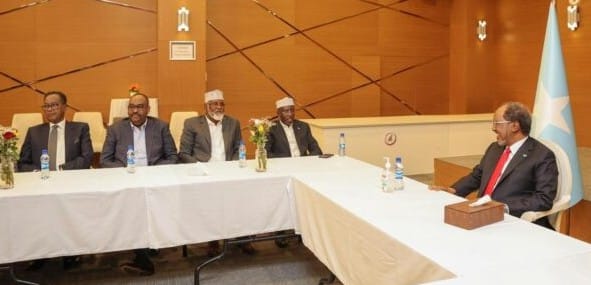
Technical negotiations between Somalia’s Federal Government and the Council for the Future have ended without an agreement after days of discussions in Mogadishu, exposing deep political divisions over the country’s constitutional future, electoral roadmap, and the management of the transition period.
According to sources familiar with the negotiations, the talks, facilitated by international diplomats, concluded in a deadlock after both sides failed to bridge fundamental differences on several key issues that are expected to shape Somalia’s political direction ahead of the next elections. Despite sustained efforts by mediators to narrow the gaps, negotiators remained firmly divided on priority constitutional amendments, the proposed two-tier electoral model, and the framework for governing the country during the transition.
The outcome represents another setback for efforts to build political consensus at a time when Somalia is facing multiple challenges, including the fight against Al-Shabaab, state-building efforts, economic reforms, and preparations for a new electoral process. Political observers have long argued that resolving disputes over the constitution and elections is essential to ensuring stability and preventing another prolonged political crisis.
At the center of the disagreement are proposed constitutional amendments that the Federal Government considers necessary to complete Somalia’s long-delayed constitutional review process. However, members of the Council for the Future have reportedly maintained that significant constitutional changes should only proceed through a broad national consensus involving all major political stakeholders, including federal member states and opposition groups. The opposition has consistently argued that reforms of such national importance require inclusive dialogue to ensure legitimacy and public confidence.
Another major sticking point is the proposed two-tier electoral system, one of the most debated political issues in Somalia today. While the Federal Government has championed electoral reforms that it believes will modernize the country’s democratic process, the opposition alliance has expressed concerns about both the timing and implementation of the proposed system. Critics argue that without sufficient political consensus, institutional preparedness, and security guarantees, introducing major electoral changes could deepen divisions rather than strengthen democracy.
The discussions also failed to produce common ground on arrangements for managing the transitional period. Sources indicated that negotiators differed on the mechanisms that should guide governance while constitutional and electoral reforms are being finalized. Questions surrounding institutional responsibilities, timelines, oversight mechanisms, and political guarantees remained unresolved throughout the talks, preventing any comprehensive agreement from being reached.
International diplomats who facilitated the negotiations had hoped the technical discussions would establish enough common ground to pave the way for a broader political settlement. Instead, the talks ended with both delegations maintaining their respective positions on several of the most contentious issues.
Following the collapse of the technical negotiations, diplomatic efforts have now shifted to a higher political level. According to sources, Western diplomats are working to convene senior leaders from both the Federal Government and the Council for the Future, particularly individuals with the authority to make final political decisions. Diplomats believe that only direct engagement between top political leaders may provide the flexibility needed to overcome the current impasse and unlock meaningful compromise.
The move reflects growing recognition among international partners that technical teams alone may no longer be able to resolve the disagreements without direct political intervention. Bringing together decision-makers could allow both sides to negotiate broader political trade-offs that extend beyond the technical issues discussed during the recent meetings.
The deadlock comes at a sensitive moment for Somalia, where political consensus remains critical for maintaining momentum on governance reforms and ensuring preparations for future elections remain on track. Previous political disputes over electoral models and constitutional reforms have contributed to delays in national processes and heightened tensions between political actors.
For many Somalis, the latest developments raise fresh concerns about whether the country’s political leadership can reach the compromises necessary to safeguard stability and strengthen democratic institutions. Analysts have repeatedly warned that prolonged political uncertainty risks diverting attention from pressing national priorities, including security operations, humanitarian needs, economic recovery, and development initiatives.
Despite the unsuccessful outcome of the technical talks, diplomatic engagement is expected to continue in the coming days. Sources say international partners remain committed to facilitating dialogue between the two sides and are encouraging both camps to remain engaged in the negotiation process rather than abandon discussions altogether.
Whether the planned high-level political engagement will succeed where technical negotiations failed remains uncertain. However, observers believe the next round of discussions could prove decisive in determining whether Somalia’s leaders can forge a consensus on constitutional reform, electoral arrangements, and the country’s political transition.
As the negotiations move from technical experts to senior political leadership, attention will now focus on whether both sides are willing to make the compromises necessary to break the current stalemate and provide a clear roadmap for Somalia’s constitutional and electoral future. Until then, the country’s political uncertainty is likely to persist, with both domestic stakeholders and international partners closely watching the next steps in the mediation process.