

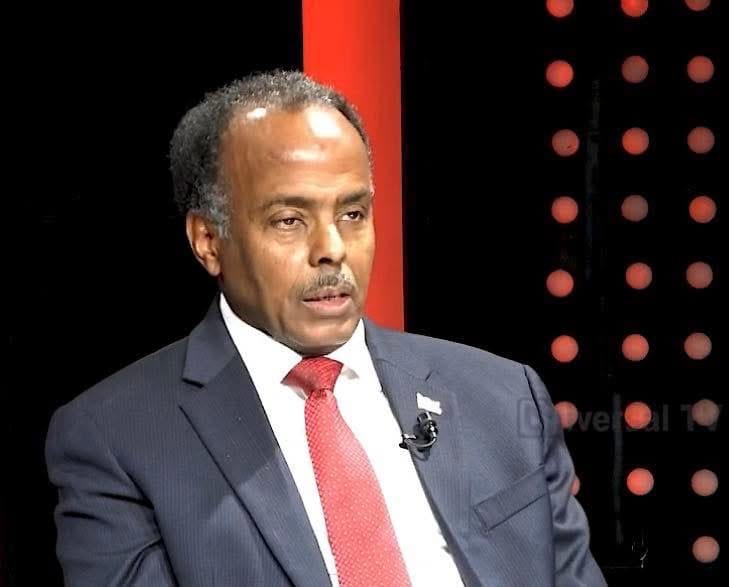
The Federal Government of Somalia has officially confirmed that State Minister at the Presidency Abshir Bukhari was denied entry into Kenya, bringing to an end days of speculation surrounding an incident that has attracted widespread attention across the Horn of Africa.
Speaking to Universal TV, Somalia’s State Minister for Foreign Affairs, Ali Omar, confirmed that the incident was genuine and announced that the government had launched an official investigation into the circumstances surrounding Bukhari’s reported denial of entry upon arrival in Nairobi.
The confirmation marks the first official statement by the Somali government on the matter after several reports claimed the senior official had been stopped by Kenyan immigration authorities at Jomo Kenyatta International Airport (JKIA) before being returned to Mogadishu.
Ali Omar said the government is seeking to establish exactly what transpired during the incident and why one of its senior officials was reportedly prevented from entering Kenya.
While the Somali government has now acknowledged the incident and launched an investigation, Kenyan authorities are yet to issue an official statement confirming or explaining the reported denial of entry.
According to earlier reports, Minister Bukhari was allegedly questioned by Kenyan immigration officials over a Kenyan passport he was said to have been travelling with. However, those claims have not been officially confirmed by the Kenyan government, and no formal explanation has been issued regarding the circumstances surrounding the reported decision.
The latest development comes only weeks after Somalia’s Second Deputy Prime Minister, Jibril Abdirashid Haji, was also reportedly denied entry into Kenya in a separate incident that sparked debate in both countries.
At the time, reports alleged that the Deputy Prime Minister had been questioned by Kenyan immigration officials over an alleged Kenyan passport before being refused entry into the country. The Somali official strongly rejected those allegations, insisting he had travelled using a valid Somali diplomatic passport and describing the claims against him as false and unfounded.
The Somali government later expressed concern over the incident, maintaining that senior government officials travelling on official duties should be treated in accordance with established diplomatic protocols. However, the matter remained unresolved after Kenya did not publicly provide a detailed explanation regarding the reported denial of entry.
The confirmation by Ali Omar that Minister Abshir Bukhari was also denied entry has now linked the two incidents, raising fresh questions over the treatment of Somali government officials travelling to Kenya.
The Somali government’s decision to launch an investigation signals that Mogadishu intends to establish the full facts surrounding the latest incident before determining its next course of action.
Kenya and Somalia maintain close relations built on trade, security cooperation and regional diplomacy. The two neighbouring countries work together in combating Al-Shabaab, share intelligence on cross-border security threats and maintain strong economic and people-to-people ties.
In recent years, both governments have also sought to strengthen bilateral cooperation through regular high-level engagements aimed at improving regional peace, economic integration and political collaboration.
The reported denial of entry to two senior Somali officials within a relatively short period has nevertheless attracted regional attention, with analysts closely watching how both governments handle the matter.
Political observers say Somalia’s confirmation transforms the issue from media reports into an officially acknowledged government matter. The investigation announced by Mogadishu is expected to establish what happened at JKIA, whether diplomatic procedures were followed and whether further engagement with Kenyan authorities will be required.
For now, the Somali government has made it clear that it is treating the incident seriously and is seeking answers through its own inquiry.
As investigations begin, attention is now turning to Nairobi, where the Kenyan government is expected to face increasing calls to clarify the circumstances surrounding the reported denial of entry to Minister Abshir Bukhari.
Until then, the incident remains under official investigation by the Somali government, with its findings likely to shape the next phase of discussions between the two neighbouring countries.