

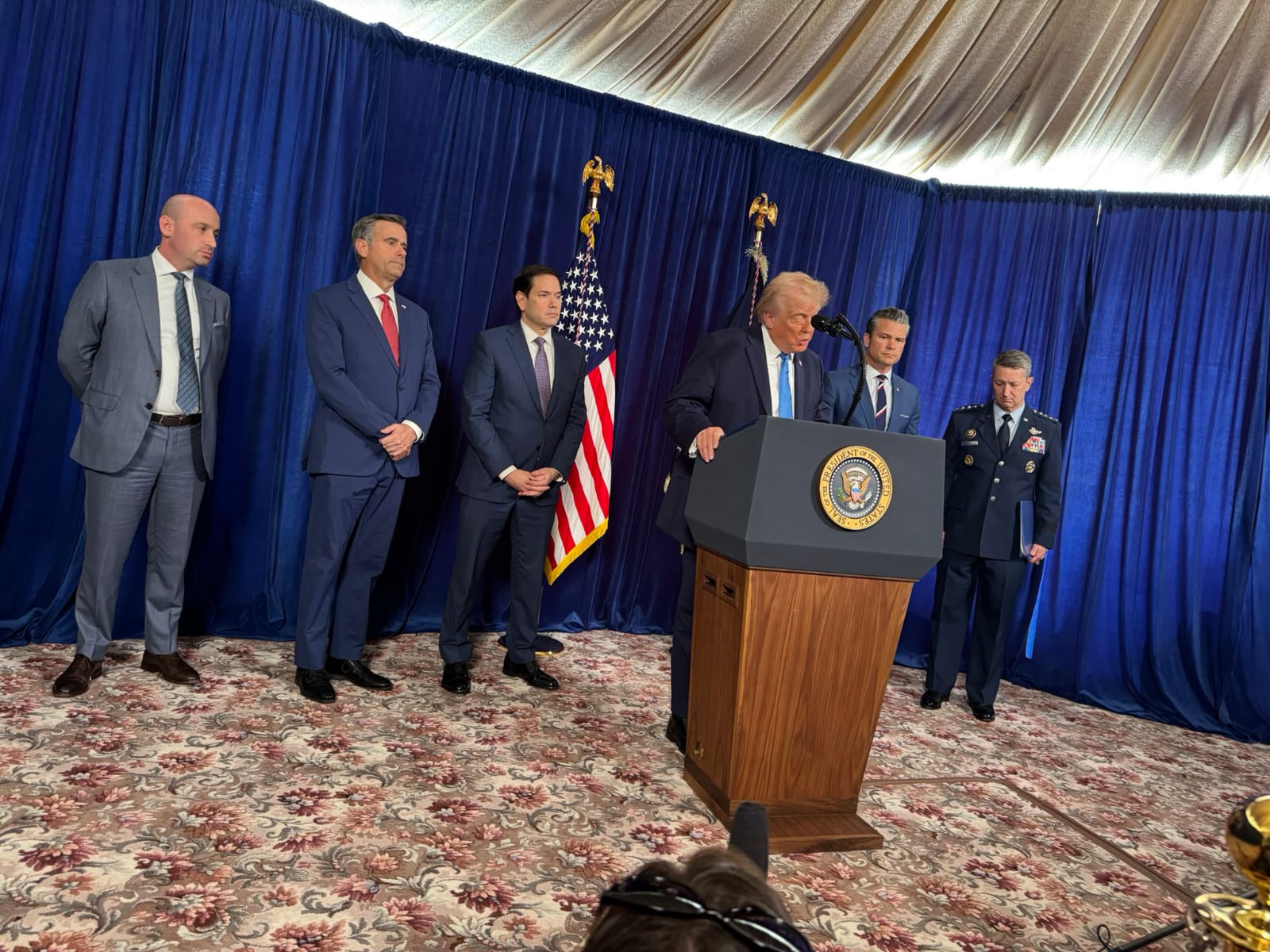
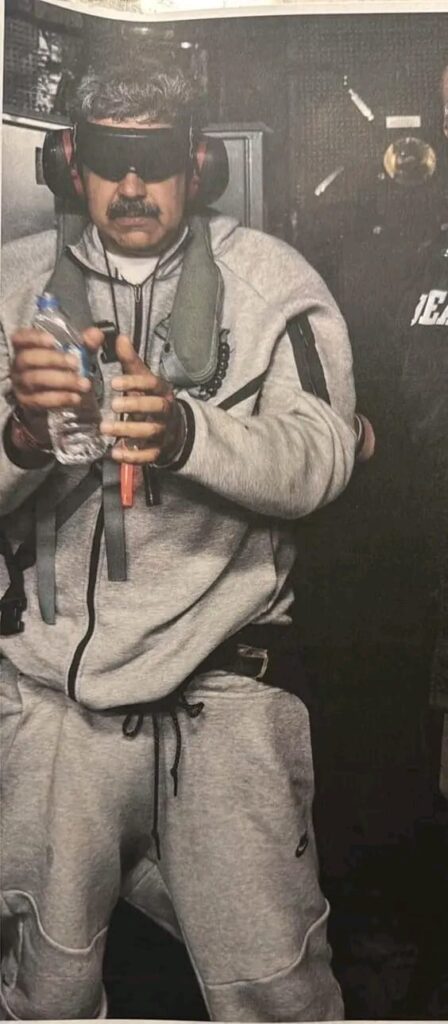
President Donald Trump has confirmed that incumbent Venezuelan President Nicolás Maduro and his wife, Cilia Flores, were captured by United States special operations forces during a covert overnight mission in Caracas. Trump described the operation as one of the most precise and powerful demonstrations of American military capability in modern history, saying it marked the end of what he called a criminal regime that had undermined regional security and U.S. national interests.
Speaking during a press conference, Trump said American forces operating alongside U.S. law enforcement entered Maduro’s fortified residence under the cover of darkness and overwhelmed his security before seizing him. He revealed that the Venezuelan leader attempted to flee toward a secured panic room built with reinforced steel doors, yet the raid unfolded so quickly that he never made it inside. According to the president, U.S. forces had even prepared industrial blowtorches to break through the steel barriers if necessary, although those measures were ultimately not required.
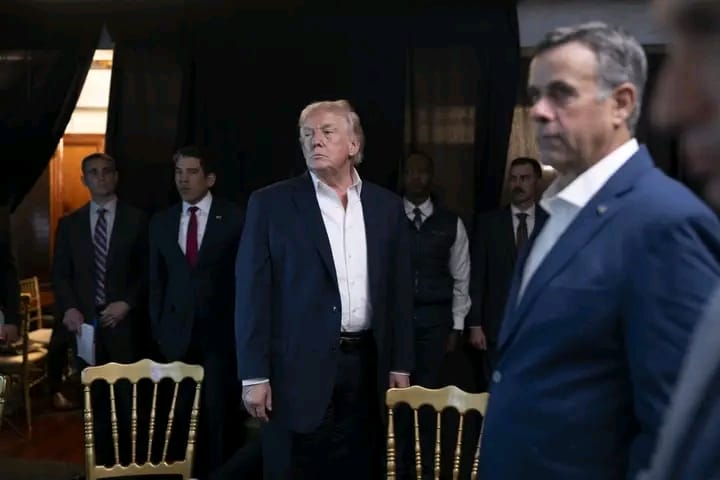
Photo courtesy of X
Trump added that he personally watched the mission unfold live from his Mar-a-Lago residential and described the scene as deadly, precise and extraordinarily well-coordinated. He said that, although a number of American personnel were slightly injured during the operation, there were no confirmed U.S. fatalities and all aircraft returned safely to base. The president also disclosed that he had previously spoken directly with Maduro days earlier, offering him the chance to surrender peacefully, but the Venezuelan leader refused and left the United States, in Trump’s words, “no choice but decisive action.”
Maduro to Face Trial in the United States
The U.S. government now intends to prosecute Maduro and his wife on narcoterrorism and weapons charges in New York. Trump said the pair are currently being transferred under American custody and will “face the full might of American justice on American soil.”
U.S. Attorney General Pamela Bondi confirmed that Maduro has been indicted over allegations involving drug trafficking, cocaine importation conspiracy, and possession of machineguns and destructive devices, saying the charges represent some of the most serious crimes possible under U.S. law.
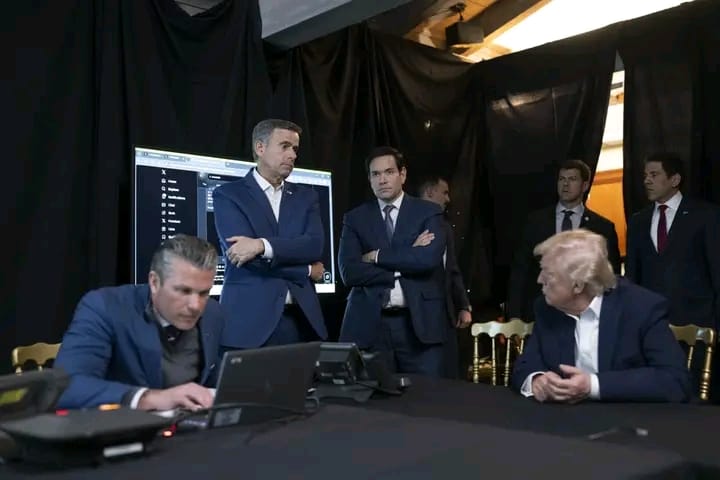
Photo courtesy of X
Trump argued that Maduro had long operated as the head of a criminal network that trafficked narcotics, led to hostile foreign actors in the region, and stole billions of dollars’ worth of U.S, energy assets and infrastructure. He said Venezuela’s oil sector would now be restored through American investment, insisting that U.S. companies would help rebuild the industry while supporting what he called a lawful and stabilizing transition.
In one of the most striking statements of the press conference, Trump declared that the United States would temporarily administer Venezuela until a “safe, proper and judicious” handover of power could be organized. He said this approach was intended to prevent the return of instability or criminal activity, noting that members of his administration would take a leading role during the interim period.
Global Reactions and Next Steps
The announcement immediately triggered a wave of international reactions. Some Western leaders expressed support for a democratic transition in Venezuela, while others warned that the U.S. operation risked setting a dangerous precedent. Trump, however, defended the mission as both lawful and necessary, arguing that Venezuela under Maduro had become a hub for narcotics trafficking, foreign interference and regional destabilization.
He also emphasized that the United States had been prepared to conduct a second wave of strikes had the situation escalated, although the initial operation proved so effective that further action was not required.
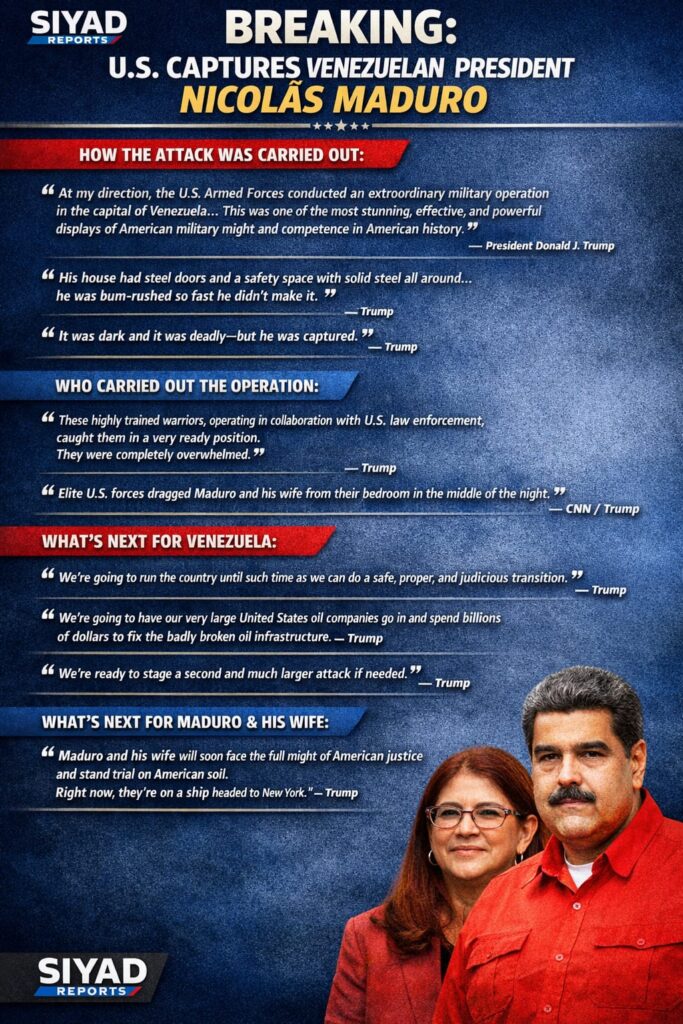
Trump repeatedly praised U.S. forces, calling their performance “flawless” and asserting that no other nation could have carried out such an operation with similar precision and success. He insisted that the capture of Maduro marked a turning point not only for Venezuela but for the wider Western region signalling what he described as the restoration of American strength and deterrence.
As Maduro and his wife move toward court proceedings in New York, the future governance of Venezuela now shifts under unprecedented American oversight. The situation continues to develop, and global attention remains firmly fixed on both Washington and Caracas as the next phase unfolds.