

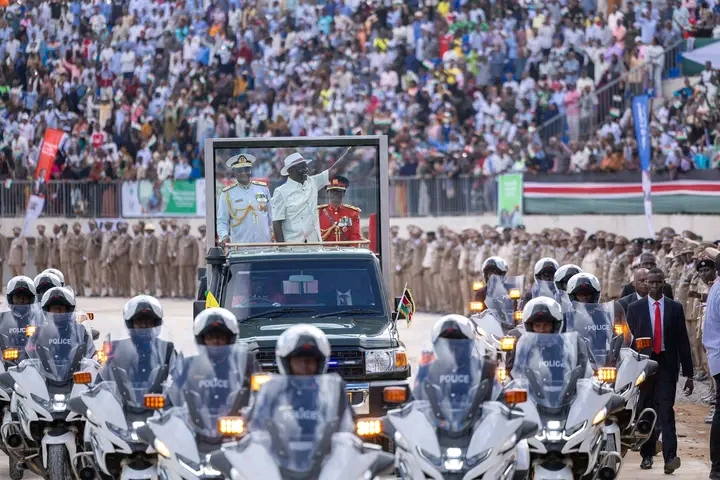
The cheers inside Wajir Stadium on Madaraka Day were loud enough to shake the stands. The colourful cultural performances, the military parade and the arrival of President William Ruto created a festive atmosphere befitting a national celebration. Yet beneath the excitement lay something deeper something emotional, something historical.
For many people across North Eastern Kenya, June 1, 2026, was not merely a day to celebrate Kenya’s independence journey. It was a day that felt like recognition. It was a day when a region that has often felt distant from the centre of power suddenly found itself at the centre of the nation’s attention.
While the celebrations took place in Wajir, the significance of the moment extended far beyond the county’s borders. From Mandera to Garissa and across the wider North Eastern region, many watched the events unfold with a sense of pride and reflection. For some, it was a reminder of how far the region has come. For others, it was an opportunity to imagine what the future could look like.
To understand why the moment mattered so much, one must first understand the long road that brought North Eastern Kenya to this stage.
For decades after independence, many people in the region felt that they lived on the margins of the Kenyan story. The region faced periods of insecurity, underdevelopment and policies that many residents viewed as discriminatory. Generations grew up carrying memories of exclusion and questioning whether they truly enjoyed the same opportunities as their fellow citizens elsewhere in the country.
The process of obtaining national identity cards became a painful experience for many families. Communities often spoke about feeling overlooked in national development priorities. Roads, healthcare facilities, schools and other public services lagged behind those in many other parts of Kenya. Over time, these experiences shaped a collective feeling that North Eastern Kenya remained physically within the country but psychologically distant from the national centre.
Yet despite these challenges, the people of the region never stopped believing in their place within Kenya. Communities invested in education. Parents made sacrifices to send their children to school. Young people pursued opportunities across the country and beyond. Leaders continued advocating for greater inclusion, equal treatment and meaningful development.
Slowly, change began to emerge.
Government reforms, infrastructure projects and increased engagement with the region signalled a shift in the national conversation. However, no gesture carried greater symbolic weight than the decision to bring Madaraka Day celebrations to Wajir for the first time in the country’s history.
Hosting the national celebrations in North Eastern Kenya was not simply about choosing a venue. It was about recognition. It was about acknowledging a region whose people have contributed to Kenya’s growth, defended its sovereignty and enriched its cultural diversity, yet have often felt overlooked in the national narrative.
And then came the moment that would define the day.
The Apology That Moved a Region
When President William Ruto publicly acknowledged the historical injustices experienced by communities in North Eastern Kenya, many people inside the stadium listened with deep emotion. The applause that followed was not merely political. It reflected years of longing for recognition.
For elders who had witnessed some of the region’s most difficult periods, the words carried profound meaning. For younger generations, they offered an opportunity to better understand why questions of dignity, belonging and equal citizenship have remained so important to their parents and grandparents.
An apology cannot rewrite history. It cannot erase decades of hardship or undo the pain associated with past injustices. But acknowledgement matters. Recognition matters. For many residents, hearing the country’s highest office publicly recognise those experiences represented something they had waited decades to hear.
It was a moment of validation.
It was a moment that told the people of North Eastern Kenya that their stories mattered, that their experiences were not forgotten and that their place within the Kenyan nation was being publicly affirmed.
Perhaps that is why the moment resonated so deeply across the region. It was not only about the past. It was also about the future. It was about creating a foundation upon which trust, inclusion and national unity can continue to grow.
The significance of the day extended beyond the apology itself. For several days, Wajir became the focus of national attention. Government officials, journalists, business leaders and visitors travelled to the county. Television cameras broadcast images of the region into homes across Kenya. Roads were improved, public infrastructure was upgraded and the region welcomed guests from all corners of the country.
For residents, there was immense pride in seeing North Eastern Kenya host the nation.
For one day, Kenya came to North Eastern Kenya.
The images that emerged from the celebrations challenged stereotypes that have often defined perceptions of the region. They showcased a vibrant society rich in culture, resilience, hospitality and potential. They reminded the country that North Eastern Kenya is not a distant frontier but an integral part of the Kenyan story.
Yet history will not judge this moment solely by the speeches delivered or the celebrations witnessed. It will judge it by what follows.
Residents across the region now hope that the spirit of inclusion demonstrated during Madaraka Day will be matched by sustained action. They want improved schools, better healthcare services, reliable water infrastructure, expanded road networks and greater economic opportunities. They want businesses to grow, investments to increase and young people to find meaningful employment closer to home.
The true test of this historic moment will therefore be whether it marks a turning point. If the commitments made are followed by lasting development, future generations may look back on June 1, 2026, as the day a new chapter genuinely began for North Eastern Kenya.
There are reasons for optimism.
Today’s youth are growing up in a different era from that of their parents and grandparents. Reforms such as the removal of discriminatory vetting processes for national identity cards have helped address long-standing grievances. More voices from North Eastern Kenya are participating in national leadership, media, business, academia and public service.
This generation carries ambitions that stretch far beyond historical limitations. They aspire to become journalists, doctors, engineers, diplomats, entrepreneurs and leaders. They seek not special treatment but equal opportunity. They want their region to be recognised not for its challenges, but for its achievements and contributions to the nation.
That may ultimately become the greatest legacy of Madaraka Day 2026.
The celebrations were about more than commemorating Kenya’s journey to self-rule. They were about belonging. They were about recognition. They were about healing old wounds while looking confidently toward the future.
For one historic day, North Eastern Kenya was not on the margins of Kenya’s story it was at the very centre of it. While Wajir hosted the nation, the significance of the moment was felt across Garissa, Mandera and every corner of the region. And if the promises, goodwill and spirit of inclusion witnessed during those celebrations endure, future generations may remember this day not simply as a national holiday, but as the moment when North Eastern Kenya’s place in the national story was publicly affirmed before the entire country.