

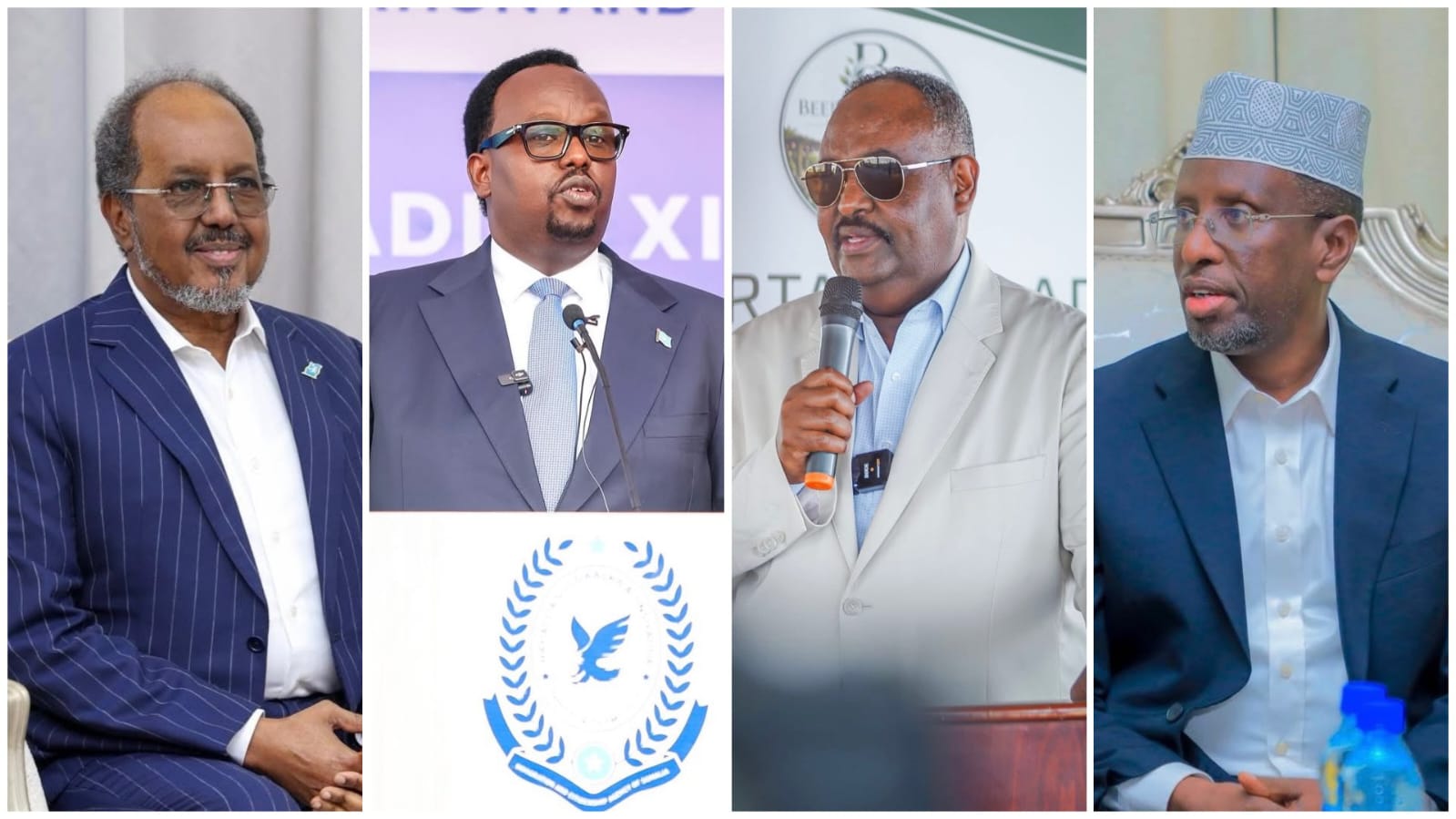
The political future of Somalia remains uncertain as crucial negotiations between the federal government and opposition leaders resumed Thursday afternoon in Mogadishu amid growing tensions over elections, constitutional legitimacy, and the mandate of President Hassan Sheikh Mohamud.
The talks, described by sources as among the most sensitive political negotiations Somalia has faced in recent years, come at a time when the country is confronting deep divisions over the direction of its democratic process and fears of a possible constitutional and institutional crisis if no agreement is reached.
Reports emerging from the closed-door discussions indicate that the meetings resumed at around 2:00 PM local time following another tense round of consultations between the Somali government and the opposition coalition known as the Somalia Future Council. Diplomatic sources say there has been a modest level of convergence between the two sides, although significant disagreements still remain unresolved.
Members of the international community, particularly the United States and Britain, are said to be heavily involved behind the scenes in an effort to prevent the talks from collapsing and to push Somali leaders toward a political settlement that could stabilize the country ahead of the planned electoral transition.
Thursday night’s negotiations reportedly ended without a breakthrough after two days of intense discussions in Mogadishu. The government delegation was led by President Hassan Sheikh Mohamud alongside Deputy Prime Minister Salah Ahmed Jama, while the opposition bloc included former Somali President Sheikh Sharif Sheikh Ahmed and Said Abdullahi Deni, among other influential political stakeholders.
According to sources familiar with the discussions, the central dispute revolves around two major issues: the mandate of the current federal institutions and the model of elections Somalia should adopt in the coming transition period.
Opposition leaders insist that the mandates of the current federal institutions expired on May 15, 2026, arguing that the government no longer possesses the constitutional legitimacy to continue leading the country under the current arrangement. The opposition has therefore pushed for indirect elections similar to previous electoral models used in Somalia, saying the country is not yet prepared for a nationwide one-person, one-vote election.
The federal government, however, maintains a completely different interpretation. President Hassan Sheikh Mohamud and his allies argue that the mandates of state institutions still have one year remaining under constitutional amendments approved by parliament. The government insists that the revised constitutional framework legally extends the life of federal institutions and provides a pathway toward universal suffrage.
This disagreement over constitutional legitimacy has become the single biggest obstacle in the negotiations.
Sources say discussions during Thursday morning’s session became extremely heated and nearly collapsed altogether before both sides agreed to pause the talks and return later after consultations with their political allies and mediators.
Diplomatic insiders involved in the process say mediators have attempted to convince opposition leaders that Somalia is politically moving toward a one-person, one-vote election and that instead of rejecting the model entirely, the focus should shift toward discussing the necessary reforms, timelines, and guarantees needed to make the process realistic and credible.
However, opposition figures reportedly rejected the proposal in its current form, arguing that Somalia still lacks the institutional preparedness, security environment, and consensus required for such a nationwide vote. They also raised concerns about the credibility and neutrality of the current electoral structures.
During the evening session on Thursday, opposition representatives reportedly introduced a new proposal aimed at breaking the deadlock. Under the proposal, Somalia would establish a transitional unity government to oversee the next phase of the country’s political transition.
The proposal allegedly included allowing President Hassan Sheikh Mohamud to remain as a caretaker president from May 15 onward while forming a broader unity administration that would include opposition figures in key leadership positions. Sources say discussions around the proposal involved the possibility of the opposition taking major government posts, including the office of the prime minister and potentially the Speaker of Parliament.
The opposition’s suggested framework also reportedly called for the creation of a mutually agreed electoral commission and the organization of elections within a nine-month transitional period.
Government negotiators rejected the proposal, maintaining that the current administration remains constitutionally legitimate and should continue implementing its electoral roadmap. The government instead insisted on proceeding toward one-person, one-vote elections while proposing reforms to the existing electoral commission and suggesting a timeline of between 12 and 18 months to prepare for the vote.
Despite the sharp disagreements, both sides agreed to continue discussions following Friday prayers, with some reports indicating that negotiations could stretch into Saturday if necessary.
Political observers say the outcome of the talks could shape Somalia’s political trajectory for years to come.
For President Hassan Sheikh Mohamud, the talks represent a major test of his administration’s efforts to move Somalia toward universal suffrage after decades of indirect electoral systems dominated by clan-based power-sharing arrangements. Supporters of the president argue that Somalia cannot continue indefinitely under indirect elections and that the country must eventually transition toward a democratic one-person, one-vote system.
Opposition leaders, however, accuse the government of attempting to impose constitutional changes and electoral arrangements without broad national consensus. They argue that any attempt to move toward elections without agreement from major political stakeholders risks plunging the country into deeper instability.
The political atmosphere in Mogadishu has remained tense throughout the negotiations, with security reportedly tightened around the venues hosting the meetings. Journalists were barred from entering the talks or photographing participants, reflecting the sensitivity of the discussions and the fragile nature of the negotiations.
So far, neither the federal government nor the opposition alliance has issued an official public statement regarding the details or outcome of the talks, leaving much of the information emerging from diplomatic and political sources close to the negotiations.
Behind the scenes, international partners are reportedly increasing pressure on Somali leaders to compromise before the dispute escalates into a broader institutional crisis. Diplomats fear that failure to reach an agreement could trigger political uncertainty, weaken security cooperation, and distract the country from ongoing operations against extremist groups.
Analysts say there are now growing indications that both sides may ultimately settle on a temporary compromise formula that preserves institutional continuity while opening the door for broader political participation and electoral reforms.
Although no final agreement has yet been reached, there are signs that negotiators are still attempting to craft a memorandum of understanding that could prevent a complete breakdown in relations between the government and opposition.
Such an agreement, if achieved, would likely focus on power-sharing arrangements, electoral reforms, timelines for voting preparations, and guarantees regarding the mandate of federal institutions.
For now, Somalia remains at a political crossroads.
The talks in Mogadishu are no longer simply discussions about elections; they have evolved into a broader struggle over constitutional authority, legitimacy, and the future structure of governance in Somalia. Whether the country moves toward compromise or confrontation may depend entirely on what emerges from the negotiating table in the coming hours.