

In the arid yet politically vibrant landscapes of Wajir County, a powerful wave of civic consciousness is steadily rising, driven by grassroots mobilization, youth engagement, and a renewed call for accountable leadership.
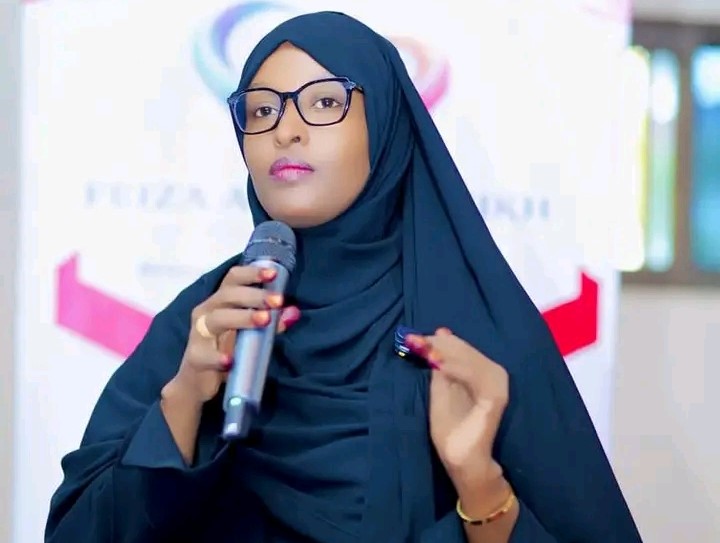
At the center of this movement is Feiza Ahmed Sheikh, a Nominated Member of the County Assembly and aspiring Woman Representative, whose foundation has taken a bold step in organizing a comprehensive public forum aimed at reshaping the county’s political future through informed voter participation.
The forum, convened under the Feiza Ahmed Sheikh Foundation, brought together a diverse cross-section of society youth leaders, women groups, civil society actors, community elders, journalists, and grassroots mobilizers all united by a shared concern the need to strengthen democratic participation as the country approaches the 2027 General Election. At its core, the engagement was not merely a discussion but a call to action, urging residents to actively register as voters and to reclaim their voice in governance.
This initiative aligns with the broader national momentum generated by the “Niko Kadi Initiative,” a youth-led campaign largely driven by Generation Z across Kenya. The movement seeks to inspire young people to register as voters, recognizing their potential to significantly influence electoral outcomes. In Wajir, where voter apathy and political disengagement have historically posed challenges, the forum represented a critical intervention aimed at bridging the gap between citizens and the democratic process.
From the outset, the atmosphere of the forum reflected both urgency and optimism. Participants openly shared their frustrations with past leadership failures, systemic inequalities, and the persistent marginalization of certain communities.
Yet, beneath these concerns lay a strong sense of hope a belief that change is possible if citizens embrace their civic responsibilities.
In her keynote address Feiza Ahmed Sheikh delivered a message that resonated deeply with attendees, emphasizing that democracy cannot function effectively without active citizen participation. She underscored the importance of voter registration as the foundation of political engagement, urging residents not to surrender their power to external influences such as money politics or clan-based allegiances.
“We must not allow the politics of money to dictate our choices,” she stated firmly. “Every citizen has both the right and the responsibility to vote for leaders who demonstrate integrity, vision, and a genuine commitment to public service.”
Her remarks reflected a broader concern about the growing influence of transactional politics, where votes are often swayed by short-term incentives rather than long-term development goals.
By addressing this issue directly, she challenged residents to rethink their approach to elections and to prioritize accountability over immediate gains.
Central to the discussions was the ongoing voter registration exercise being conducted by the Independent Electoral and Boundaries Commission (IEBC).
Participants were reminded that registration is the first and most crucial step in ensuring representation. Without it, citizens effectively exclude themselves from the decision-making process, leaving their future in the hands of others.
The forum also provided a platform for marginalized voices, particularly those from minority communities, to express their grievances. Abdikarim Haji, Chairman of Minority Communities in Wajir, spoke candidly about the persistent exclusion faced by these groups. His remarks painted a sobering picture of a political system that often overlooks minority interests once elections are concluded.
“In reality, minority communities in Wajir have not been given the recognition they deserve,” he said. “We participate in elections, but after that, our concerns are ignored. This must change.”
Haji’s call for unity among minority groups highlighted the importance of collective action. By registering and voting in large numbers, he argued, these communities could strengthen their bargaining power and ensure that their voices are heard.
Economic concerns also featured prominently in the discussions.
Participants expressed frustration over the apparent disconnect between tax contributions and service delivery. Many questioned why, despite the resources allocated to the county, basic infrastructure and essential services remain inadequate.
“Life is becoming harder,” Haji added.
“Money is not circulating, and there is little to show for the taxes residents pay. Accountability must be demanded.”
These sentiments were echoed by civil society activist Fatuma Yussuf, who criticized what she described as an integrity deficit in local leadership. She pointed to the lack of basic amenities, such as public sanitation facilities, as evidence of governance failures.
“It is unacceptable that a county capital like Wajir lacks essential services like public toilets,” she said. “This is a clear indication that leadership must improve.”
Yussuf’s remarks reinforced the idea that voting is not just a right but a tool for demanding better governance. By electing leaders based on merit and performance, citizens can drive meaningful change.
Another key theme of the forum was voter apathy, particularly among young people. Many participants acknowledged that disillusionment with past elections has led to declining participation rates. However, speakers emphasized that disengagement only perpetuates the cycle of poor leadership.
Halima Farah, a local resident, shared her personal journey from skepticism to renewed commitment. “I used to think voting was pointless,” she admitted. “But I realized that if we don’t participate, we have no right to complain. Change starts with us.”
Her testimony highlighted a critical shift in mindset one that the forum aimed to cultivate among all attendees. By encouraging individuals to take ownership of their civic responsibilities, the initiative sought to transform passive observers into active participants.
Youth leaders also played a significant role in shaping the conversation. Abdifatah Hussein, chairman of the Soko Mjinga Youth group, challenged the deeply entrenched culture of clan-based politics. He argued that leadership should be determined by competence and vision rather than ethnic or regional affiliations.
“We must move away from voting based on tribe,” he said. “Leadership should be about ideas, integrity, and service.”
This call for issue-based politics was widely supported by other participants, including Emanuel Mutia, chairman of the local boda boda association. He emphasized that young people have the power to redefine the political landscape if they prioritize long-term development over short-term incentives.
“Money should not decide our leaders,” Mutia stated. “We need leaders who can improve our future.”
The forum also delved into the role of the Woman Representative position, a constitutional office established to promote gender equality and support social development initiatives. While some participants acknowledged its contributions, others questioned its effectiveness in addressing community needs.
Community leader Hussein Shurie offered a balanced perspective, noting that the position has played a role in supporting vulnerable populations, particularly during times of crisis such as drought. However, he stressed the need for greater accountability and impact.
“This office has potential,” he said. “But it must deliver tangible results for the people.”
Discussions on devolution further enriched the dialogue, with participants reflecting on its impact since its introduction in 2013.
While acknowledging the progress made in certain areas, many agreed that significant gaps remain. These include disparities in resource allocation, limited access to services in remote areas, and persistent governance challenges.
Township Ward MCA aspirant Jibril Mohamed highlighted the importance of performance-based evaluation in leadership. “If leaders do not deliver, the ballot box gives us the power to remove them,” he said. “That is the essence of democracy.”
As the forum progressed, it became clear that its impact extended beyond immediate discussions. It served as a catalyst for ongoing civic engagement, encouraging participants to take the message back to their communities and to continue the conversation at the grassroots level.
Community mobilizer Mohamed Ali emphasized the need for sustained outreach, particularly among pastoralist communities who often feel excluded from political processes. He called for targeted efforts to ensure that these groups are registered and represented.
“Everyone must be included,” he said. “No one should be left behind.”
The forum concluded with a powerful and unified message: “Your vote is your right.”
This phrase, repeated throughout the event, encapsulated the essence of the initiative. It served as both a reminder and a rallying cry, urging residents to recognize the power they hold in shaping their future.
Participants left the forum with a renewed sense of purpose, committed to rejecting corruption, vote-buying, and divisive politics. Instead, they pledged to embrace informed decision-making and to prioritize leaders who demonstrate integrity and accountability.
As the voter registration exercise continues under the IEBC, the impact of such civic forums is expected to grow. In Wajir, the efforts of Feiza Ahmed Sheikh and her foundation have set a precedent for community-driven political engagement offering a model that could be replicated across other regions.
Ultimately, the success of this movement will depend on the willingness of citizens to act to register, to vote, and to hold their leaders accountable. In a democracy, power lies not in institutions alone but in the hands of the people.
And as Wajir County prepares for the 2027 General Election, one thing is becoming increasingly clear the people are ready to use that power.