
In international diplomacy, political messages are not always delivered through dramatic speeches, official declarations, or formal communiqués. Sometimes, the most important signals are hidden inside a single word, a title, or even the way a leader is addressed publicly.
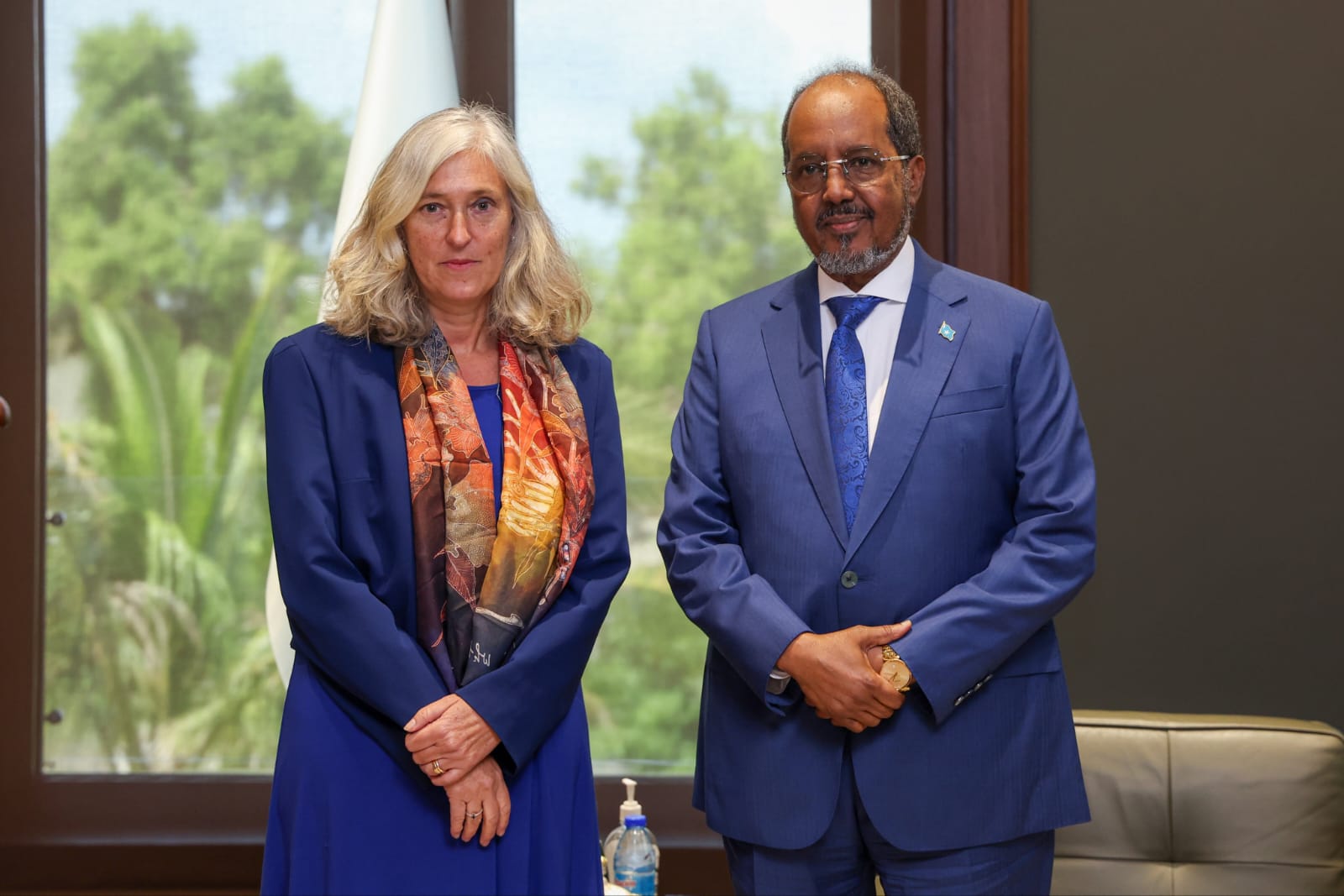
That is why a recent social media post by the European Union Representative to Somalia, Francesca Di Mauro, has quietly attracted attention within Somali political circles following the collapse of the mediated talks between the Federal Government and opposition leaders in Mogadishu.
The post itself appeared routine on the surface. It focused largely on humanitarian aid, European Union financial support to African Union Support and Stabilization Mission in Somalia, and continued cooperation with Somalia during a difficult period marked by political uncertainty, insecurity, and drought.
However, one particular phrase stood out immediately:
“During my meeting with H.E. President Hassan Sheikh Mohamud…”
For many outside observers, the wording may appear ordinary. But within Somalia’s current political climate, where the opposition is openly questioning the legitimacy and constitutional mandate of the government, diplomatic language has become politically sensitive.
And because of that, the explicit use of the title “President” by the EU envoy carries significance far beyond protocol.
The timing of the statement matters.
Only days earlier, Somalia had witnessed the collapse of high-level negotiations between Villa Somalia and opposition leaders over the country’s electoral future and constitutional direction. Opposition figures had argued that the current administration’s mandate had effectively expired, while the government maintained that parliamentary constitutional amendments legally extended the institutional timeline and established a new political transition framework.
The disagreement created an atmosphere where every international statement became subject to intense scrutiny.
This is why some political observers immediately noticed an important contrast: in one earlier communication, the EU representative reportedly referred to Hassan Sheikh Mohamud without emphasizing the presidential title in the same direct manner. Now, after the failed talks and growing legitimacy debate, the title “President” was clearly and publicly used again.
In diplomacy, that change is not accidental.
International diplomats choose wording carefully, particularly during constitutional disputes. Titles are often deliberate indicators of recognition, institutional continuity, and political positioning.
By publicly referring to Hassan Sheikh Mohamud as “President,” the European Union representative effectively reaffirmed that the EU continues to recognize him as the legitimate head of the Federal Government of Somalia.
That point is politically important for several reasons.
First, it directly affects the international legitimacy battle currently unfolding in Somalia. Opposition groups may challenge constitutional processes internally, but international recognition remains one of the strongest pillars sustaining any government’s authority in fragile political environments.
Somalia’s political system remains deeply interconnected with international security cooperation, donor support, humanitarian assistance, diplomatic partnerships, and multilateral institutional backing. Because of that, recognition by actors such as the European Union, the United Nations, and the African Union carries enormous political weight.
The EU envoy’s wording therefore sends a subtle but important signal: despite ongoing disputes, Brussels still treats Villa Somalia as the recognized federal authority of the Somali state.
At the same time, however, the statement should not be interpreted as unconditional endorsement of the government’s entire political roadmap.
That distinction is essential.
Throughout the recent crisis, international actors have consistently avoided two extremes. They have not declared the government illegitimate, endorsed claims of constitutional collapse, or treated Somalia as entering a vacuum of authority. But they have also avoided fully endorsing unilateral implementation of one-person-one-vote elections, rejecting opposition concerns, or dismissing calls for broader political consensus.
This careful balancing has now become the defining feature of international diplomacy toward Somalia.
The EU representative’s post reflects that same pattern.
Even while recognizing Hassan Sheikh Mohamud as president, the broader diplomatic approach from European partners still emphasizes dialogue, inclusivity, consensus, and negotiated transition. That is because international actors appear increasingly concerned about one overriding issue: preventing Somalia from sliding into a deeper legitimacy crisis that could destabilize already fragile institutions.
The mention of European financial support inside the same post is also politically meaningful.
The EU representative referenced 75 million euros allocated to AUSSOM, burden-sharing responsibilities, and 63 million euros in humanitarian aid implementation. Those references reinforce another diplomatic reality: the European Union remains heavily invested in Somalia’s stability.
The EU is not merely an outside observer. It is one of the major stakeholders supporting Somalia’s security sector, stabilization missions, humanitarian operations, governance structures, and institutional continuity. Because of this deep involvement, European diplomats are naturally cautious about political instability that could threaten state functionality or security coordination.
From Villa Somalia’s perspective, the public use of the title “President” likely provides political reassurance during a sensitive moment.
It signals that despite fierce internal disputes, major international partners have not withdrawn formal recognition of the administration.
And in diplomatic crises, perception matters enormously.
Governments often measure success not only through domestic politics but through continued international engagement, meetings, funding commitments, and official language used by foreign diplomats.
That is why some observers believe there may indeed have been quiet diplomatic pressure from Somali federal authorities to ensure international actors maintained institutional recognition language publicly.
Whether direct pressure occurred or not, what matters politically is the final outcome: the EU envoy publicly reaffirmed Hassan Sheikh Mohamud’s presidential status at a moment when the opposition was trying to challenge the legitimacy narrative internationally.
Yet the deeper diplomatic reading remains more nuanced than outright political alignment.
The EU’s broader posture still suggests support for Somali state continuity rather than unconditional support for any single political faction.
European actors appear to believe that Somalia’s political transition is ongoing, that the current federal government remains recognized, but that sustainable progress still requires broader national consensus.
This explains why international statements following the failed talks consistently avoided triumphalist language.
Neither the UN, AU, nor EU framing has given Villa Somalia a blank cheque to move entirely alone.
At the same time, opposition groups have also failed to secure international validation for claims that the government’s authority ended immediately after the disputed constitutional timeline.
As a result, Somalia now finds itself in a politically delicate middle ground.
The government retains international recognition and institutional continuity.
The opposition retains political leverage through unresolved constitutional disputes and demands for inclusivity.
And the international community continues trying to balance those realities carefully without triggering further instability.
In Somali politics today, diplomacy is no longer only about what is openly declared.
It is increasingly about what is implied.
A title. A phrase. A carefully chosen sentence.
And in the middle of Somalia’s tense constitutional transition, even the simple public use of the word “President” has become part of a much larger political and diplomatic battle over legitimacy, continuity, and the future direction of the Somali state.