

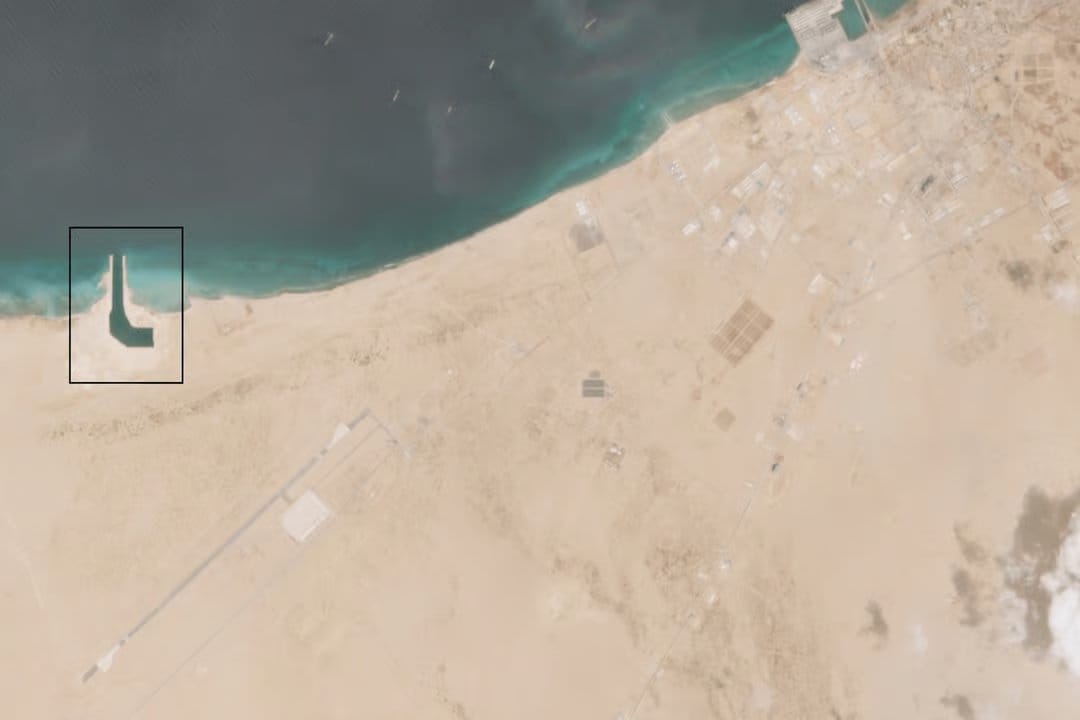
The Horn of Africa is entering a new geopolitical era. What was once largely viewed as a region grappling with terrorism, piracy and political instability is now rapidly emerging as one of the world’s most strategically contested frontiers. At the centre of this shift is Berbera, a quiet port city in Somaliland that is increasingly becoming a focal point of global military and diplomatic competition.
According to an investigation by the French newspaper Le Monde, supported by satellite imagery and intelligence sources, a military facility is under construction within Berbera Airport. The report states that the project is being led by the United Arab Emirates (UAE) and is intended to support military operations involving the UAE, the United States and Israel. Construction is reported to have been underway for nearly ten months, while access to the airport has become heavily restricted and surrounding roads have reportedly been closed to the public.
If these developments continue as reported, they could fundamentally reshape the balance of power across the Red Sea and place Somalia and Somaliland at the centre of an increasingly complex geopolitical contest.
Berbera’s importance is not accidental. Situated on the Gulf of Aden, just across from Yemen and overlooking the Bab al-Mandab Strait, the city occupies one of the world’s most valuable strategic locations. Nearly 10 percent of global trade passes through these waters, making the security of the shipping lane a matter of international concern. Since Houthi attacks on commercial vessels and Israel intensified the conflict in the Red Sea, governments around the world have sought stronger military positions from which to monitor and protect this vital corridor.
For the United States, maintaining secure maritime trade routes has long been a strategic priority. For Israel, the growing threat posed by the Houthis has expanded the importance of military cooperation beyond the Middle East. For the UAE, Berbera fits into a wider regional strategy that includes investments in ports, logistics and security infrastructure stretching from the Gulf to the Horn of Africa.
The airport itself is therefore no longer just an aviation facility. It is increasingly viewed as a strategic asset capable of supporting intelligence gathering, logistics, surveillance and regional military operations.
For Somaliland, the reported development represents another significant chapter in its long quest for international recognition. Since declaring independence from Somalia in 1991, Somaliland has built functioning institutions, conducted relatively peaceful elections and maintained greater stability than much of southern Somalia. Yet it remains unrecognized by the United Nations and the African Union.
International investment in Berbera Port, infrastructure projects and now the reported military expansion all reinforce Somaliland’s image as a reliable strategic partner for foreign governments. While none of these developments amount to formal recognition, they increase Somaliland’s geopolitical relevance and strengthen its relationships with influential international actors.
However, strategic importance comes with strategic risks.
Military installations often become targets during periods of regional conflict. Should tensions in the Red Sea continue to escalate, Berbera’s growing military significance could expose Somaliland to security threats that previously seemed distant. Becoming a key security partner for global powers may also draw Somaliland deeper into conflicts originating far beyond the Horn of Africa.
For Somalia, the implications are even more profound.
Mogadishu has consistently maintained that Somaliland remains part of the Federal Republic of Somalia. Any foreign military cooperation concluded directly with Somaliland without the approval of the federal government raises serious constitutional and diplomatic questions from Somalia’s perspective.
Beyond the issue of sovereignty lies an even greater concern. Somalia today finds itself surrounded by competing international interests. Türkiye has expanded its defence partnership with Mogadishu. The United States continues supporting counterterrorism operations against Al-Shabaab. The UAE maintains growing security interests across the region. Ethiopia’s recent agreements with Somaliland triggered one of the most serious diplomatic disputes in recent years. Now, the reported military expansion in Berbera adds another layer to an already complicated regional picture.
Taken together, these developments suggest that Somalia is increasingly becoming a theatre where global and regional powers pursue overlapping strategic objectives.
This is the essence of a proxy competition.
Unlike conventional wars, proxy conflicts are fought through influence, alliances, infrastructure investments, intelligence partnerships and military cooperation rather than direct confrontation between major powers. Countries compete for strategic advantage while local actors bear much of the political and security consequences.
Whether Somalia has already entered such a phase remains a matter of debate among analysts. However, there is little doubt that foreign strategic interests across the Horn of Africa have expanded dramatically over the past decade.
The greatest challenge for Somalia may therefore not be choosing allies but maintaining balanced relations without becoming trapped in broader geopolitical rivalries.
At the same time, Al-Shabaab remains active within Somalia. The instability in neighbouring Yemen continues. Maritime insecurity persists across the Red Sea despite multinational naval deployments. Every new security development affects an already fragile regional environment.
For Somaliland, hosting internationally significant infrastructure may generate investment, employment opportunities and enhanced security cooperation. Yet it may also increase political pressure from neighbouring countries and expose the territory to greater regional tensions.
For Somalia, preserving national unity while strengthening state institutions will become increasingly important. Diplomatic engagement with neighbouring states and international partners will likely determine whether external competition contributes to stability or further political fragmentation.
The wider Horn of Africa is also changing.
Djibouti already hosts military bases belonging to several global powers, including the United States, China, France, Japan and Italy. The Red Sea has become one of the world’s most militarised maritime regions. Berbera’s emergence as another strategic military location reflects this broader transformation rather than an isolated development.
As global attention increasingly shifts toward securing international trade routes and countering regional threats, the Horn of Africa is no longer viewed simply through the lens of humanitarian crises or counterterrorism. It is becoming one of the world’s most important geopolitical crossroads.
The coming years may therefore define not only the future of Somalia and Somaliland but also the security architecture of the wider Red Sea region.
Whether Berbera ultimately becomes a symbol of economic opportunity, regional security or geopolitical rivalry will depend on decisions made in Hargeisa, Mogadishu, Abu Dhabi, Washington and other world capitals.
One reality is already clear. The strategic competition unfolding around Berbera is about far more than one airport or one military facility. It reflects a broader struggle for influence across one of the world’s most vital maritime corridors.
The Horn of Africa is no longer on the sidelines of global politics. It is becoming one of its main stages. For Somalia and Somaliland, the challenge will not simply be navigating regional politics, but ensuring that growing international interest translates into stability, prosperity and security rather than turning the region into another arena where global powers compete while local communities bear the consequences.