

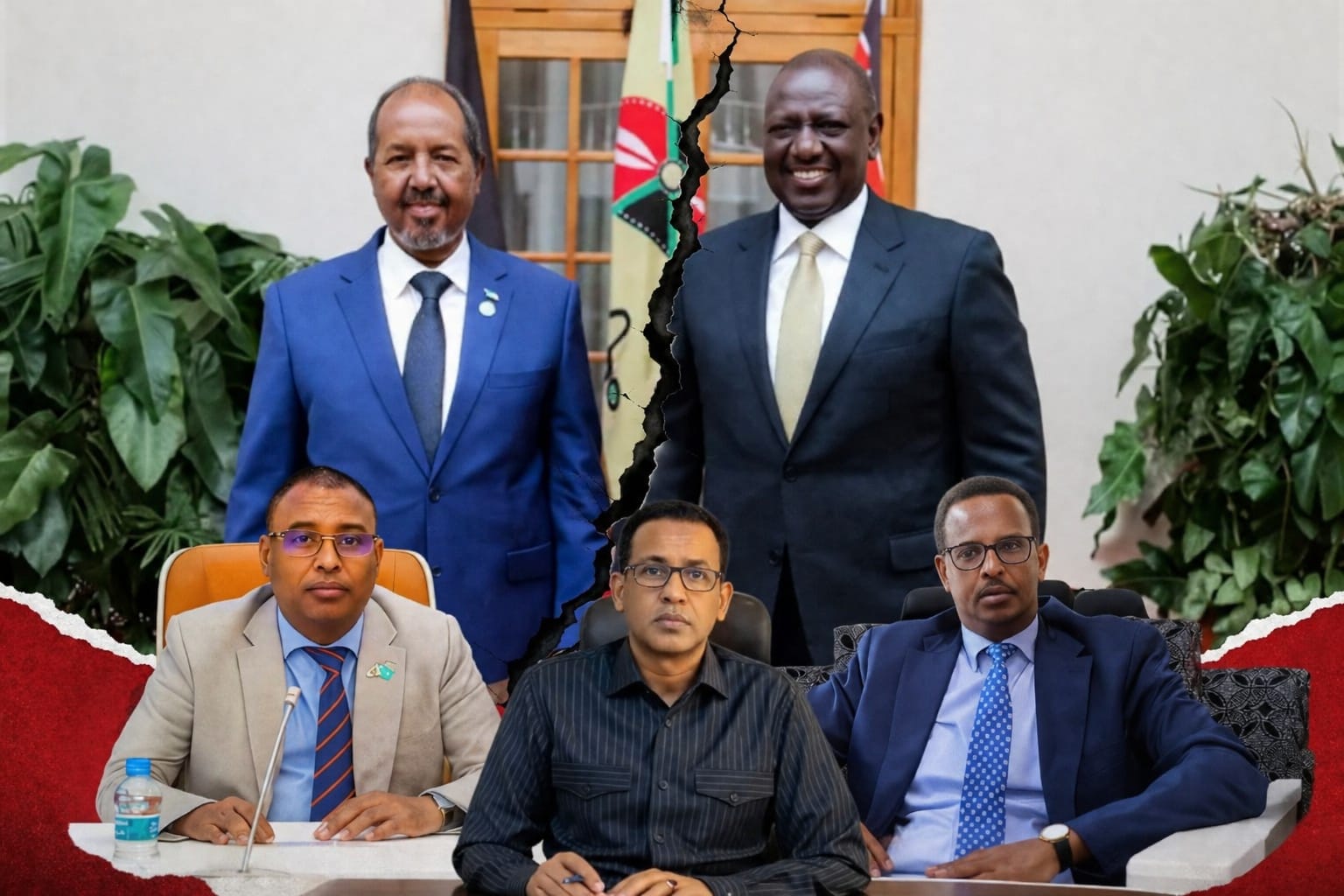
Diplomatic relations between Somalia and Kenya have entered a tense new chapter after the Federal Government of Somalia recalled its Ambassador to Kenya, Jibril Ibrahim Abdulle, for urgent consultations following the reported denial of entry into Nairobi of senior Somali government officials.
The move comes a day after Somalia’s State Minister at the Presidency, Abshir Bukhaari, was reportedly denied entry into Kenya upon arrival at Jomo Kenyatta International Airport (JKIA) and deported back to Mogadishu. According to multiple reports, Kenyan immigration authorities barred the minister from entering the country over questions surrounding a Kenyan passport he was allegedly travelling with. However, neither the Kenyan nor the Somali government has officially confirmed those claims or explained the circumstances surrounding the reported deportation.
In a further escalation, Mogadishu also summoned Kenya’s Ambassador to Somalia to the Ministry of Foreign Affairs to seek an official explanation over reports that several Somali cabinet ministers had been denied entry into Kenya. The two diplomatic actions recalling Somalia’s ambassador from Nairobi and summoning Kenya’s envoy in Mogadishu mark Somalia’s strongest response yet and indicate that what initially appeared to be an immigration matter has now developed into a diplomatic dispute between two neighbouring countries.
Recalling an ambassador for consultations is one of the strongest diplomatic measures a government can take without breaking diplomatic relations. It enables the government to receive first-hand briefings from its envoy, assess the situation and determine its next course of action while signalling its dissatisfaction with developments in the host country. Summoning another country’s ambassador, meanwhile, is a formal diplomatic protest through which a government demands clarification or expresses concern over a specific incident. By taking both steps simultaneously, Somalia has demonstrated that it considers the matter serious while keeping diplomatic channels open.
The latest incident comes just weeks after Somalia’s Second Deputy Prime Minister, Jibril Abdirashid Haji, was also reportedly denied entry into Kenya under similarly controversial circumstances. According to reports at the time, Kenyan immigration officials questioned the Deputy Prime Minister over an alleged Kenyan passport believed to have been irregularly acquired. The Somali official strongly rejected those allegations, insisting he had travelled using a valid Somali diplomatic passport and had committed no offence under Kenyan law.
Although the incident generated widespread public debate across the region, the Kenyan government did not issue a detailed public explanation outlining the reasons behind the reported decision. The lack of official communication left room for speculation and raised concerns about the treatment of senior foreign government officials.
Now, with another high-ranking Somali official reportedly facing a similar experience, Mogadishu appears determined to seek formal clarification rather than allowing the issue to remain unresolved.
The silence from both governments has continued to fuel uncertainty. Kenyan authorities have yet to publicly confirm whether Abshir Bukhaari was denied entry or explain the legal basis for the reported decision. Likewise, Somalia has not released details of its discussions with Kenya’s ambassador or indicated what response it expects from Nairobi.
Diplomatic observers note that the absence of official statements has made it difficult to determine whether the reported incidents were purely immigration matters, linked to passport verification procedures or based on broader security concerns. Until both governments clarify the facts, many of the questions surrounding the incidents remain unanswered.
The diplomatic implications extend far beyond the officials involved.
Kenya and Somalia maintain one of the Horn of Africa’s most important bilateral relationships. The two countries share a long border, cooperate extensively in the fight against the Al-Shabaab militant group and work closely on intelligence sharing, cross-border security and regional peace initiatives. Kenya also hosts a large Somali community, serves as a major commercial hub for Somali businesses and remains one of Somalia’s key economic and humanitarian partners.
The two governments also cooperate through regional organisations including the East African Community (EAC), the Intergovernmental Authority on Development (IGAD) and African Union-led security missions.
Relations between Nairobi and Mogadishu have experienced periods of tension before, including disputes over maritime boundaries, aviation restrictions, border security and political disagreements. However, in recent years, Presidents William Ruto and Hassan Sheikh Mohamud have sought to strengthen bilateral ties through high-level meetings, expanded trade discussions and renewed commitments to regional peace and economic cooperation.
The latest developments now threaten to test that progress.
What happens next will largely depend on Kenya’s response. If Nairobi provides a comprehensive explanation regarding the reported immigration decisions, diplomatic engagement could help ease tensions and prevent further deterioration in bilateral relations. Somalia, on the other hand, is expected to evaluate Kenya’s response before deciding whether further diplomatic measures are necessary.
Despite the current tensions, analysts believe neither country is likely to allow the disagreement to escalate into a prolonged diplomatic crisis. Both governments have significant strategic interests in maintaining close cooperation on security, trade, transport and regional stability. A prolonged dispute could affect official engagements, business confidence and cross-border cooperation, making dialogue the most practical path forward.
For now, Somalia’s decision to recall its ambassador to Kenya while simultaneously summoning Kenya’s ambassador in Mogadishu sends a clear diplomatic message that it expects answers over the reported treatment of its senior officials. Whether the matter is resolved through quiet diplomacy or develops into a broader political disagreement will depend largely on Nairobi’s response in the coming days.
As both capitals remain officially silent, the unfolding developments are being closely watched across the Horn of Africa, where strong relations between Kenya and Somalia are widely regarded as essential for regional peace, security and economic integration. The coming days are expected to determine whether the dispute remains an isolated diplomatic incident or evolves into a more significant test of relations between two neighbours whose partnership is critical to the stability of the region.