

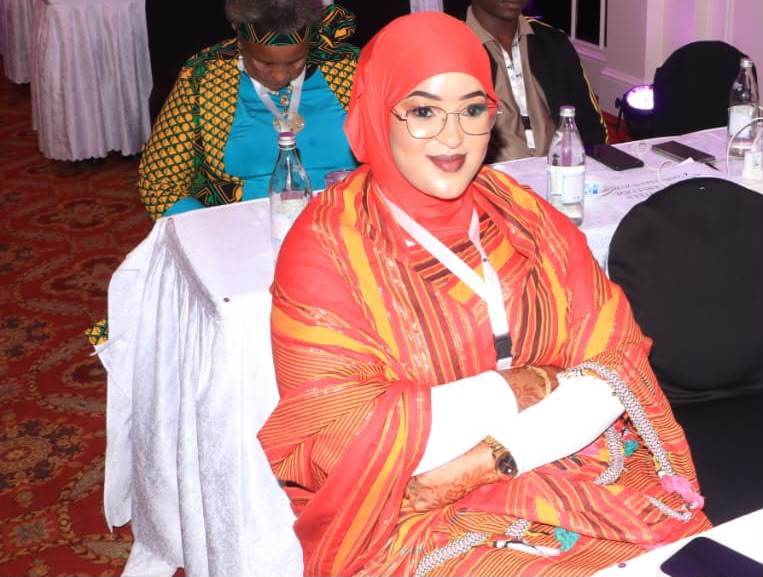
There are professions that demand knowledge, and then there are professions that demand something more: the courage to walk into difficult places, confront difficult problems and remain committed to solutions long after the applause has faded. Engineering is one of them.
In Mandera, where drought, distance, fragile infrastructure and an unforgiving climate can turn access to water into a daily struggle, the work of a water engineer carries a significance far beyond drawings, measurements and technical reports. It touches health, dignity, livelihoods and the future of entire communities.
For Engineer Hibaaq, that responsibility has become a purpose.
Her journey, however, did not begin with a childhood certainty that she would become an engineer. It began unexpectedly, during a flight to Nairobi after completing Form Four, and grew through discipline, determination, loss, professional challenges and a deepening understanding of what engineering can mean to communities.
In an exclusive interview with Siyad Reports Chief Editor Abdihakim Siyad, Engineer Hibaaq shared her journey into engineering, her experience as a woman in a male-dominated profession, her work in Mandera’s water sector, the projects that have shaped her career, her vision for the future of water security and the legacy she hopes to leave behind.
“My journey to becoming an engineer has been anything but ordinary,” Hibaaq says.
Throughout primary and high school, she was known less for technical ambition than for her ability to make people laugh.
“I was known as the joker in class. I loved making people laugh, enjoyed socializing and was never considered the most serious student. However, despite my playful nature, I understood the importance of education and consistently performed well enough to earn my place at Campus.”She recalled.
Water engineering was not always part of the plan. The direction came later, during a moment of reflection after Form Four.
“Interestingly, I did not always dream of becoming a water engineer,” she says.
“That passion was born during one of the most memorable moments of my life which was my flight to Nairobi after completing my Form Four studies. As I reflected on my future and the opportunities ahead, I realized I wanted to pursue a career that would challenge me intellectually while allowing me to make a meaningful contribution to society.” she reflected.
That journey became a turning point.
“It was during that journey that I decided to study Water Engineering, a decision that would shape the course of my life.”she said.
University then transformed the playful student she had been into someone increasingly driven by purpose.
“Campus transformed me. The playful student I had always been developed a new level of determination and discipline. I became focused, ambitious and driven by one goal: to one day have my name proudly read as Engineer Hibaq.”
But the goal was never merely the certificate.
“It was no longer just about earning a certificate, it was about building a legacy and proving to myself that I could achieve something meaningful.”
One of the people who gave that ambition its deepest meaning was her late father.
“Although he was not there to witness me graduate or hear the title ‘Engineer’ before my name, I carried his dreams with me every step of the way,” she says. “I was determined to make him proud by accomplishing what he had always hoped for me.” she added
His memory became part of every milestone she achieved.
“Every challenge I overcame and every milestone I achieved became a tribute to his belief in the importance of education, perseverance and hard work.”
Today, the title she once dreamed of carries a deeper significance.
“Whenever I am introduced as Engineer Hibaq, I am reminded that dreams can begin in the most unexpected moments,” she says. “My story is proof that you do not have to fit the stereotype of the ‘perfect student’ to succeed. With passion, determination and a clear sense of purpose, it is possible to turn a dream into reality while honoring those who believed in you along the way.” She explained
That determination would become particularly important in engineering, a profession where women remain underrepresented.
Yet Hibaaq says her motivation was never simply to prove that a woman could become an engineer.
“What inspired me to pursue engineering was not the idea of proving that a woman could work in a male-dominated profession. It was my genuine interest in technical problem-solving and the desire to build a career where I could apply science and engineering principles to real challenges.”
Water engineering, she says, attracted her because of its direct connection to communities.
“Once I discovered water engineering, I became particularly interested in how engineering can be used to develop, operate and improve systems that provide an essential resource to communities.”
She understood early that professional competence would require much more than graduating.
“I knew that engineering would require more than obtaining a certificate; it would require continuous learning, practical field experience, technical judgement and the ability to make decisions based on data and engineering standards. That challenge attracted me.”
Her experience as a woman in the field has sometimes meant entering spaces where women are few.
“Being a woman in engineering has, at times, meant entering spaces where women are underrepresented, whether on construction sites, during infrastructure inspections, in technical meetings or when supervising contractors and field teams.”
Those experiences taught her that confidence must have substance behind it.
“In those situations, I learned that confidence has to be supported by competence. I had to know my designs, understand specifications, interpret technical information, ask the right questions and be prepared to defend professional decisions.”
Her approach to leadership is equally grounded.
“I do not believe I need to be the loudest person in a room to establish my authority. I believe my work, professional conduct and ability to solve problems should speak for me.”
And when she does not know something, she is prepared to learn.
“When I do not know something, I am willing to learn or consult someone with more expertise. Engineering is multidisciplinary and acknowledging that is part of being a good engineer.”
Her confidence developed through experience.
“Every field assignment, technical challenge and responsibility gradually strengthened my confidence. I learned to walk onto a site knowing that I had earned my place there and that I had a professional responsibility to contribute, regardless of whether I was the only woman in the room.”she said.
That visibility, she believes, matters.
“When a girl from a community like Mandera sees a woman working confidently as an engineer, it makes the profession feel more attainable.”
For Hibaaq, breaking barriers is therefore not about competing with men.
“It has been about earning my competence, doing my work well, continuing to learn and refusing to allow stereotypes to determine how far I can go. Engineering gave me a platform to turn my passion into a profession and I want to use that platform to make space for the women who will come after me.”she narrated
That passion has taken root in one of Kenya’s most challenging water environments.
Mandera depends heavily on groundwater, but the availability of groundwater does not automatically mean the availability of safe, reliable water.
“Mandera County faces unique hydrogeological and climatic challenges that make water supply both technically and operationally demanding,” Hibaaq explains. “One of the biggest challenges is the county’s dependence on groundwater (60%) as the primary source of water.”
She notes that water quality is another major concern.
“Many aquifers produce water with high salinity or elevated fluoride concentrations, requiring appropriate treatment before it is safe for domestic consumption.”
Drought makes the situation even more difficult.
“In addition, prolonged droughts, driven by climate change, reduce aquifer recharge and increase pressure on the limited available resources.”
Population growth, aging infrastructure, leakages, illegal connections, inadequate storage and the sheer geographical size of the county add further pressure.
“Operational challenges such as high energy costs for groundwater abstraction, limited financing for infrastructure development and the need for continuous operation and maintenance also affect the sustainability of water services.”
But Hibaaq sees opportunities within those challenges.
“Expanding groundwater exploration using modern hydrogeological and geophysical investigations can help identify more productive aquifers. Investing in solar-powered borehole systems can significantly reduce operational costs associated with diesel or grid-powered pumping.”
She also points to better infrastructure and technology.
“Upgrading transmission and distribution networks, increasing storage capacity and implementing pressure management can reduce water losses and improve service reliability.”
Technology, she says, can transform how systems are monitored.
“Integrating Supervisory Control and Data Acquisition (SCADA) systems, Geographic Information Systems (GIS) and smart metering can improve real-time monitoring, asset management, leak detection and operational efficiency.”
But technology must work alongside strong institutions and communities.
“Equally important is strengthening institutional capacity, promoting community participation in water resource management and fostering partnerships between county governments, water service providers, development partners and local communities.” she says.
Her own working life reflects the complexity of that mission.
“As a Water Engineer, no two days are exactly the same because the work combines field operations, technical analysis and project management.”
Her responsibilities include monitoring borehole production, pumping schedules, reservoirs and distribution networks, as well as planning, designing and supervising infrastructure projects.
“A significant part of my role involves planning, designing, supervising and monitoring water supply infrastructure projects,” she says. “This includes overseeing borehole drilling and equipping, pipeline installation, storage reservoir construction, pump installation and rehabilitation of existing infrastructure.”
Water quality remains one of her most important responsibilities.
“I coordinate routine water quality monitoring and analysis to verify that the water supplied to consumers meets the standards set by the Kenya Bureau of Standards (KEBS) and the Water Services Regulatory Board (WASREB).”
Her work involves monitoring parameters including pH, turbidity, electrical conductivity, TDS, residual chlorine, fluoride, nitrates, salinity and microbial indicators such as E. coli and total coliforms.
“Where water quality does not meet the required standards, I recommend and implement corrective measures such as optimizing treatment processes, adjusting chlorination dosages or investigating potential sources of contamination within the distribution system.”
Beyond infrastructure and water quality, her role involves reporting, data analysis, project planning, asset management and stakeholder engagement.
Ultimately, she says, “my responsibility extends beyond constructing infrastructure.”
“It is about ensuring that every component of the water supply system from source development and treatment to transmission, distribution, water quality monitoring and customer delivery operates efficiently and sustainably so that communities receive a continuous supply of safe, reliable and high quality drinking water.”
Her career has already provided opportunities to turn that responsibility into tangible impact.
She points to her involvement in Community-Led Total Sanitation, the HOAGW4RP programme and sanitation facilities at schools.
“One of the projects I am particularly proud of is my involvement in Community-Led Total Sanitation (CLTS) under the Ending Drought Emergencies (EDE) and CPIRA programme in six villages in Mandera.”
The work was meaningful because it focused on ownership rather than simply infrastructure.
“CLTS moves away from simply providing subsidized sanitation facilities and instead focuses on creating community demand and ownership.”
She also explains why construction alone cannot guarantee sustainable sanitation.
“Constructing latrines without generating demand does not necessarily result in their sustained use. Communities are therefore facilitated to understand the health, environmental and social consequences of open defecation and to take collective responsibility for ending the practice.”
Her work under HOAGW4RP has similarly focused on water access.
“The HOAGW4RP programme, focuses on the rehabilitation of existing boreholes and drilling of new boreholes across Mandera County.”
She emphasizes the importance of rehabilitation because it can restore water production at lower cost and in a shorter period than developing entirely new sources.
She has also supervised sanitation facilities at Waranqara and Lafey Primary School, including six four-door pit latrine blocks.
“This work was meaningful because sanitation infrastructure in schools directly contributes to a safer and healthier learning environment.”
Across these projects, Hibaaq sees a larger lesson.
“Engineering is not only about designing and constructing infrastructure. It is about understanding the technical problem, involving the people who will use the facilities, applying appropriate engineering standards, monitoring performance and ensuring that the intervention remains functional and sustainable.”
That is also how she measures achievement.
“For me, the greatest achievement is therefore the impact created through engineering.”
Whether restoring a borehole, supporting a village to achieve ODF status or improving sanitation for children, she says, “each intervention represents a tangible improvement in people’s lives.”
That impact is what keeps her going despite the difficult conditions.
“In Mandera, water engineering is not simply about infrastructure, it is directly connected to people’s health, livelihoods, dignity and resilience.”
She knows the work comes with long distances, difficult conditions, equipment failures, limited resources and climate pressures.
“Mandera’s challenges are not a reason to step back from the work; they are a reason to become better engineers.”
Her vision for the future is therefore built around resilience.
She sees opportunities in solar pumping, groundwater monitoring, improved storage, reduction of non-revenue water, water-quality surveillance and data-driven planning.
For her, innovation must remain grounded in reality.
“We cannot simply import technologies because they are being used elsewhere; we have to consider our hydrogeology, climate, settlement patterns, water demand, energy costs, technical capacity and the ability to operate and maintain the systems locally.”
She advocates stronger groundwater data, combining geophysical surveys, GIS and remote sensing, while monitoring groundwater levels and abstraction to understand sustainability.
Solar-powered systems, she believes, could reduce energy costs, but only if properly designed.
“Solarization should be accompanied by proper pump sizing, hydraulic analysis, storage optimization, preventive maintenance and appropriate system controls.”
Smart water management can also help.
“Introducing telemetry, remote monitoring, smart meters and SCADA where technically and financially appropriate can allow operators to monitor borehole production, reservoir levels, pump performance, pressure, flow and system interruptions in near real time.”she explains.
She also emphasizes water conservation.
“Reducing non-revenue water through leak detection, pressure management, metering and timely repair of bursts can increase the amount of water available without necessarily developing a new source.”
For Hibaaq, however, technology is only a tool.
“The real innovation is not technology for its own sake. It is using engineering data, appropriate technology and local knowledge to make every liter of water count and ensure that today’s water infrastructure remains functional and sustainable tomorrow.”
That philosophy extends naturally into her message to young girls.
“Do not disqualify yourself before you even enter the room,” she says.
She wants girls to understand that engineering requires mathematics, science and discipline, but also curiosity, resilience, communication and problem-solving.
“You do not have to be the perfect student or have everything figured out from the beginning.”
Her own journey is a proof.
“My own journey did not start with a perfectly defined career plan. What mattered was that once I found my direction, I became committed to learning and improving myself.”
She encourages girls to seek mentors, embrace internships and field opportunities, develop technical skills and become comfortable with data and technology.
“Do not be afraid of fieldwork, construction sites, laboratories or technical discussions simply because they are environments where you may find fewer women.”
And above all she says, “You can be feminine, confident, ambitious and technically competent at the same time. Your gender should never be the limitation you place on your own potential.”
For girls from communities where engineering may not seem like an obvious path, her message is even more powerful.
“Your background does not determine the size of your ambition. If you want to become an engineer, work towards it. One day, your name can be the one inspiring another girl to believe that she can do it too.”
That is also the future she hopes to help build.
“I would like my legacy to be measured by both the water systems I contributed to strengthening and the people I helped develop.”
She wants Mandera to move towards water systems that are “more reliable, data-driven, climate-resilient and sustainable,” with stronger groundwater monitoring, better water-quality surveillance, efficient distribution networks and infrastructure that remains functional long after construction.
But she also wants planning to become more evidence-based.
“We need to move beyond developing water points simply because a community needs water and increasingly consider questions such as: What is the sustainable yield of the source? What is the quality of the water? What is the projected demand? What will it cost to operate the system? Who will maintain it? What happens during drought?”
Her legacy, therefore, is not only about water infrastructure.
“Beyond infrastructure, I want my legacy to be about professional service and mentorship. I want young engineers, particularly young women from northern Kenya, to see engineering as a field in which they can belong, lead and make technical decisions.”
And ultimately, she wants engineering to remain connected to the people it exists to serve.
“A technically excellent borehole that is not maintained, a treatment system that cannot be operated, or a sanitation facility that communities do not use cannot be considered a complete success. Sustainable engineering requires technical competence, community ownership, institutional capacity and long-term thinking.”
Then comes the sentence that perhaps captures the entire journey.
“I would be proud if years from now someone could say that Engineer Hibaq contributed to making water services better, helped strengthen the profession, encouraged young people to pursue engineering, and served her community with integrity.”
“For me, that would be a meaningful legacy, not simply having my name attached to projects, but knowing that my work continued to create value long after I was no longer directly involved.”
And perhaps that is the most fitting way to understand Engineer Hibaaq’s story.
It began with a young woman on a flight to Nairobi, uncertain about exactly where life would take her. It continued through university, where determination replaced uncertainty and a career choice became a calling. It was tested by the realities of being a woman in engineering and strengthened by the demands of working in Mandera, where every water project carries consequences far beyond the technical drawings.
Today, her work sits at the intersection of engineering and humanity: groundwater and public health, infrastructure and dignity, technology and community, professional ambition and service.
The title “Engineer Hibaaq” may once have been a dream. Today, it represents years of learning, sacrifice, courage and purpose. It carries the memory of a late father whose dreams she continues to honour. It carries the example of a woman who chose competence over stereotypes. And it carries a message to young girls watching from northern Kenya that their circumstances do not have to define the size of their dreams.
In a county where water can determine whether a community thrives or struggles, Hibaaq has chosen to place her knowledge where it matters most.
Her greatest legacy may not be a single borehole, pipeline, sanitation facility or project bearing her name.
It may be something quieter and far more lasting: a community with reliable water because she helped strengthen a system; a child learning in a healthier environment because she helped improve sanitation; a water problem identified before it became a crisis because she insisted on monitoring; or a young girl choosing engineering because she saw, in Hibaaq, someone who looked like her and dared to enter the room.
Some legacies are written on plaques. Others are built in concrete.
But the finest are felt in the lives that become better long after the engineer has left the site.
And in Mandera, where every drop matters, Engineer Hibaaq is building precisely that kind of legacy one rooted not in the title before her name, but in the lives touched by the work behind it.
Where the water runs, so does her purpose.