

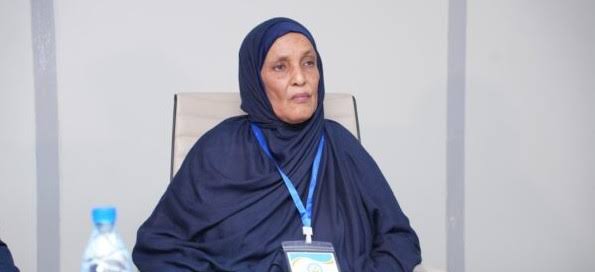
Somalia has taken a historic step toward strengthening accountability, governance, and protection of civil liberties following the election of former cabinet minister Dr. Maryan Qaasim Axmed as the Chairperson of the country’s newly established Independent Human Rights Commission. The development signals a critical institutional milestone as Somalia attempts to transition from decades of conflict, fragile governance structures, and recurring human rights challenges toward a more transparent and rights-based state framework.
The election of Dr. Maryan Qaasim is not merely a routine leadership appointment. Instead, it represents a broader political, legal, and institutional shift that could shape Somalia’s democratic evolution, reinforce citizen protection mechanisms, and redefine how the country addresses both historical and ongoing rights violations. Her leadership emerges at a moment when Somalia faces competing pressures of security reforms, state-building, and international expectations regarding human rights compliance.
The creation of the Independent Human Rights Commission marks the first time Somalia has established a nationally managed, autonomous oversight body tasked with monitoring, investigating, and reporting on human rights issues across the country. This development demonstrates Somalia’s attempt to reclaim full ownership of its human rights monitoring processes after years of heavy reliance on international oversight and monitoring frameworks.
Dr. Maryan Qaasim brings extensive government experience, academic expertise, and policy leadership into the role. Having previously served in Somalia’s federal cabinet, her appointment suggests confidence from state institutions in her capacity to balance political realities with the commission’s independence. Analysts view her selection as a strategic move aimed at ensuring both credibility and operational stability for a newly formed institution that will inevitably face complex political and security environments.
The commission has been mandated to investigate allegations of human rights abuses, provide independent policy recommendations to the government, and advocate for the protection of vulnerable communities. These responsibilities place the institution at the center of Somalia’s accountability structure, particularly as the country continues to confront allegations involving security operations, civilian protection, displacement crises, and gender-based violence.
President Hassan Sheikh Mohamud publicly congratulated the newly elected leadership of the commission, emphasizing that their expertise and experience would play a significant role in fulfilling Somalia’s aspirations to institutionalize human rights protections. His remarks highlight the government’s recognition that sustainable peace and national stability depend heavily on strengthening justice systems and ensuring public trust in governance institutions.
The President also stressed the importance of advancing accountability and reinforcing justice mechanisms through the commission’s work. Such statements reflect growing acknowledgment within Somalia’s leadership that weak accountability structures have historically contributed to instability, corruption, and public mistrust toward state institutions.
Similarly, Prime Minister Hamza Abdi Barre described Dr. Maryan’s election as a reflection of confidence in her professional competence, transparency, and leadership ability. He reaffirmed the government’s commitment to strengthening independent oversight institutions, describing them as fundamental pillars supporting peace, democratic governance, and rule of law.
The prime minister’s position reinforces the broader political narrative that Somalia’s federal government is attempting to consolidate governance reforms by empowering institutions that operate outside direct political control. If implemented effectively, this could enhance institutional checks and balances, a critical requirement for countries transitioning from prolonged conflict.
The international community has also closely monitored Somalia’s human rights reform trajectory. During her recent briefing to the United Nations, Isha Dyfan, the Independent Expert on the human rights situation in Somalia, urged Somali authorities and global partners to maintain coordinated efforts to protect human rights gains and prevent regression during the country’s fragile transition period.
Dyfan emphasized that Somalia’s journey remains challenging but contains significant potential if national leadership, inclusive dialogue, and international cooperation are sustained. Her statement reflects a widely shared assessment among international observers that Somalia’s human rights progress remains vulnerable to security instability, political tensions, and institutional capacity limitations.
Somalia’s decision to establish its own independent human rights commission aligns with international best practices recommended by global human rights frameworks, particularly the Paris Principles, which outline the standards for national human rights institutions. These principles emphasize independence, transparency, inclusivity, and adequate operational authority.
If Somalia successfully aligns its commission with these international standards, the country could significantly improve its global reputation regarding human rights performance. This may also enhance Somalia’s diplomatic positioning, international partnerships, and eligibility for development funding and governance support programs.
However, the success of the commission will largely depend on its operational independence, resource allocation, and ability to conduct investigations without political interference. Many similar institutions in fragile states have struggled due to budget constraints, security threats, and pressure from powerful political actors.
Somalia’s internal security landscape remains one of the most significant challenges facing the commission.
Ongoing counterterrorism operations against Al-Shabaab, displacement crises, and humanitarian emergencies continue to generate complex human rights concerns. Balancing national security priorities with civilian protection obligations will require careful institutional coordination between the commission, security agencies, and judicial bodies.
Another major challenge lies in public awareness and citizen trust. For the commission to function effectively, Somali citizens must perceive it as a legitimate, accessible, and impartial institution capable of addressing grievances. Public engagement strategies, regional outreach, and transparent reporting mechanisms will therefore be essential in building nationwide confidence in the commission’s role.
The commission also has a critical opportunity to address long-standing structural human rights issues, including protection of internally displaced persons, minority rights, women’s rights, and child protection. Somalia continues to experience high rates of displacement, early marriage concerns, and limited access to justice for vulnerable populations. A strong human rights oversight institution could help highlight these issues and push for policy reforms that address root causes rather than temporary solutions.
Furthermore, Somalia’s federal governance structure introduces an additional layer of complexity. The commission must navigate coordination between federal authorities and federal member states, ensuring consistent human rights standards across diverse regional political environments. Achieving such coordination will require diplomatic skill, institutional clarity, and legal enforcement capacity.
The establishment of the commission also represents a symbolic shift in Somalia’s governance narrative. For decades, Somalia has been associated internationally with conflict, humanitarian crises, and weak institutional capacity. The creation of an independent oversight body signals Somalia’s attempt to redefine its governance identity by prioritizing accountability, transparency, and citizen protection.
Dr. Maryan Qaasim’s leadership will therefore be closely scrutinized both domestically and internationally. Her success could set a precedent for strengthening other independent oversight institutions, while challenges in implementation could test Somalia’s broader reform agenda.
Ultimately, the election of Dr. Maryan Qaasim and the formation of Somalia’s Independent Human Rights Commission represent a defining moment in the country’s state-building process. While the commission alone cannot resolve Somalia’s complex human rights challenges, it provides an institutional foundation capable of advancing accountability, justice, and inclusive governance.
Somalia’s transition toward durable peace and democratic stability will depend heavily on whether such institutions are allowed to operate independently, receive adequate support, and maintain public trust. As Somalia continues navigating political reforms, security operations, and economic recovery, the success of its human rights commission may become one of the most important indicators of the country’s long-term stability and governance transformation.