

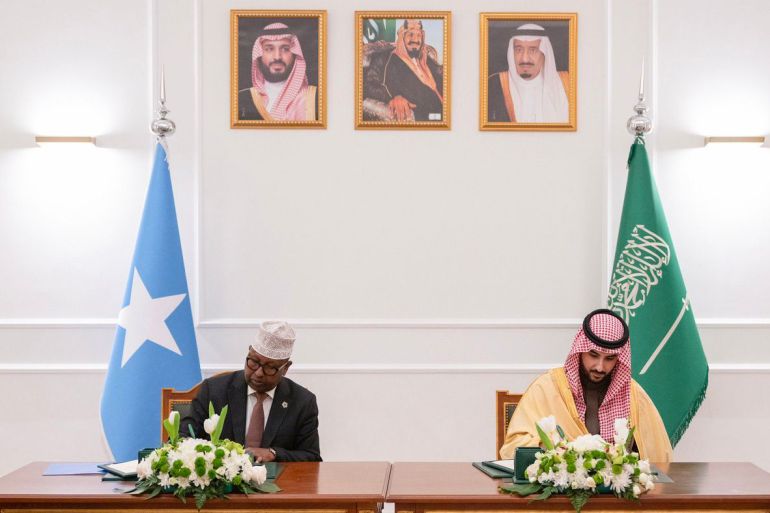
The Horn of Africa is once again emerging as one of the world’s most strategically contested regions, and at the heart of this evolving geopolitical chessboard sits Somalia. The renewed interest by Saudi Arabia in establishing a naval and logistical port facility in the historic coastal town of Laasqoray signals a potential shift in regional power dynamics that could reshape maritime security, economic influence, and political alliances across the Red Sea, the Gulf of Aden, and beyond.
While official confirmations remain limited and negotiations continue quietly behind diplomatic curtains, emerging signals suggest Riyadh views Laasqoray not simply as a military outpost, but as a critical node within its broader Vision 2030 ambitions a blueprint aimed at transforming Saudi Arabia into a global logistics, security, and trade powerhouse.
For Somalia, however, the proposed development represents both an opportunity and a looming geopolitical gamble that could redefine the country’s sovereignty, stability, and regional standing.
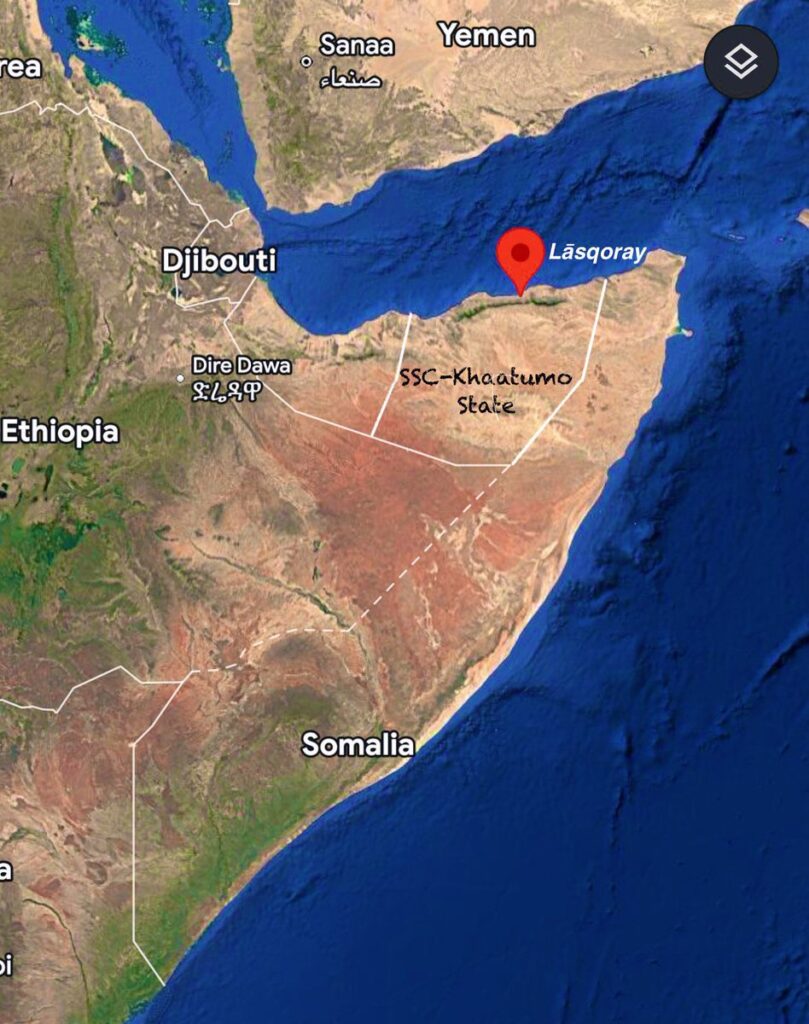
Laasqoray’s importance lies not merely in its geography but in its historical and strategic significance. Positioned along the Gulf of Aden, the port sits close to one of the world’s busiest maritime corridors. Nearly 12 percent of global trade and a significant portion of global oil shipments pass through these waters, linking Europe, Asia, and the Middle East. Control or influence over facilities in this corridor grants nations leverage not only in trade but in military and diplomatic power projection.
Saudi Arabia’s pursuit of influence in Laasqoray reflects a growing realization in Riyadh that maritime security and logistics infrastructure are essential pillars of its future global positioning. Vision 2030 is often discussed in economic terms, focusing on diversification away from oil dependency, but its strategic dimension is equally significant. Saudi Arabia is seeking to build a network of ports, shipping corridors, and naval footholds that allow it to secure trade routes, counter regional adversaries, and position itself as a dominant maritime actor.
For decades, the Red Sea and Gulf of Aden have been arenas of intense global competition. The United States, China, Turkey, the United Arab Emirates, and European powers all maintain some form of military or economic presence across the region. Saudi Arabia’s potential entry into Laasqoray would add another heavyweight into an already crowded strategic theatre.
Somalia, with its 3,300-kilometer coastline the longest in mainland Africa has increasingly become a focal point for these competing global ambitions. However, Somalia’s internal political fragility, unresolved federal disputes, and security challenges make any foreign strategic investment deeply sensitive.
Reports indicating that President Hassan Sheikh Mohamud has been given a three-month window to facilitate preliminary clearance for the Laasqoray project highlight the urgency and seriousness of the negotiations. If accurate, such timelines underscore Riyadh’s desire to accelerate its maritime expansion while regional rivalries continue intensifying.
For Somalia’s federal leadership, approving the Saudi proposal may appear attractive. Saudi Arabia remains one of Somalia’s key economic and diplomatic partners, providing humanitarian aid, development assistance, and political support within international forums. The establishment of a Saudi-funded port facility could potentially bring infrastructure development, employment opportunities, and enhanced maritime security capabilities to northern Somalia a region often marginalized from major federal investment projects.
Yet, beneath these potential benefits lie complex domestic and regional tensions that could complicate implementation. Laasqoray is located within the broader Sanaag region, an area historically contested between Somaliland and Puntland administrations. Any foreign-backed infrastructure project introduced without careful local political negotiation risks inflaming already fragile territorial disputes.
Foreign military or strategic port bases often reshape internal power balances within host nations. Different Somali political actors could interpret the Saudi presence differently some viewing it as an opportunity for development and security cooperation, while others may perceive it as external interference that threatens regional autonomy.
The Expanding Maritime Rivalry and Somalia’s Strategic Leverage
Saudi Arabia’s interest in Laasqoray cannot be analyzed in isolation. It forms part of a broader maritime competition unfolding across the Red Sea and the western Indian Ocean. Over the past decade, the United Arab Emirates has aggressively expanded its port and security infrastructure footprint across the Horn of Africa. UAE-linked companies have developed or secured operational control over ports in Berbera in Somaliland and Bosaso in Puntland, while also maintaining strong military and training relationships with regional authorities.
Turkey, meanwhile, has established its largest overseas military training facility in Mogadishu and remains deeply involved in Somalia’s security sector reform and infrastructure projects. China operates a major naval support base in neighboring Djibouti, while the United States maintains counterterrorism installations in the region. Iran, through indirect networks and alliances, has also sought influence along critical maritime chokepoints.
Saudi Arabia’s Laasqoray ambitions therefore represent not only economic expansion but strategic balancing against these rival actors. Riyadh’s leadership is acutely aware that control over maritime logistics networks increasingly determines geopolitical power. By positioning itself along critical trade arteries, Saudi Arabia aims to secure energy transport routes, protect commercial shipping from militant or piracy threats, and strengthen its defense posture against Iranian-aligned groups such as the Houthis in Yemen.
The Yemen conflict has profoundly shaped Saudi maritime calculations. Houthi missile and drone attacks targeting shipping vessels in the Red Sea have demonstrated how non-state actors can disrupt global commerce and regional security. Establishing forward naval logistics points in locations like Laasqoray could provide Saudi Arabia with enhanced surveillance capabilities and rapid-response deployment capacity across the Gulf of Aden.
However, expanding foreign military presence in Somalia also risks importing Middle Eastern proxy rivalries into the Horn of Africa. If Saudi Arabia establishes a significant naval footprint, Iranian-aligned groups or regional competitors may respond by strengthening relationships with alternative Somali actors. Such competition could deepen local divisions and complicate Somalia’s fragile state-building efforts.
Another critical dimension of this geopolitical shift lies in economic competition for maritime infrastructure control. Ports are no longer simply commercial gateways; they function as strategic leverage points linking global supply chains, naval mobility, and diplomatic influence. Nations that control port networks can shape regional trade policies, security alliances, and economic development patterns.
For Somalia, this reality presents a unique but delicate opportunity. The country’s geographic location offers enormous leverage in global maritime logistics. Properly managed, foreign investment in Somali ports could accelerate national economic transformation. Mismanaged, it could fragment the country into zones of competing foreign influence, undermining sovereignty and internal cohesion.
The Laasqoray proposal also intersects with evolving global power competition between Western nations and emerging multipolar alliances. Saudi Arabia has increasingly pursued a foreign policy that balances relationships between Western partners, China, and regional allies. By expanding maritime infrastructure across the Red Sea corridor, Riyadh is positioning itself as a central connector between continents and political blocs.
Somalia’s acceptance of such projects may align it more closely with Gulf security architectures while simultaneously reshaping its diplomatic relationships with other international stakeholders. Western nations focused on counterterrorism may support Saudi involvement if it strengthens anti-Al-Shabaab operations and maritime security enforcement. Conversely, regional actors wary of Saudi expansion may attempt to counterbalance the move through alternative alliances or economic investments in competing Somali regions.
Security implications remain equally complex. While Saudi naval facilities could enhance maritime patrol capabilities and anti-piracy operations, they may also transform Somalia into a potential target for retaliatory attacks by militant networks opposing Gulf state influence.
Al-Shabaab, which has historically exploited foreign military presence narratives to recruit and mobilize support, could attempt to frame the base as evidence of foreign occupation, potentially increasing extremist propaganda and recruitment efforts.
Humanitarian and social impacts must also be considered. Large-scale infrastructure projects often trigger population displacement, environmental pressures, and rapid urbanization challenges. If not managed transparently and inclusively, development around Laasqoray could generate local grievances that undermine long-term stability.
Ultimately, Somalia stands at a defining historical moment. The country’s leaders must navigate the intersection of global ambition, regional rivalry, and domestic political realities. The potential Saudi naval base in Laasqoray symbolizes both Somalia’s rising strategic importance and the enormous risks associated with becoming a focal point for international competition.
If negotiated carefully, with strong federal consensus and inclusive regional consultation, the project could transform Somalia into a central player within global maritime trade and security networks. It could stimulate infrastructure development, expand economic opportunity, and strengthen national defense capabilities.
However, if pursued without comprehensive political coordination and transparent governance frameworks, it risks exacerbating territorial disputes, encouraging proxy competition, and further complicating Somalia’s already delicate path toward stability and sovereignty.
As Saudi Arabia advances its Vision 2030 maritime ambitions and global powers intensify competition across the Red Sea corridor, Somalia’s coastline is rapidly becoming one of the most strategically valuable stretches of territory in international geopolitics. The decisions made in Mogadishu and regional capitals in the coming months may determine whether Somalia emerges as a sovereign maritime gateway connecting continents or becomes a contested arena where global rivalries collide.
The unfolding Laasqoray negotiations therefore represent far more than a port development project. They reflect the shifting architecture of global power in the twenty-first century and Somalia now sits firmly at its centre.