

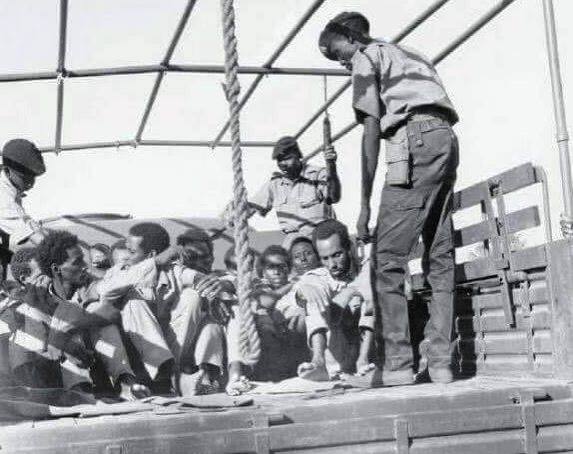
On the dusty plains of Wajir County lies Wagalla Airstrip a quiet, open stretch of land that appears ordinary to a visitor unfamiliar with its history. Planes occasionally land. Livestock graze nearby. Children play in the surrounding areas. But beneath the silence of this vast field lies a story that has haunted generations, shaped community memory, and raised uncomfortable questions about state power, national unity, and justice in Kenya.
Every year on February 10, elders gather, survivors recite prayers, families speak the names of loved ones who never returned home, and an entire region pauses to remember an event that changed the social and political landscape of North Eastern Kenya forever.
The Wagalla Massacre of 1984 remains one of the most controversial and painful episodes in Kenya’s post-independence history. More than four decades later, it stands not only as a tragedy of loss but also as a symbol of unresolved justice, historical neglect, and a reminder of the fragile relationship between state authority and marginalized communities.
To understand Wagalla is to understand a deeper story — one rooted in colonial legacies, regional marginalization, security politics, and the complicated nature of governance during Kenya’s early post-independence decades.
By the early 1980s, Kenya was under the leadership of President Daniel Toroitich arap Moi, who had taken over power in 1978 following the death of founding President Jomo Kenyatta. Moi’s administration inherited a country grappling with ethnic tensions, economic pressure, and rising security concerns, particularly in remote frontier regions such as North Eastern Kenya.
The region itself carried a complicated history. During colonial rule, North Eastern Kenya had been administered under strict security regulations due to its proximity to Somalia and the historical Shifta insurgency of the 1960s, where separatist movements sought to join Somalia. Even decades later, the region remained heavily securitized and politically sensitive.
By 1984, tensions between communities in Wajir had escalated, particularly involving conflicts linked to local clan disputes. Reports of violence, cattle rustling, and competition over resources were increasingly drawing the attention of the central government.
Authorities viewed the situation as a growing security threat that required urgent intervention. What followed would later become one of the most disputed and painful security operations in Kenyan history.
Security forces were deployed to Wajir with the stated objective of restoring peace and controlling escalating clan conflicts. The operation specifically targeted members of the Degodia community, who were accused by authorities of involvement in violence and instability in the region.
Thousands of men were rounded up from surrounding villages and forced to gather at Wagalla Airstrip. Many were separated from their families and transported to the airstrip under military supervision. Witness accounts and later investigations indicate that the detainees were held at the site for several days under extremely harsh conditions.
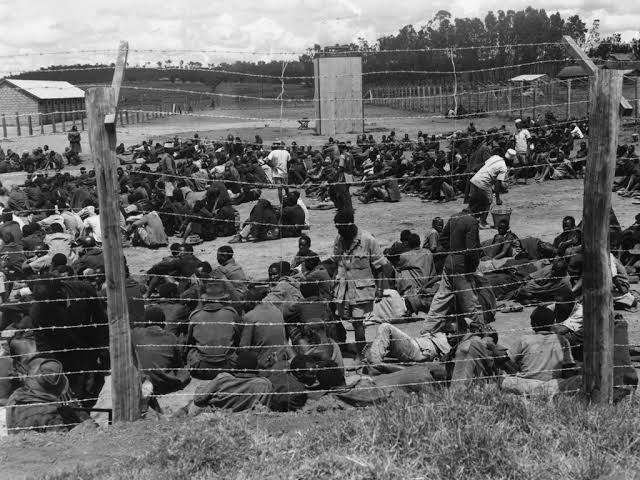
Survivors would later recount being confined in the open airstrip under intense heat, with limited access to food, water, or medical care. The detentions, according to testimonies presented years later, turned the airstrip into a site of suffering and mass death.
The exact number of people who died during the operation remains contested. Official government figures at the time suggested significantly lower casualty numbers, while survivors, local leaders, and human rights organizations have consistently argued that the death toll was far higher with estimates often reaching into the hundreds and sometimes claimed to exceed one thousand.
The lack of clear official documentation, burial records, and independent investigations during the immediate aftermath has contributed to decades of uncertainty surrounding the true scale of the tragedy.
At the time, President Moi’s administration framed the operation as a necessary security measure intended to restore law and order. Government statements emphasized the need to control violence and maintain stability in the region. However, critics and survivors would later argue that the operation involved excessive force and collective punishment that violated human rights.
For many families, Wagalla marked a turning point in their lives. Entire households lost breadwinners. Young boys grew up without fathers. Communities lost elders and leaders whose absence altered social structures and economic stability for decades.
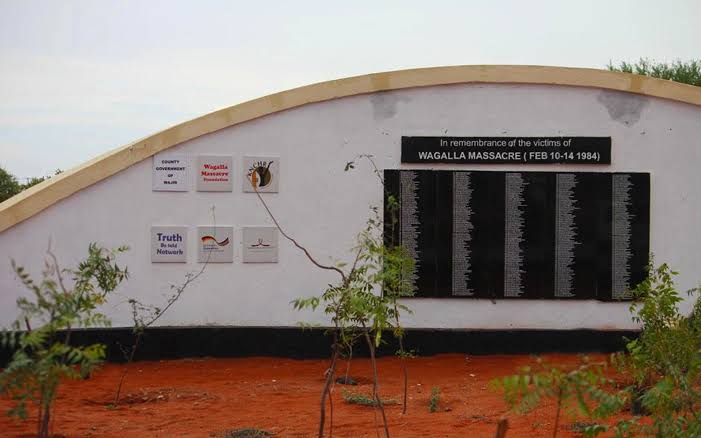
THE LONG ROAD FROM TRAGEDY TO TRUTH AND THE SEARCH FOR ACCOUNTABILITY
For years after 1984, Wagalla remained largely absent from national conversation. Survivors describe a prolonged period of silence, where speaking openly about the massacre was often met with fear, denial, or political sensitivity.
Many victims were buried in unmarked graves. Families struggled to obtain official recognition of deaths. In some cases, survivors say they faced intimidation or were discouraged from publicly recounting their experiences.
It was not until the early 2000s that survivors and civil society organizations began organizing campaigns demanding national acknowledgment of the massacre. Human rights groups, local leaders, and activists pushed for official investigations into what happened at Wagalla.
One of the most significant developments came with the establishment of Kenya’s Truth, Justice and Reconciliation Commission (TJRC), formed to investigate historical injustices committed between 1963 and 2008.
The TJRC conducted hearings, collected survivor testimonies, and examined government records related to Wagalla. In its findings, the commission concluded that state security forces were responsible for serious human rights violations during the operation. The commission recommended government apology, compensation for victims, and further accountability measures.
In 2015, the Kenyan government issued a formal apology acknowledging the suffering experienced during Wagalla and pledged to support compensation initiatives for survivors and families of victims. While the apology marked a symbolic milestone, many survivors argue that it did not fully address the scale of the tragedy or provide adequate closure.
Over the past four decades, justice for Wagalla has remained complex and slow. Survivors have consistently raised concerns about delayed compensation programs, limited medical and psychological support for victims, and lack of legal accountability for those responsible for planning and executing the operation.
Political leadership across successive administrations has acknowledged Wagalla in varying degrees, but critics argue that concrete implementation of TJRC recommendations has remained incomplete.
The broader national conversation around Wagalla has also reflected deeper issues about historical marginalization of North Eastern Kenya. The massacre is often cited alongside discussions about infrastructure gaps, economic exclusion, and representation challenges that have affected the region since independence.
For survivors, however, Wagalla is not just a political or historical debate it is a deeply personal memory that continues to shape everyday life. Some survivors still suffer long-term physical and emotional trauma. Others speak about intergenerational effects, where children and grandchildren inherit the stories, grief, and unresolved questions from their families.
Community remembrance ceremonies held every February 10 serve as both memorial and advocacy platform. Elders lead prayers. Youth groups recite poems and historical narratives. Leaders call for unity while urging the government to fulfill promises of justice.
These annual commemorations have become powerful symbols of resilience. They demonstrate how communities preserve memory even when official records remain incomplete.
Scholars and human rights experts often describe Wagalla as a turning point in Kenya’s human rights history. The massacre highlighted the dangers of unchecked state security power and reinforced calls for constitutional reforms, improved oversight of security agencies, and stronger protections for civilian populations.
Kenya’s 2010 Constitution, which introduced expanded human rights protections and devolution of power, is sometimes viewed by analysts as part of the broader national effort to address historical injustices like Wagalla. However, translating constitutional principles into practical justice for survivors has proven to be an ongoing challenge.
Today, Wagalla remains both a historical event and a living memory. It is taught in academic discussions, referenced in human rights advocacy, and remembered deeply within community oral traditions.
Forty-two years later, Wagalla continues to raise critical national questions: How should nations confront painful histories? What responsibilities do governments carry toward victims of past state violence? Can reconciliation exist without full accountability?
For many survivors and families, the search for justice is not about revenge or political gain. It is about recognition, dignity, and assurance that such tragedies will never happen again.
As Kenya continues to grow politically, economically, and socially, Wagalla stands as a solemn reminder that national unity must be built on truth, fairness, and respect for every community.
The quiet plains of Wagalla Airstrip remain unchanged physically, but historically, they carry the weight of thousands of memories memories of fear, survival, loss, and resilience.
And every February 10, as prayers rise into the dry Wajir sky, one message echoes across generations:
The past cannot be erased, but justice delayed must never become justice denied.