

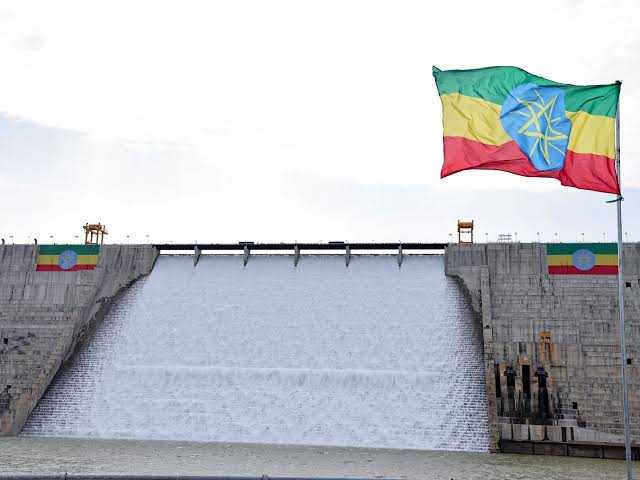
The image of an Ethiopian flag fluttering beside the Grand Ethiopian Renaissance Dam is more than symbolic it captures a defining moment in Africa’s modern geopolitical history. What began as a national development project has evolved into one of the most complex and potentially destabilizing transboundary water disputes in the world.
Today, with Ethiopia announcing plans to construct three additional dams along the Blue Nile, the stakes have risen dramatically, pushing tensions with Egypt toward an uncertain and potentially volatile future.
This is not just a dispute about water it is about sovereignty, survival, regional power, historical injustice, and the future of development in Africa.
To understand the gravity of the current moment, one must go back more than a century. The Nile River, the world’s longest river, has been the lifeline of civilizations for millennia, particularly in Egypt, where over 95 percent of the population lives along its banks.
Historically, colonial-era agreements most notably the 1929 and 1959 Nile Waters Agreements allocated the lion’s share of the river’s waters to Egypt and Sudan, effectively excluding upstream countries like Ethiopia from meaningful participation.
From Cairo’s perspective, these agreements are legal and binding, forming the backbone of its water security. From Addis Ababa’s perspective, they are relics of colonial injustice documents signed without its consent, denying it the right to utilize a river that originates largely within its own borders. In fact, Ethiopia contributes approximately 85 percent of the Nile’s waters through the Blue Nile, yet historically used almost none of it for large-scale development.
This imbalance laid the foundation for decades of quiet resentment, which eventually transformed into assertive action in 2011 when Ethiopia launched the GERD project. At the time, Egypt was politically weakened following the Arab Spring, and Ethiopia seized the opportunity to begin construction without prior agreement.
What followed was nearly a decade of negotiations involving Egypt, Ethiopia, and Sudan, mediated at times by the African Union, the United States, and other international actors. Yet, despite countless rounds of talks, no binding agreement was ever reached.
The completion and filling of GERD between 2020 and 2022 marked a turning point. Ethiopia demonstrated that it could unilaterally execute a mega-project on the Nile despite opposition. Egypt, meanwhile, was forced to adapt investing heavily in desalination, wastewater recycling, and irrigation efficiency to offset water losses.
But these measures, while significant, only partially address a deeper structural vulnerability: Egypt’s near-total dependence on the Nile.
Now, Ethiopia’s announcement of three new dams each costing around $3.5 billion and collectively adding 5,700 megawatts of power signals a bold escalation. From Addis Ababa’s perspective, this is a logical continuation of its development strategy.
With a population exceeding 120 million and growing rapidly, Ethiopia faces immense pressure to expand energy access, industrialize, and reduce poverty.
Hydropower offers a clean, renewable solution that aligns with global climate goals while also positioning Ethiopia as a regional energy hub capable of exporting electricity across the Horn of Africa.
Yet, from Cairo’s vantage point, the implications are existential.
Egypt already faces acute water scarcity. With a fixed allocation of 55.5 billion cubic meters annually based on the 1959 agreement and a population surpassing 110 million, per capita water availability has fallen well below the threshold of water poverty. Climate change, population growth, and upstream developments have further strained the system. The filling of GERD alone, according to Egyptian officials, resulted in significant water losses during critical years.
The prospect of three additional dams raises fears of cumulative impacts that could fundamentally alter the flow regime of the Nile. Egyptian experts warn that expanded storage capacity upstream would give Ethiopia unprecedented control over water release, enabling it to regulate flows in ways that could reduce water availability downstream, especially during drought periods.
Moreover, the implications extend beyond water quantity. The Aswan High Dam a cornerstone of Egypt’s water and energy infrastructure relies on steady flows to generate electricity and regulate irrigation.
Reduced inflows could diminish its efficiency, leading to power shortages and economic losses. Agriculture, which consumes the majority of Egypt’s water, would be particularly vulnerable, threatening food security in a country already heavily reliant on imports.
At the heart of the dispute lies a fundamental clash of narratives.
Ethiopia frames the Nile as a sovereign resource one that it has every right to develop for the benefit of its people. It argues that its projects are not designed to harm downstream countries but to harness water for energy, not consumption.
Hydropower dams, unlike irrigation projects, do not permanently remove water from the system; they store and release it.
Egypt, however, views unilateral actions as a direct threat. It insists on a legally binding agreement governing the filling and operation of dams to ensure predictable water flows and protect its interests.
Without such an agreement, Cairo fears being at the mercy of upstream decisions over which it has no control.
This disagreement has proven intractable, largely because it is rooted in incompatible principles: historical rights versus equitable utilization, legal continuity versus developmental justice.
A River Divided, A Region on Edge
Beyond the technical and legal dimensions, the Nile dispute is increasingly intertwined with broader geopolitical dynamics in the Horn of Africa and the Red Sea region.
Egypt’s concerns are no longer limited to water. Ethiopia’s ambitions to secure access to the Red Sea highlighted by its controversial memorandum with Somaliland have raised alarms in Cairo, which views control over maritime routes as critical to its national security, particularly given the strategic importance of the Suez Canal.
In response, Egypt has adopted a multi-layered strategy. Militarily, it has increased its presence in the region, including troop deployments to Mogadishu under African Union missions. Diplomatically, it has strengthened ties with Ethiopia’s neighbors and sought to build coalitions that can counterbalance Addis Ababa’s influence.
Economically, it continues to invest in water resilience measures to reduce vulnerability.
These moves reflect a broader shift from reactive diplomacy to proactive containment.
Ethiopia, for its part, appears undeterred. Buoyed by its success with GERD and driven by domestic imperatives, it is pressing ahead with its dam-building agenda. The government frames these projects as essential for national development and regional integration, emphasizing their potential to generate electricity for export and support industrial growth.
However, this confidence carries risks.
The absence of a binding agreement creates a vacuum that could lead to miscalculations. In times of drought or political tension, decisions about water release could become flashpoints for conflict. The militarization of the dispute while still largely rhetorical adds another layer of uncertainty.
Sudan, often caught in the middle, faces its own dilemmas. While it stands to benefit from regulated flows and reduced flooding due to upstream dams, it also shares Egypt’s concerns about water security and the lack of coordination. Political instability within Sudan further complicates its ability to play a consistent mediating role.
What emerges is a complex web of interdependence and rivalry, where cooperation is both necessary and elusive.
At a deeper level, the Nile dispute reflects broader questions about the future of transboundary resource management in a changing world. As populations grow and climate change intensifies, pressures on shared resources are likely to increase. The Nile Basin, with its mix of historical grievances, developmental needs, and geopolitical rivalries, offers a stark illustration of these challenges.
Can countries move beyond zero-sum thinking and develop cooperative frameworks that balance competing interests? Or will unilateral actions and strategic rivalries dominate, increasing the risk of conflict?
For now, the trajectory appears uncertain.
Ethiopia’s new dam plans represent both an opportunity and a threat an opportunity for development and regional integration, and a threat to downstream stability if not managed cooperatively. Egypt’s response, shaped by existential concerns, will likely continue to combine diplomacy, adaptation, and strategic positioning.
The international community, while often involved, has struggled to facilitate a lasting solution. Mediation efforts have been hindered by shifting alliances, competing interests, and the complexity of the issues at stake.
Ultimately, the future of the Nile will depend on whether its basin countries can reconcile their divergent visions and build trust in a context where mistrust has long prevailed.
The river that once united civilizations now stands as a dividing line its waters carrying not only life but also the weight of history, ambition, and uncertainty.
And as Ethiopia moves forward with its Blue Nile master plan, one reality becomes increasingly clear: the Nile is no longer just a river.
It is a test of whether cooperation can triumph over conflict in one of the world’s most strategically vital regions.