

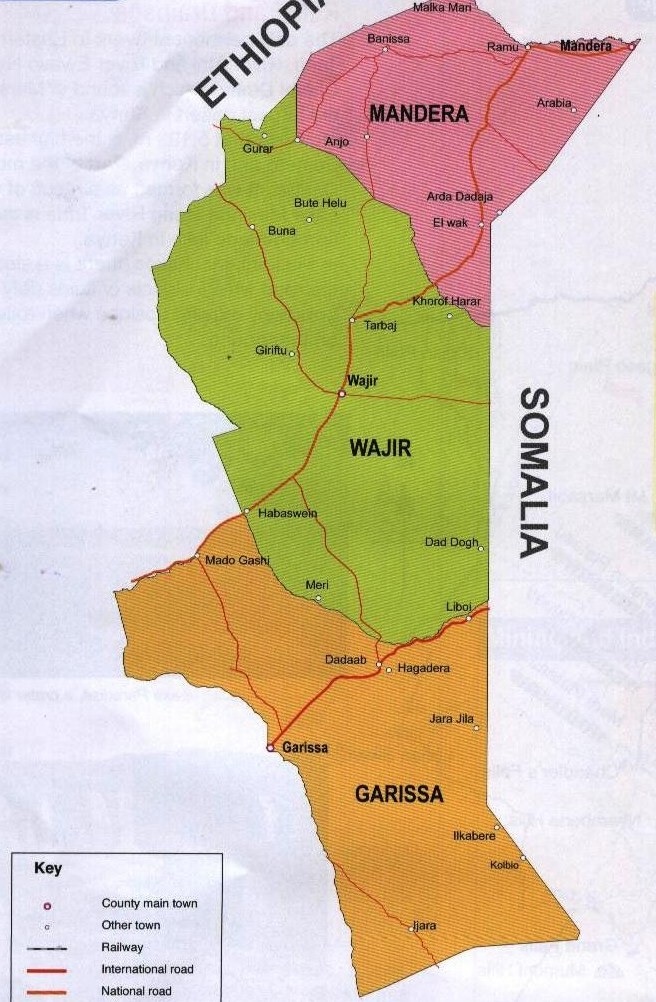
For years, negotiated democracy has been presented as the political lifeline of North Eastern Kenya. Clan elders would meet, vet candidates, distribute key political seats, and argue that consensus was the only way to preserve peace in a fragile region. That system once served a purpose. Today, however, it is increasingly being questioned and rightly so.
As early campaigns for the August 2027 General Elections gain momentum, a noticeable shift is taking place across Garissa, Wajir, and Mandera. Young people are stepping forward to contest for governor, MP, and MCA seats without waiting for elders’ endorsements. This is not a reckless political rebellion; it is a response to years of exclusion, underperformance, and unmet promises.
The youth are not rejecting culture. They are rejecting stagnation.
When Stability Replaced Accountability
Negotiated democracy was born out of necessity. In a region historically affected by marginalisation, insecurity, and clan tensions, elders played a critical role in preventing violent political competition. By agreeing on candidates and rotating leadership among clans, they ensured representation and relative calm during elections.
But over time, this arrangement hardened into a closed system. Leadership became predictable and protected from scrutiny. Once a candidate received a clan endorsement, competition effectively ended. Elections became formalities rather than choices. Accountability suffered.
The consequences are visible across North Eastern Kenya. Despite decades of “stable” leadership, the region still struggles with poor infrastructure, weak healthcare systems, under-resourced schools, high unemployment, and limited economic growth. Roads remain impassable in many areas, hospitals lack essential equipment, and thousands of educated young people remain jobless.
Stability without progress is not success. It is delay.
For the youth, negotiated democracy increasingly feels like a system designed to preserve political privilege rather than deliver development. When leadership is determined by lineage instead of ideas, performance becomes optional. That reality has fuelled frustration, not unity.
A Generation No Longer Willing to Wait
The rise of youth candidates marks a generational awakening. This is the most educated and digitally connected generation North Eastern Kenya has ever produced. Through social media, travel, and exposure, young people can compare their counties with others across Kenya. They see what competitive politics can deliver elsewhere and they ask why their region remains behind.
Unemployment is the tipping point. Many young people feel locked out of opportunities by political networks that recycle the same leaders and families. County jobs, tenders, and influence often follow political loyalty, not merit. For a generation struggling to survive, waiting quietly for elders to decide leadership is no longer an option.
Technology has accelerated this shift. Social media has broken the elders’ monopoly over political messaging. A young aspirant no longer needs approval from a council of elders to reach voters. Ideas now travel faster than authority. Campaigns are built on WhatsApp groups, TikTok videos, and community engagement rather than closed-door negotiations.
This does not mean clan influence has disappeared. It remains powerful. But it is no longer absolute.
The growing number of youth candidates is not a threat to peace it is a demand for relevance. It is a call for leadership that understands unemployment, service delivery, insecurity, and development not as talking points, but as lived realities.
Negotiated democracy is being challenged because it failed to evolve. Elders are not being rejected; unquestioned authority is. If the system cannot accommodate youth, women, and open competition, it will continue to lose legitimacy.
North Eastern Kenya now stands at a crossroads. One path clings to a model that prioritised harmony but neglected accountability. The other embraces a more competitive, inclusive politics that may be uncomfortable but necessary.
The youth are not the problem. They are the correction.
If the region truly wants development, it must allow leadership to be earned, not inherited through endorsement. The future of North Eastern Kenya depends not on silencing young voices, but on finally listening to them.