

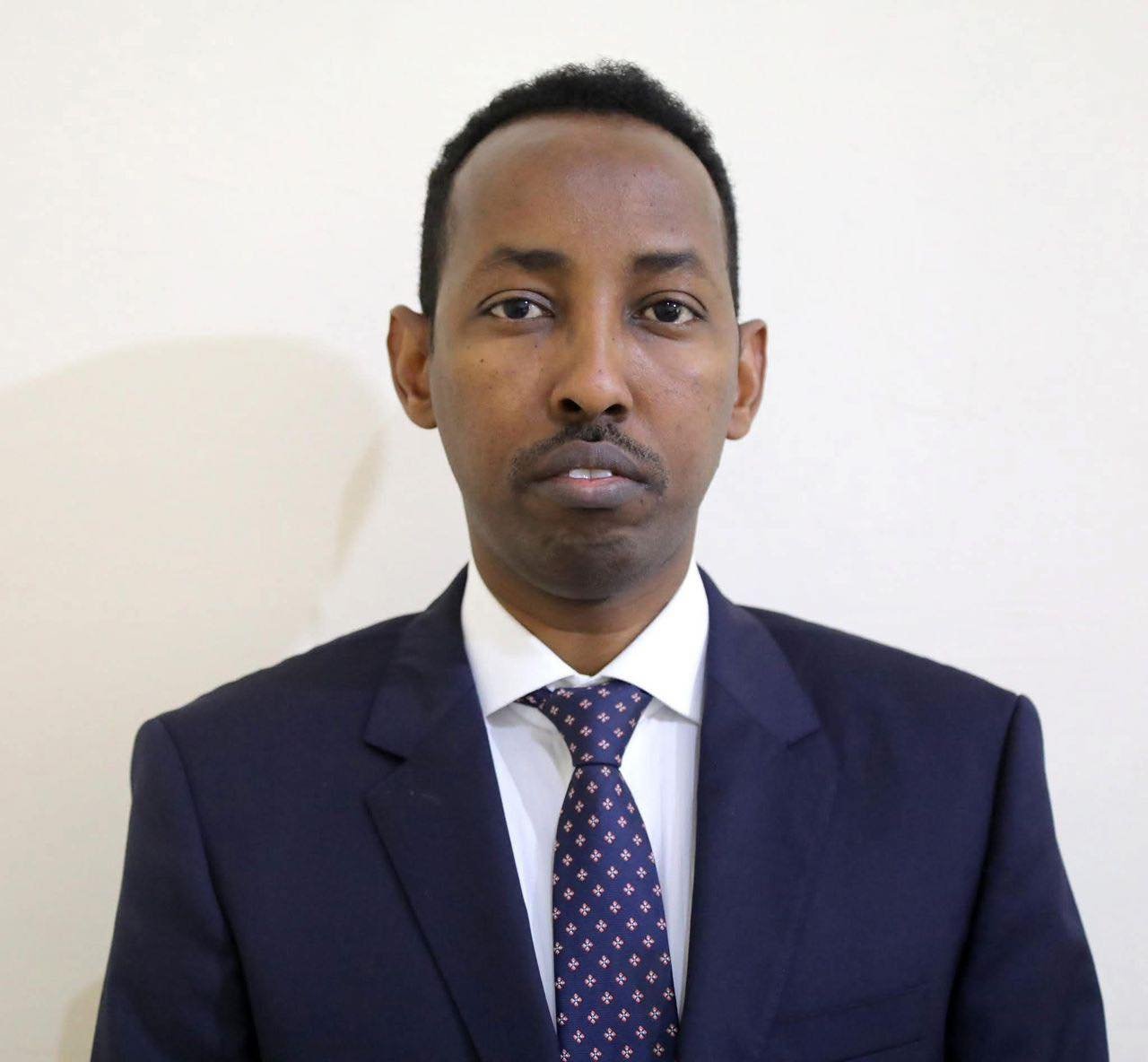
The appointment of Hussein Khaasim Yusuf, widely known as Hussein Iidow, as the new Director General of the Somali Immigration and Citizenship Agency marks a significant development in Somalia’s evolving political and administrative landscape.
Approved by the Council of Ministers following a recommendation from the Ministry of Internal Security, the decision has drawn attention not only because of the importance of the office, but also due to the political profile of the appointee and his close ties to the country’s top leadership under President Hassan Sheikh Mohamud and Prime Minister Hamza Abdi Barre.
This development comes at a time when Somalia is undergoing critical governance reforms, particularly around its constitutional framework, national identity systems, and institutional rebuilding. The Somali Immigration and Citizenship Agency is one of the most sensitive and strategically important institutions in the country.
It is responsible for managing border control, issuing passports, overseeing citizenship processes, and regulating residency status. In a country like Somalia, where questions of identity, mobility, and sovereignty remain central to state-building, leadership of such an agency carries both administrative and political weight.
Hussein Iidow is not entering this role as a neutral technocrat. His political history and involvement in recent national debates place him firmly within the inner circles of Somalia’s current leadership. He has been actively involved in the constitutional amendment process, a highly contested political exercise that has divided stakeholders across the country.
The amendments have been framed by the government as necessary steps toward stabilizing governance structures and modernizing the state, while critics have raised concerns about power consolidation and the marginalization of alternative voices.
Within this context, Iidow’s appointment is being interpreted as part of a broader pattern in which individuals closely aligned with the government’s reform agenda are being positioned in key institutional roles.
His involvement in pushing forward constitutional changes has elevated his political profile, making him a recognizable figure in Somalia’s current political landscape. His transition from a politically active role into a powerful administrative position suggests a deliberate alignment between political loyalty and institutional authority.
The Somali Immigration and Citizenship Agency itself sits at the heart of national control systems. It regulates who enters and exits the country, who qualifies as a citizen, and how identity is documented. These functions are not only administrative but also deeply political.
Control over such systems can influence security policy, migration trends, and even electoral dynamics. As such, leadership of this agency is often viewed as a strategic position within the broader machinery of government.
Government statements have framed the appointment as part of ongoing efforts to strengthen immigration and citizenship services. The official narrative emphasizes efficiency, reform, and institutional development. According to the Prime Minister’s Office, the decision reflects a commitment to improving service delivery and enhancing the capacity of the agency to meet national demands.
This framing positions the appointment as a technical and administrative decision aimed at improving governance outcomes.
However, political observers note that such appointments rarely exist outside of broader political considerations. In Somalia’s context, where state institutions are still consolidating and political alliances play a critical role in governance, appointments to senior positions often reflect a combination of merit, trust, and strategic alignment. Iidow’s close relationship with both the president and the prime minister is seen as a key factor in his elevation to this role.
This relationship suggests a high level of trust between the appointee and the executive leadership. In governance systems facing internal and external pressures, trust becomes a central factor in decision-making.
Leaders often prioritize individuals who are aligned with their vision and capable of implementing policy without resistance. In this sense, the appointment can be understood as part of a broader effort to ensure coherence within government institutions.
At the same time, the political timing of the appointment is significant. It comes in the aftermath of intense debates around constitutional reform, a process that has reshaped political alliances and heightened tensions among various actors. By appointing a figure closely associated with that process, the government is reinforcing the position of those who have supported its reform agenda.
This move signals continuity in policy direction and strengthens the influence of pro-government actors within the state structure.
The concept of political reward is also central to understanding this development. In many political systems, individuals who play key roles in advancing major government initiatives are often appointed to influential positions. This is not unique to Somalia but is a common feature of political systems where loyalty and contribution to policy objectives are recognized through appointments.
In this case, Iidow’s involvement in the constitutional amendment process positions him as a beneficiary of such political dynamics.
The implications of this appointment extend beyond internal politics. Somalia’s international partners closely monitor governance developments, particularly in areas related to institutional capacity and transparency. The immigration agency is of particular interest due to its role in managing travel documentation and cross-border movement.
Any changes in leadership can influence perceptions of the country’s governance standards and its ability to manage critical systems effectively.
Domestically, public perception will play a crucial role in shaping the narrative around this appointment. Citizens interact directly with the immigration agency when applying for passports, verifying citizenship, or dealing with residency issues. The effectiveness and fairness of the agency’s services directly impact public trust in government institutions.
If the appointment leads to improved service delivery, it may strengthen confidence in the government’s decisions. If not, it could reinforce concerns about politicization.
The appointment also highlights the ongoing process of state-building in Somalia. As institutions are strengthened and restructured, leadership choices become critical in determining their effectiveness. The integration of politically experienced individuals into administrative roles reflects an approach that prioritizes alignment and cohesion within the government.
This approach can facilitate policy implementation but also raises questions about the balance between political influence and institutional independence.
Iidow’s leadership will now be closely watched as he takes on this role. His performance will ultimately determine how this appointment is judged. Key areas of focus will include improvements in passport issuance systems, border management, and the overall efficiency of immigration services. These are areas where tangible results can shape public and political perceptions.
In reporting this development, it is clear that the appointment represents more than a routine administrative decision. It reflects the intersection of politics and governance in Somalia’s current context.
The alignment between the appointee and the country’s top leadership underscores the importance of trust and loyalty in shaping institutional leadership. At the same time, it highlights the strategic significance of the immigration agency within the broader framework of state control.
As Somalia continues to navigate its path toward stability and institutional maturity, decisions like this will remain central to understanding the direction of its governance.
The appointment of Hussein Khaasim Yusuf stands as a clear example of how political dynamics, reform agendas, and institutional priorities converge in shaping the country’s leadership landscape.