

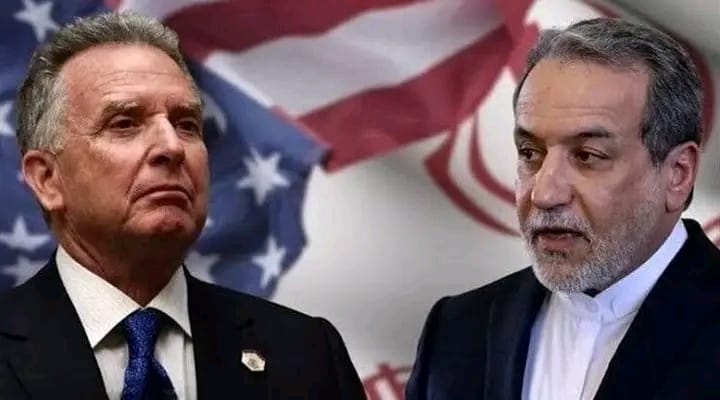
In the shifting and often volatile geopolitical landscape of the Middle East, moments emerge that define not only the trajectory of wars but also the political legacy of the leaders involved. The latest developments surrounding the ongoing conflict involving Iran, the United States, and Israel represent one such moment.
Reports that U.S. Middle East envoy Steve Witkoff attempted to contact Iran’s Foreign Minister Abbas Araghchi twice in order to discuss a ceasefire, only for Tehran to refuse to answer the calls, reveal a complex and tense diplomatic landscape.
Simultaneously, the United States attempted to pass a message through the Omani government to Ali Larijani, a key Iranian national security figure, requesting negotiations. Iran again declined. Yet the significance of this diplomatic exchange goes far beyond a simple refusal to pick up the phone.
It exposes a deeper story one about power, strategic calculation, domestic politics, global pressure, and the delicate balance between escalation and restraint.
At the center of this moment stands U.S. President Donald Trump. Earlier on Wednesday Trump publicly stated that the war was nearing its end. Almost immediately afterward, U.S. forces stationed in the region were reportedly ordered to stay away from Iranian naval bases along the coast.
On the Iranian side, President Masoud Pezeshkian declared that Iran would consider ending the war only under three conditions: that the United States and Israel pay reparations for the damage caused, that Iran’s right to peaceful nuclear development be recognized, and that international guarantees be established to prevent future attacks against Iran. These demands signal that Tehran believes it is negotiating from a position of strength.
At the same time, the Islamic Revolutionary Guard Corps the powerful military institution that often operates independently of Iran’s elected government has threatened to continue the war.
To understand why Trump now appears to want a ceasefire in a war widely seen as emerging from his own strategic decisions, one must examine the deeper layers of the conflict. Wars rarely begin with a single action. Instead, they are the culmination of political calculations, security fears, alliances, ideological conflicts, and sometimes personal leadership styles.
In this case, the war grew out of years of rising tensions between Washington and Tehran, tensions that intensified under Trump’s approach to Iran.
Trump’s strategy toward Iran has long been rooted in the concept of “maximum pressure.” During his presidency, he withdrew the United States from the nuclear agreement that had been negotiated between Iran and world powers.
That agreement had placed restrictions on Iran’s nuclear program in exchange for sanctions relief. Trump argued that the deal was flawed, claiming it allowed Iran to continue expanding its regional influence while only temporarily limiting its nuclear ambitions.
By withdrawing from the agreement and re-imposing severe economic sanctions, Trump sought to weaken Iran economically and force it into accepting a broader agreement that would also limit its missile program and regional military activities.
However, the consequences of the maximum pressure campaign were complex. Rather than forcing Iran to immediately concede to U.S. demands, the policy intensified confrontation. Iran began gradually reducing its compliance with nuclear restrictions. Regional tensions increased as confrontations occurred in the Persian Gulf, Iraq, Syria, and elsewhere.
Each side accused the other of aggression. Over time, the possibility of direct military conflict became increasingly real.
The war that eventually emerged can therefore be seen as the result of escalating cycles of action and reaction.
Each side believed it was defending its interests. Each believed the other side was responsible for the escalation. Yet once the conflict reached the stage of open military confrontation, a new set of realities began to shape decision-making.
For Trump, the initial logic behind confrontation was rooted in the belief that overwhelming pressure could force Iran to surrender strategically without requiring a prolonged war. The assumption was that Iran’s economy, already strained by sanctions, would not be able to sustain a major conflict. Additionally, Washington believed its military superiority would deter Iran from escalating too far. But wars have a way of defying expectations.
Iran’s military doctrine has long been built around asymmetric warfare. Unlike the United States, Iran does not rely primarily on conventional military dominance. Instead, it uses a combination of missile capabilities, regional alliances, naval disruption strategies, cyber operations, and proxy forces.
This approach allows Iran to impose significant costs on its adversaries even without matching them in traditional military strength. When conflict erupted, these capabilities began to shape the battlefield.
Missile strikes, drone attacks, disruptions of maritime routes, and regional proxy engagements quickly expanded the scope of the conflict. Suddenly, the war was no longer confined to a single front. Instead, it threatened to engulf the broader Middle East.
Oil shipping routes, energy infrastructure, and regional stability all became vulnerable. For global powers and markets, the potential consequences were enormous.
As the war unfolded, the political calculations in Washington also began to shift. Leaders often start wars believing they can control their duration and intensity. Yet once military operations begin, new pressures emerge. Public opinion, economic impacts, international alliances, and the risk of escalation all influence the choices leaders must make.
Trump’s statement that the war was nearing its end, combined with the diplomatic outreach to Iran, suggests that the United States may now be seeking a strategic exit from the conflict.
This does not necessarily mean Washington believes it has lost the war. Rather, it may indicate that the costs and risks of continuing the conflict are beginning to outweigh the benefits.
One key factor behind the push for a ceasefire may be the risk of regional escalation. The Middle East is not a simple battlefield involving only two countries. It is a network of alliances, rivalries, and fragile states. If the conflict between the United States and Iran expands further, it could draw in multiple actors from Israel and Gulf states to various non-state armed groups across the region. Such an expansion could transform a limited war into a broader regional confrontation with unpredictable consequences.
Another factor is the global economy. The Middle East remains central to the world’s energy supply. Even temporary disruptions in oil shipping routes can cause major economic shocks. If Iranian naval forces threaten maritime traffic or if energy infrastructure becomes a target, the impact could ripple through global markets.
Governments around the world therefore have a strong interest in preventing the conflict from escalating further.
Domestic politics may also play a role in Trump’s calculations. Wars that begin with strong political support can become politically risky if they drag on without clear victory. Casualties, financial costs, and international criticism can gradually erode public support.
Leaders who initially champion military action sometimes seek diplomatic solutions once they realize that prolonged conflict could damage their political standing.
On the Iranian side, the refusal to answer calls from U.S. envoys carries its own strategic message. In diplomacy, symbolism matters. Ignoring a phone call is not merely a technical detail; it is a political signal. Tehran may be attempting to demonstrate that it will not appear desperate for negotiations. By publicly rejecting immediate talks, Iranian leaders reinforce the narrative that they are resisting pressure and maintaining dignity.
President Pezeshkian’s three conditions for ending the war are particularly significant. By demanding reparations, recognition of nuclear rights, and international guarantees against future attacks, Iran is setting a high bar for negotiations. These demands serve both domestic and international purposes.
Domestically, they signal to the Iranian public that their government will not accept a settlement that appears to reward aggression. Internationally, they shift the diplomatic conversation toward broader questions of sovereignty and security guarantees.
The demand for reparations is especially noteworthy. In international politics, compensation for war damages is rarely granted unless one side suffers a clear defeat. By raising the issue of reparations, Iran is framing the conflict in moral and legal terms. It suggests that Tehran sees itself as the victim of aggression and expects acknowledgment of that claim.
The second condition the recognition of Iran’s right to peaceful nuclear development returns the debate to the core issue that has shaped U.S.–Iran relations for decades. Iran insists that it has the legal right under international treaties to develop nuclear technology for civilian purposes, including energy production. The United States and its allies have long feared that such capabilities could eventually lead to nuclear weapons development. The disagreement over this issue has been one of the most persistent sources of tension between the two countries.
The third condition international guarantees against future attacks reflects Iran’s broader security concerns. From Tehran’s perspective, past experiences have demonstrated that agreements alone may not prevent military action. Therefore, Iran is demanding mechanisms that would ensure long-term protection against external aggression.
Meanwhile, the Islamic Revolutionary Guard Corps adds another layer of complexity to the situation. The IRGC is not just a military institution; it is a powerful political and economic actor within Iran. Its commanders often take harder positions than the civilian government.
By threatening to continue the war, the IRGC may be attempting to strengthen Iran’s negotiating position or to ensure that any eventual settlement reflects its strategic priorities.
The contrast between Trump’s suggestion that the war may be ending and the IRGC’s threats to continue fighting highlights the uncertainty surrounding the conflict’s future. Wars often reach moments where leaders on both sides must decide whether to escalate further or seek a negotiated exit.
These decisions are influenced by military realities, domestic politics, and international pressure.
Trump’s desire for a ceasefire may therefore reflect a recognition that the war has reached a strategic crossroads. Continuing the conflict could produce unpredictable outcomes, including the possibility of a broader regional war. Seeking a ceasefire, on the other hand, could allow Washington to claim that its objectives such as demonstrating military strength or deterring Iranian actions have been achieved.
At the same time, Iran’s leadership appears determined to ensure that any ceasefire does not appear as a capitulation. By setting conditions and refusing immediate talks, Tehran is attempting to shape the narrative of the war’s conclusion.
Ultimately, the struggle over how this war ends may prove as important as the war itself. In international politics, perception often shapes reality. If one side is seen as forcing the other to seek a ceasefire, it gains strategic prestige. If a leader is perceived as ending a war responsibly before it spirals out of control, that too can become part of their political legacy.
The coming days and weeks will therefore be critical. Diplomacy may intensify behind the scenes. Regional actors such as Oman, which has often served as a mediator between the United States and Iran, could play an important role in facilitating indirect negotiations. International organizations and major powers may also push for de-escalation.
For the world, the stakes are immense. The Middle East has long been a region where local conflicts can rapidly acquire global consequences. Energy security, international alliances, nuclear proliferation, and regional stability all intersect in this crisis.
Trump’s pursuit of a ceasefire, despite having pursued a confrontational strategy that contributed to the war’s outbreak, illustrates one of the enduring paradoxes of international leadership. Leaders who initiate pressure campaigns sometimes become the same leaders who must find a path to peace.
Whether this ceasefire effort succeeds and under what terms will shape not only the outcome of the current conflict but also the future balance of power in the Middle East.
In the end, the war has become more than a military confrontation. It is a contest of narratives, legitimacy, and strategic endurance. Each statement, each diplomatic message, and even each unanswered phone call carries meaning in this complex geopolitical drama.
The outcome will determine whether the region moves toward de-escalation or whether the conflict continues to evolve into something even more dangerous.