

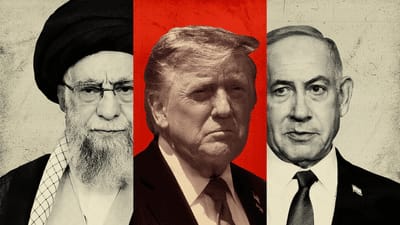
Over the past 24 hours, the Middle East has witnessed one of the most intense and strategically revealing phases of its ongoing conflict. Iran, facing repeated aerial bombardments and missile strikes, has demonstrated resilience that contrasts sharply with the conventional expectations of how a war of attrition might unfold.
Israel has continuously flown a large number of aircraft over Iranian airspace, conducting strikes on major cities including Tehran, Isfahan, Mashhad, and Qom. Each strike, while tactical in nature, carries a broader political message, signaling both resolve and deterrence. The intensity of these attacks, coupled with Iran’s countermeasures, indicates that the war has entered a stage far more dangerous than the initial skirmishes, a phase where calculations are no longer purely military but increasingly political, economic, and psychological.
Iran’s response has been calculated and multifaceted. Not only has the country launched missiles, but it has also deployed unmanned aerial vehicles (drones) into Israel and several Gulf states. Even Oman, historically considered a neutral party and a mediator in regional tensions, has felt the impact. Recent strikes targeting key infrastructure, including ports and economic hubs, have reportedly angered Omani leadership, demonstrating the broader geographical spread and escalating intensity of the conflict.
What was once largely a confrontation between two nations has begun to affect surrounding states, showing that modern conflicts cannot be confined to borders.
This widening scope is a deliberate part of Iran’s strategy, signaling that attacks can have ripple effects, influencing not only military targets but also diplomatic and economic calculations across the region.
Looking at the broader dynamics, it becomes clear that the war has entered a stage of compulsive pursuit of visible victory.
Both sides are under pressure to demonstrate tangible results, knowing that international scrutiny, domestic opinion, and political expectations will not tolerate prolonged stalemates. Historical precedents provide lessons for understanding this stage. The 2003 Iraq war, for instance, initially promised quick success for coalition forces, but the pressures of insurgency, political fallout, and extended operations significantly altered strategic calculations.
Similarly, the Russia-Ukraine war shows that the longer a conflict drags on, the more domestic and international pressures come to outweigh military objectives, forcing leaders to make choices that may not align with initial strategic expectations.
Within this context, the United States, led by President Donald Trump, faces extraordinary internal pressures. Political stakeholders in Washington, concerned about the economic and human costs of prolonged engagement, are increasingly urging a rapid resolution. Millions of dollars are being expended daily in military operations, creating domestic debate over the sustainability and purpose of U.S. involvement.
Unlike Iran, which has leveraged low-cost missiles and drones to achieve significant strategic effects, the U.S. must contend with far higher operational costs, political scrutiny, and potential backlash from both domestic constituencies and international partners.
This disparity has created a situation where Iran’s relatively low-cost, asymmetric approach allows it to maintain pressure while consuming fewer resources, thereby sustaining a strategic advantage in a long-term engagement scenario.
Israel, too, is facing critical internal and external pressures. Reports from military analysts suggest that the prolonged conflict is testing operational endurance and public support. Unlike in previous wars, Israel is confronting an adversary capable of sustaining attacks while simultaneously influencing regional actors and leveraging asymmetric tactics.
The cost-benefit analysis for Israel is becoming increasingly complex, especially as domestic opinion and regional diplomatic considerations weigh on leadership decisions. The question Israel must grapple with is whether continued escalation will achieve meaningful strategic objectives or whether the costs both material and political will begin to outweigh potential gains.
The juxtaposition of Iran’s resilience and the mounting pressures on U.S. and Israeli leadership creates a scenario in which a resolution appears inevitable, but the timing and nature of that resolution remain uncertain. The war is no longer purely a battlefield confrontation; it is a race against time, domestic pressures, and geopolitical calculation.
Both Iran and its adversaries are acutely aware that prolonged conflict is unsustainable in its current form.
Every missile fired, every airstrike conducted, and every strategic maneuver is calculated not only to achieve immediate tactical objectives but also to shape the perceptions of allies, adversaries, and domestic populations.
Iran’s approach in the past 12 days underscores a strategic lesson learned from decades of conflict management and preparation. Tehran has invested heavily in asymmetric capabilities, including drones, ballistic missiles, and regional partnerships with non-state actors. These capabilities allow Iran to apply pressure across multiple theaters simultaneously, extending influence without committing to a full-scale conventional confrontation.
The recent events demonstrate how these investments pay off: Iran can challenge opponents with relatively low-cost, high-impact operations that influence political and military decision-making far beyond the immediate battlefield.
This strategy also has significant implications for the United States. Trump’s administration, while traditionally assertive in projecting military power, must weigh the economic, political, and social costs of a prolonged engagement. Public opinion in the United States is wary of extended foreign wars, particularly those that could destabilize oil markets, disrupt global trade, or inflame broader regional conflicts.
In this context, the U.S. faces the dual challenge of supporting Israeli operations while simultaneously seeking avenues for de-escalation and exit strategies that preserve credibility without provoking further Iranian aggression.
Israel’s considerations are similarly nuanced. The country has long relied on rapid military responses and technological superiority to maintain deterrence.
However, the current scenario involves an adversary capable of asymmetric retaliation, regional influence, and sustained operations. This has forced Israeli leadership to recalibrate expectations and strategy, recognizing that short-term tactical gains may not translate into strategic victory.
At the same time, the need to maintain domestic confidence and international support creates additional constraints, limiting the range of options available for escalation.
A critical insight from this conflict is the interplay between cost, capability, and perception. Iran’s low-cost missile and drone strategy allows it to exert significant pressure while minimizing direct economic burden. Conversely, the U.S. and Israel face higher operational costs, increasing domestic scrutiny, and the challenge of sustaining public support.
This imbalance creates conditions in which the perception of strength becomes as important as actual battlefield outcomes. Iran’s ability to sustain operations while demonstrating resilience enhances its strategic posture, influencing adversaries’ decision-making and shaping the broader geopolitical narrative.
The trajectory of the conflict over the next days and weeks is likely to be shaped by these intersecting pressures. Trump’s administration, cognizant of internal political dynamics and economic repercussions, is increasingly motivated to seek an endgame or, at minimum, a symbolic victory that can be communicated to domestic audiences.
Israel, recognizing similar pressures, may adjust operational tempo, scale, and focus to align with both strategic objectives and practical constraints. Iran, meanwhile, will likely continue to exploit asymmetric advantages, applying pressure in ways that challenge adversaries’ calculations while avoiding overextension.
This phase of the conflict illustrates the modern reality of limited, high-intensity warfare, where traditional notions of battlefield victory are supplemented and sometimes overshadowed by strategic signaling, psychological impact, and domestic political calculations.
Every missile strike, drone deployment, and public statement carries multiple layers of meaning, influencing not only immediate operational outcomes but also the long-term positioning of regional and global powers.
Analysts observing these events are noting that the current pattern a short, intense confrontation with measured escalation may become a model for future conflicts in the region. Wars may increasingly be fought in compressed timeframes, leveraging technology, asymmetric tactics, and political signaling rather than prolonged occupation or attrition.
The twelve-day period demonstrates that the combination of rapid military action and strategic patience can allow a country like Iran to exert influence disproportionate to its conventional military capacity.
The events of the past 24 hours highlight a critical juncture in the Middle East conflict. Iran’s resilience, Israel’s operational recalibration, and U.S. political pressures converge to create a scenario in which resolution appears inevitable, but timing, terms, and consequences remain uncertain. The war is not merely an exchange of missiles; it is a contest of strategic patience, domestic political management, economic calculation, and regional influence.
As both sides navigate this complex landscape, one certainty emerges: the window for meaningful action is shrinking, and the question now is not whether the conflict will end, but when and under what conditions.
The coming days will test leadership, strategy, and diplomacy in ways that will resonate far beyond the immediate battlefield, shaping the geopolitical order of the Middle East for years to come.