

For decades, Kenya’s North Eastern region stood as one of the country’s most neglected areas despite its immense potential. Since independence, the region faced historical marginalization characterized by inadequate infrastructure, limited government presence, poor road networks, insufficient healthcare facilities, and underinvestment in education and economic opportunities.
Many residents grew up witnessing a development gap between North Eastern Kenya and other parts of the country. Basic services that many Kenyans considered normal remained out of reach for thousands of families in Garissa, Wajir, and Mandera counties. The vast region was often associated with insecurity, drought, and underdevelopment rather than its rich culture, strategic location, and economic potential.
Today, however, that narrative is gradually changing.
Under the leadership of President William Ruto, North Eastern Kenya has witnessed renewed government attention, increased development spending, and a series of major infrastructure projects aimed at unlocking the region’s potential. The government’s focus on roads, housing, healthcare, water projects, education, and economic empowerment is beginning to reshape the region’s future.
One of the most significant projects is the Horn of Africa Gateway Development Project, which includes the multi-billion-shilling Isiolo-Modogashe-Wajir-Mandera road corridor. Once completed, the project is expected to transform trade, improve mobility, reduce travel time, strengthen security operations, and enhance cross-border commerce with neighbouring Ethiopia and Somalia. The project also includes the installation of hundreds of kilometres of fibre optic infrastructure to improve digital connectivity across the region.
The government has also invested in affordable housing projects in Garissa and Wajir, creating employment opportunities for local youth while addressing housing challenges. In addition, major road upgrades such as the Odda-Bute-Danaba-Wajir road have been initiated to improve connectivity within the county.
Healthcare infrastructure has equally received attention. The expansion of medical facilities, including the Mother and Child Unit at Garissa Level Five Hospital, aims to improve access to quality healthcare services for thousands of residents.
Another notable achievement is the reopening of the Garissa Passport Application Centre after more than a decade of closure. The facility has significantly reduced the burden on residents who previously had to travel to Nairobi for passport services, bringing government services closer to the people.
Education and skills development have also benefited through the expansion of Technical and Vocational Education and Training (TVET) institutions, while industrial projects such as county aggregation and industrial parks seek to create jobs and support local economies.
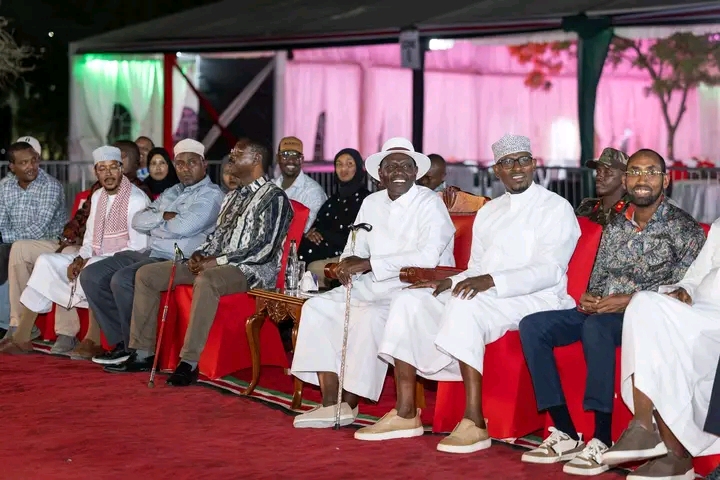
Perhaps one of the most symbolic milestones came in 2026 when Wajir hosted Kenya’s Madaraka Day celebrations for the first time in history. For many residents, the event represented more than a national celebration; it signified recognition and inclusion in the country’s development journey.
President Ruto has made several visits to North Eastern Kenya since assuming office, with the most extensive being his development tour of Mandera, Wajir, Garissa, and Isiolo in February 2025. His administration has consistently emphasized that every part of Kenya deserves equal attention and development opportunities. While exact visit counts vary depending on official and working tours, the President has made multiple visits to the region, including development inspections, stakeholder engagements, security meetings, and national celebrations.
Despite the progress, challenges remain. Many residents still seek improved access to water, better healthcare services, expanded educational opportunities, and greater economic investment. However, there is growing optimism that North Eastern Kenya is finally receiving the attention it deserves.
For far too long, the region was overlooked and marginalized, deliberately excluded from Kenya’s broader development agenda. Today, that story is changing. North Eastern Kenya is increasingly becoming a region of opportunity, investment, and hope. As roads are built, services expanded, and economic opportunities created, the region is steadily taking its rightful place in Kenya’s development story.
The transformation may not be complete, but the foundation for a brighter future has undoubtedly been laid.